Whether you’re laying laminate flooring in a single room or tackling a large project, a dedicated circular saw that handles laminate with clean cross, miter, and rip cuts is essential. This guide highlights five reliable options, explaining who each is best for and why you might choose one over another. It’s designed to help buyers pick a saw that fits project size, portability needs, and cutting precision priorities.
| Product | Best For | Why It Stands Out |
|---|---|---|
| SKIL 3601-02 Flooring Saw | Professional jobs, portable work sites | Laminate-ready cuts with a contractor blade; lightweight for transport |
| DOVAMAN Circular Saw | Versatile multi-material cutting | Multiple blades included; built-in laser and edge guide |
| Skil 5080-01 7-1/4″ Circular Saw | Power users requiring higher RPM | Strong motor, bevel capacity, lighter than older models |
| SEESII Mini Circular Saw | DIYers and small projects | Compact, laser guide, multiple blades for materials |
| CUTTEREX 13” Laminate/Vinyl Floor Cutter | Indoor cutting with no electricity | One-step angle/length cutting, no dust or noise |
SKIL 3601-02 Flooring Saw With 36T Contractor Blade
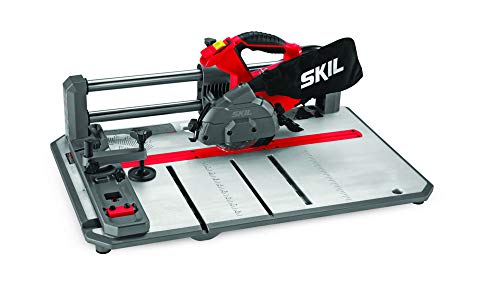
The SKIL 3601-02 Flooring Saw is designed for cutting solid, engineered, and laminate flooring with a 36-tooth contractor blade. It supports cross, miter, and rip cuts and emphasizes lightweight portability for use at various job sites. This model is best for contractors or DIYers who need a dedicated floor-cutting tool that travels easily between rooms. A potential limitation is blade depth and power compared to larger saws, which may affect very thick or dense materials.
DOVAMAN Circular Saw, 5.8A, 4-1/2″ With Laser

The DOVAMAN circular saw focuses on versatility with six blades included for wood, soft metal, plastic, and tile cuts. The built-in laser guide and edge guide enhance straightness, while the larger base and extra auxiliary handle improve stability. Choose this if you need a compact, multi-material cutter that expands its blade options for different laminate installation tasks. A caveat is that the 4-1/2″ blade size may require more passes for thick boards compared to larger saws.
Skil 5080-01 13-Amp 7-1/4″ Circular Saw

The SKIL 5080-01 delivers a robust 13-amp motor and a 7-1/4″ blade, offering strong cutting performance for laminate and other materials. It features bevel capacity and a positive stop at 45 degrees for diverse cut options and reduces fatigue with a lighter build than some older SKIL models. Best for power users who need a durable saw with reliable speed, though the larger size may be less ideal for tight spaces.
SEESII Mini Circular Saw With Laser
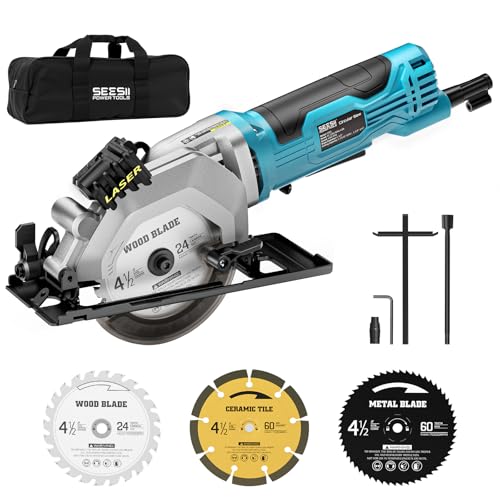
The SEESII mini saw is a compact, corded option with a 4.8A motor delivering up to 4000 RPM, optimized for precise, straight cuts on laminate, wood, and other materials. It includes a laser guide and compatibility with dust extraction for a cleaner workspace. This model is best for DIYers or small-scale projects where portability and precision matter. A potential limitation is its smaller blade size, which may require more passes on thicker boards.
CUTTEREX 13” Laminate/Vinyl Floor Cutter

The CUTTEREX laminate/vinyl floor cutter offers a large 13″ width and 5/8″ thickness capacity, suitable for a wide range of materials including engineered wood, VCT, LVT, SPC, and more. It emphasizes angle versatility (0°, 15°, 22.5°, 30°, 45°) and features an integrated ruler with clear angle indicators to improve accuracy. It’s ideal for indoor projects where noise and dust must be minimized, and the LED light and wheels aid mobility. A noted limitation is the lack of electric power needs for operation, which means manual effort is required for all cuts.
Buying Guide: Laminate Floor Cutting Essentials
- Material compatibility: Look for saws explicitly rated for laminate, engineered wood, and vinyl. Some models excel at multi-material cutting with additional blades, while others focus on pure laminate performance.
- Cut accuracy features: Laser guides, edge guides, bevel stops, and clear rulers help achieve straight, precise cuts and minimize waste.
- Portability and weight: For projects across multiple rooms, a lighter, compact model reduces fatigue and increases site-to-site mobility.
- Blade options: A saw with interchangeable blades broadens versatility (wood, tile, plastic, metal). Check blade diameter and compatibility.
- Power and speed: Higher amperage motors deliver cleaner cuts through dense laminates but may add weight. Balance power with maneuverability for the project size.
- Dust control: Dust collection or compatible vacuums help maintain visibility and reduce debris on indoor installations.
- Indoor use considerations: For silent or dust-free cutting, consider tools marketed for indoor use or those with no electricity requirements, like floor cutters, when appropriate.
What to consider when choosing
- Project scale: Large rooms benefit from more powerful, larger-blade saws; small rooms may be better served by compact models.
- Cut types needed: If bevel cuts are frequent, prioritize models with reliable bevel stops and positive-angle settings.
- Maintenance: Check blade availability and replacement costs; some machines use standard blades found across multiple brands.
Common buying scenarios
- New laminate installer on a tight budget may prefer compact, affordable options with laser guides for precision.
- Pro contractors handling extensive installations value a durable saw with a strong motor and comfortable grip for long sessions.
- DIY enthusiasts focusing on indoor renovations might favor dust-free or no-electricity-required cutters for quiet operation.
FAQ
- Is a specialized laminate saw necessary? Not always, but dedicated laminate or multi-material saws simplify precision cuts and reduce chipping on edges.
- What blade is best for laminate? A carbide-tipped blade designed for laminates or engineered wood typically provides clean cuts with minimal splintering.
- Can these saws cut tile or metal? Some models include additional blades for tile or soft metals, but check manufacturer guidance for laminate-specific results.
- Do laser guides improve accuracy? Yes, laser guides help establish a straight cut line, especially on long rip cuts.
- Should I buy a corded or cordless model? Corded saws generally offer more consistent power for long cuts, while cordless models improve portability at the expense of steady power under load.
- What safety features matter? Look for blade guards, spindle locks for easy blade changes, and ergonomic grips to reduce fatigue during extended use.