Finding an affordable finish nailer that still delivers solid performance for trim, moulding, baseboards, and cabinetry is possible with the right options. This guide highlights five cost-conscious finish nailers that balance price, reliability, and user-friendly features. Each product is designed for common finish tasks and offers varying power sources, sizes, and drive types to fit different projects and budgets.
| Product | Brand | Primary Use |
|---|---|---|
| NuMax Pneumatic 3-in-1 Nail Gun (16 GA & 18 GA) | NuMax | Baseboards, moulding, furniture trim |
| TROOZY Pneumatic Brad Nailer / Cordless | TROOZY | Fine trim, panels, cabinetry |
| 3PLUS HDA1564SP 15 Gauge Angled Finish Nailer | 3PLUS | Angled finish trim, moulding |
| Metabo HPT NT65M2S Finish Nailer | Metabo HPT | Molding, chair rails, cabinets |
| DEWALT 20V Max Finish Nailer (DCN660B) | DEWALT | Cordless finish work, fast setup |
NuMax 3-in-1 Finish Nailer (16/18 GA)
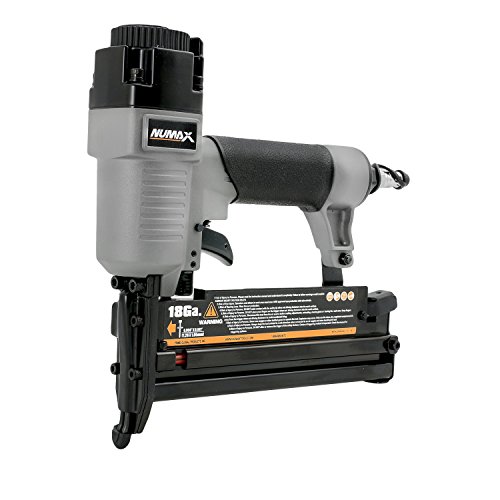
The NuMax SL31 combines a 16-gauge finish nailer with 18-gauge brad nails and a stapler in one tool. It is designed for baseboards, cabinet backs, chair rails, shoe and crown moulding, furniture trim, and window casings. The buildup in one drive blade promises durability for repeated use in trim projects. Weighing a typical pneumatic setup, this tool aims to reduce the need to switch between separate nailers for small to mid-size trim runs. It accepts 3/4″ to 2″ 16 GA nails, 5/8″ to 2″ 18 GA brads, and 5/8″ to 1-5/8″ 18 GA staples.
TROOZY Pneumatic Brad Nailer / Cordless

The TROOZY system blends pneumatic power with cordless convenience. It drives 18-gauge brad nails (3/4″–2″) and 1/4″ narrow crown staples (3/4″–1-5/8″). The tool is designed to maintain consistent drive power for pine, MDF, and hardwood while minimizing jams caused by dust or spring fatigue. A 100-nail starter kit helps push projects along, while dual firing modes offer precision for trim and rapid-fire for larger areas such as panels or upholstery work. The unit targets broad finish tasks with extended capacity in mind.
3PLUS HDA1564SP 15 Gauge Angled Finish Nailer

This angled finish nailer uses 15-gauge DA nails from 1-1/4″ to 2-1/2″ and features tool-free depth adjustment for flush fastening into varying materials. Its Work Contact Element helps prevent accidental firing, and a no-mar tip protects the work surface. The angled design is particularly helpful for tight corners on moulding and chair rails, enabling a clean, professional finish with less maneuvering in confined spaces.
Metabo HPT NT65M2S Finish Nailer

The NT65M2S is a lightweight, 16-gauge finish nailer designed for consistent performance on molding, chair rails, and cabinetry. It operates with a selective actuation switch that toggles between bump and sequential firing modes, allowing for quick work when speed is needed and precise placement when detail matters. Nails range from 1″ to 2-1/2″, supporting a broad range of trim materials while keeping fatigue low during long sessions.
DEWALT 20V Max Finish Nailer (DCN660B)

The DEWALT DCN660B is a battery-powered finish nailer that eliminates the need for a compressor, hose, or gas cartridges. The 16-gauge finish nailer features a brushless motor for extended runtime and durability, with a tool-free selectable trigger for sequential or contact actuation. Its cordless design makes it ideal for areas without easy access to power outlets or for quick, portable trim tasks. This model supports 1-1/4″ to 2-1/2″ nails, suiting many common interior finishing jobs.
Buying Guide: Key Considerations For Budget Finish Nailer Purchases
- Power source: Choose pneumatic for steady power and continuous use, cordless for portability, or a hybrid option if you frequently work away from outlets.
- Nail gauge and length: 16-gauge nails are common for trim; 15- and 18-gauge options suit fine moulding and delicate work. Consider ranges up to 2-1/2″ for thicker baseboards.
- Angled vs. straight magazine: Angled nailers excel in corners and tight spaces; straight nailers are simpler and quicker for flat surfaces.
- Depth adjustment: Tool-free depth control helps achieve flush finishes without marring surfaces.
- Jam clearance and maintenance: Look for easy-access jams and minimal dust buildup, especially in longer projects.
- Weight and ergonomics: Lighter tools reduce fatigue during extended sessions; balance matters for precision.
- Firing modes: Sequential firing is precise; bump or rapid-fire modes speed up large areas but may require more control.
- Accessories and extras: Starter nails, spare no-mar tips, and carrying cases add value; consider if included in the package.
- Price-to-performance: Balance upfront cost with durability, load capacity, and expected project scope to maximize value.
- Project context: For small renovations, cordless models can be more convenient; for workshop-heavy tasks, pneumatic tools often offer steady power and lower operating costs.