When choosing a carbide tip chainsaw blade, look for durability, compatibility with your bar, and how well the chain maintains edge under harsh work. This guide highlights five top carbide-tipped chains and related high-performance cutting tools. It targets professional arborists, land-clearing crews, and serious DIYers who cut dirty wood, frozen timber, or hardwoods. Below is a quick buyer’s table of the recommended options, followed by in-depth product insights.
| Product | Bar Size / Pitch | Drive Links | |
|---|---|---|---|
| BYANE 20-Inch Carbide Chainsaw Chain | 20-Inch, 3/8″ Pitch | 72 | Longer-lasting edge in heavy-duty cutting |
| BYANE 18-Inch Carbide Chainsaw Chain | 18-Inch, 3/8″ LP Pitch | 62 | Low-kickback design for controlled cuts |
| KAKEI Carbide Chainsaw Chain | 20 Inch, 3/8″ Pitch | 72 | All-purpose, fits many saws, durable carbide tips |
| RazEdg 18 Inch Carbide Chainsaw Chain | 18-Inch, 3/8″ LP Pitch | 62 | Extended lifespan, cost-effective over time |
| Dunhil 9″ x 20T Brush Cutter Blades | 9″ x 20T (Carbide Tip) | — | Brush-cutting and small-tree work in rough terrain |
BYANE 20-Inch Carbide Chainsaw Chain
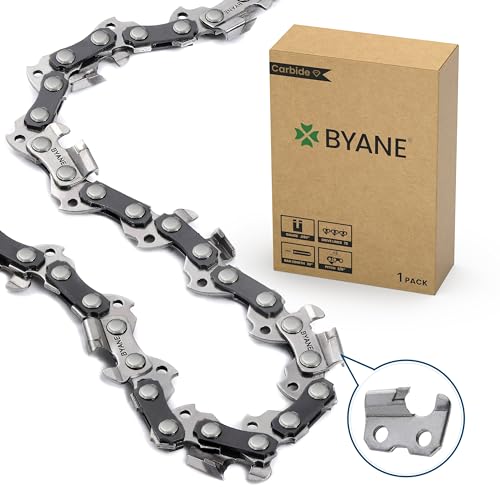
Best for professional arborists tackling large-diameter hardwoods. This chain uses patented carbide-tipping for exceptional wear resistance, staying sharp up to 10 times longer than standard steel chains. It’s designed for 20-inch guide bars with a 3/8″ pitch and .050″ gauge, 72 drive links. The cutters require a 7/32″ diamond-coated sharpener for maintenance, as standard files are not effective on carbide. Choose this if you need extended edging life in demanding environments, such as dirty wood or frozen timber.
Who it’s best for: professionals performing heavy-duty felling and removal where frequent sharpening is impractical. Why: carbide tips stay sharper longer, reducing downtime. Caution: confirm your guide bar parameters to ensure precise fit, and use a diamond-coated sharpener for maintenance.
BYANE 18-Inch Carbide Chainsaw Chain

Best for mid-size saws and many pro-grade bar setups. This 18-inch chain uses 3/8″ Low Profile Pitch, .050″ gauge, and 62 drive links. The chain’s carbide tips stay sharp up to 10× longer than standard chains. It emphasizes durability with Japanese chrome-plated leads and hardened rivets that resist wear under high loads. It’s well-suited for dirty wood, sand-caked logs, and frozen hardwoods. Caution: verify your guide bar parameters to ensure precise fit and correct sharpener size (5/32″ diamond-coated) for carbide maintenance.
Who it’s best for: operators who balance portability with heavy cutting in tough environments. Why: improved wear resistance and smoother cutting in challenging wood. Limitation: specialized diamond-coated sharpener required for routine maintenance.
KAKEI Carbide Chainsaw Chain 20 Inch
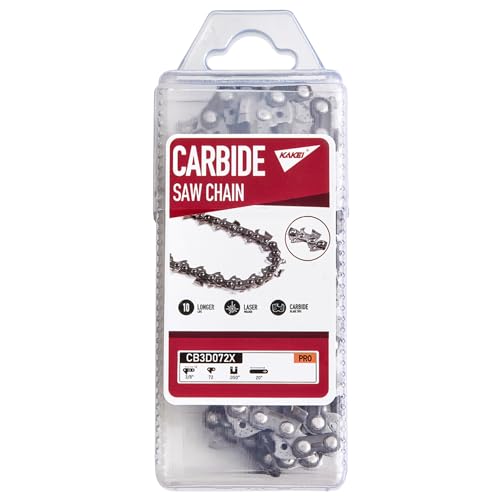
Best for versatile compatibility across popular saw models. KAKEI offers a 20-inch chain with 3/8″ pitch, .050″ gauge, and 72 drive links featuring full chisel carbide-tipped cutters. It warns about potential kickback and advises users to check the owner’s manual to confirm pitch, gauge, and drive link counts before ordering. The carbide tips provide up to 10× longer sharpness, making it ideal for hardwood, treated lumber, and frozen wood where standard chains dull quickly. Caution: kickback risk remains a consideration; ensure experienced operation and training.
Who it’s best for: users who need a durable, widely compatible carbide chain with a strong cut on tough wood. Why: balanced durability and compatibility across brands. Limitation: contains a kickback warning; proper safety and training are essential.
RazEdg 18 Inch Carbide Chainsaw Chain
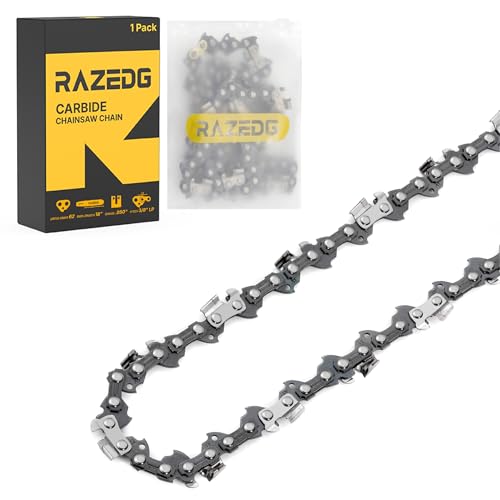
Best for long-term maintenance savings and high-duty use. RazEdg uses tungsten carbide tips laser-welded to cutter heads, delivering up to 10× longer edge life than standard chains. It’s an 18-inch chain with 3/8″ Low Profile Pitch and 62 drive links. The design aims to reduce sharpening frequency, lowering downtime. It targets professionals seeking durability in harsh conditions, including dirty wood and frozen timber. Caution: verify guide bar markings or owner’s manual for exact pitch, gauge, and drive link counts.
Who it’s best for: field crews looking to minimize downtime and chain replacements. Why: extended lifespan translates to lower operating costs. Limitation: higher upfront cost compared to standard steel chains.
Dunhil 9″ x 20T Brush Cutter Blades (Carbide Tip)

Best for vegetation clearance and brush-cutting in tight spaces. This set includes 9″ x 20T brush cutter blades with carbide tips, offering sharper and more wear-resistant performance for dense vegetation. It includes a universal fit and adapter kits for multiple machines. It’s suitable for straight-shaft trimmers and some chainsaw applications when used with compatible adapters. Caution: verify arbor size and compatibility to avoid mounting issues.
Who it’s best for: crews needing aggressive cutting through brush and small trees with minimal blade dulling. Why: carbide tips improve wear resistance in non-wood substrates. Limitation: not a dedicated chainsaw chain; verify tool compatibility before use.
9x20T Brush Blades With Carbide Tip Set

Best for lawn mower-to-tractors and versatile outdoor maintenance. This set includes 9″ x 20T chainsaw tooth brushes, 10″ x 80T carbide tip blades, and universal adapters. The blades suit straight-shaft trimmers, cutters, and weed eaters with standard arbor sizes. They’re designed to be flexible across several brands and applications. Caution: avoid impact with stones or hard objects to prevent blade deformation.
Who it’s best for: homeowners and contractors needing multi-application blade kits. Why: broad compatibility and carbide-enhanced wear. Limitation: kit includes mixed blade types; ensure correct use and safety alignment for each tool.
Buying Guide: Carbide Tip Chainsaw Blades And Accessories
- What to consider: bar size, pitch, gauge, and drive links. Match these precisely to your saw’s guide bar to ensure proper engagement and safe operation.
- Carbide tips: look for full carbide-tipped cutters and brazed tips. They offer extended edge life but require proper sharpening techniques and diamond-coated tools.
- Maintenance: carbide blades often require diamond-coated sharpeners rather than standard steel files. Check manufacturer recommendations for the correct sharpener size.
- Durability vs. cost: carbide blades cost more up front but can reduce replacement frequency when cutting tough wood, frozen timber, or dirty wood.
- Safety: low-kickback designs and operator training help minimize kickback risks. Always follow saw safety guidelines and wear protective gear.
- Compatibility: some products are designed for brush cutters or multi-tool kits; confirm compatibility with your current saw or tool system before purchasing.
Frequently Asked Questions
- What is the main benefit of carbide-tipped chains? – They stay sharp longer and resist wear in tough materials, reducing sharpening and replacement frequency.
- Do all carbide chains fit every saw? – No. Verify bar length, pitch, gauge, and drive link counts to ensure a precise fit.
- Is carbide harder to sharpen? – Yes; carbide requires diamond-coated sharpeners or professional services, not standard files.
- Can carbide chains cause more kickback? – Proper technique and low-kickback geometry reduce kickback risk; always use training and safety equipment.
- When should I choose a low-profile (LP) pitch? – LP is often preferred for lighter cuts and reduced kickback, especially on smaller bars.
- Are these suitable for brush cutting? – Some items are designed for brush cutters with carbide tips; verify tool compatibility before use.