Looking for carbide reciprocating saw blades that last longer and cut tougher metals? This guide highlights top options, explains who each blade is best for, and helps you compare strengths. Ideal buyers include metalworkers handling thick steel, demolition pros tackling cast iron and rebar, and DIY builders cutting through high-alloy metals. The selections below cover industrial-grade endurance, general-purpose heavy-duty use, and specialized performance in demanding materials.
| Product | Best For | Key Advantage |
|---|---|---|
| EZARC R678HM Endurance 6″ 8TPI 3-Pack | Thick metal, cast iron, alloy steel | Up to 50x longer life; carbide tips |
| USEWIN 3 Pack 6″ 8TPI | Metal pipes, angle iron, rebar | High bi-metal with carbide teeth; robust design |
| Diablo DS0908CF Steel Demon 6″ 8TPI | Extreme metal cutting | Ultra-hardened carbide edge; long life |
| EZARC Obsidian R678HMK 6″ 8TPI | Thick metal, cast iron, alloy steel | TiAlN carbide tech; up to 100x life |
| Diablo DS0909CGP3 Demo Demon 9″ 6/9TPI | General purpose cuts in wood, metal, nail-embedded wood | Variable tooth design; broad material coverage |
EZARC R678HM Endurance 6″ Carbide Blade (3-Pack)
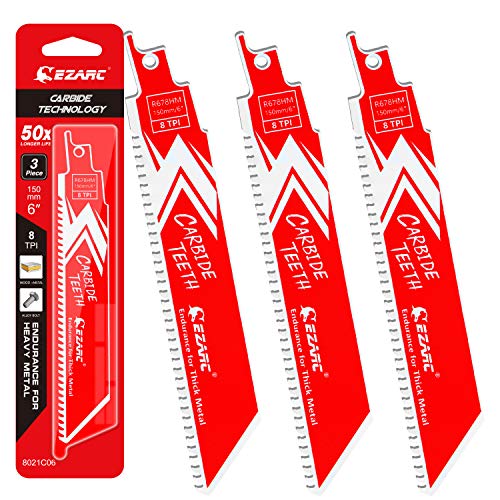
The EZARC R678HM Endurance blades use carbide technology to deliver significantly longer life when cutting thick metal. Designed with an 8 teeth-per-inch configuration, they excel in high-alloy construction steels, stainless steels, rebar, and car beams. Best for professionals handling demanding metal demolition or fabrication where blade wear is a major concern.
Who it’s best for: metalworkers and demolition pros who need reliable performance in tough metals and want fewer blade changes. Why selected: the carbide tip and durable construction target extended life in high-stress metal cutting.
Caution: performance depends on material and feed rate; very hard alloys can still wear blades over time if cut settings are aggressive.
USEWIN 3 Pack Carbide Reciprocating Blades (6″)

These USEWIN blades use high bi-metal material with carbide teeth for excellent hardness and toughness. They promise up to 50x longer life than standard bi-metal blades and feature a tooth design intended to reduce friction and heat, helping maintain sharpness for smoother cuts in metal applications and some cutting tasks where precision is important.
Who it’s best for: builders seeking long-lasting blades for metal cutting at a mid-range price point. Why selected: robust carbide teeth and a design that balances life with cutting speed.
Caution: mainly described for metal cutting; performance in very hard alloys may vary with technique and material composition.
Diablo DS0908CF Steel Demon Carbide Blade (6″)

Diablo’s Steel Demon carbide teeth blade targets extreme metal cutting. The ultra-hardened cutting edge and TiCo Hi-Density carbide tip provide high durability for stainless steel, high-strength alloys, cast iron, and similar materials. A Perma-SHIELD non-stick coating helps resist heat and buildup during demanding cuts.
Who it’s best for: professionals performing heavy metal demolition where maximum blade life and cutting power are required. Why selected: strongest carbide edge and coating for aggressive metal work.
Caution: coated blades can still wear if cutting through very thick, dense materials with high feed pressures or improper alignment.
Diablo DS0909CGP3 Demo Demon Carbide Blades (9″)

These Diablo Demo Demon blades are designed for general purpose cuts that span wood, nail-embedded wood, plastic, and metal with a patented variable tooth design. The carbide teeth provide extended life across multiple materials, and the Perma-SHIELD coating reduces friction and heat buildup.
Who it’s best for: job sites needing versatile blades that cover multiple materials. Why selected: broad material compatibility with a focus on longevity and smoother cuts.
Caution: variable tooth blades may cut slower on very dense metals compared with dedicated metal-only carbide blades.
EZARC Obsidian Carbide Reciprocating Blade (Pro) 6″ 8TPI

The Obsidian line introduces TiAlN-coated carbide tips with an optimized 8 TPI design for stable, heat-resistant performance in demanding thick metal work. Claims include up to 100x longer life than standard bi-metal blades and faster, smoother cuts due to reduced friction.
Who it’s best for: users who require extreme longevity and efficiency on hard metals like stainless steel and cast iron. Why selected: advanced coating and tip design that target heat resistance and life extension.
Caution: as with all carbide blades, cutting technique and material type influence real-world benefits; improper use can offset gains in blade life.
Buying Guide: Carbide Reciprocating Blades For Thick Metal
What counts as carbide in these blades?
Carbide blades use carbide tips or carbide teeth embedded in a steel body. This composition improves wear resistance, allowing longer life in tough materials such as stainless steel, high-alloy steels, and cast iron.
When should you choose an 8TPI blade?
Eight teeth per inch is a balance for metal cutting: it cuts faster than finer teeth while maintaining control and reducing tooth chatter in thick sections of metal.
Blade length considerations
Shorter blades (6″) excel in tight spaces and quick demolition cuts. Longer blades (9″) cover more surface area and can cut through thicker sections with fewer pedal strokes but may be less maneuverable in cramped work areas.
Coatings and coatings beyond carbide
Coatings like TiAlN reduce heat buildup and prevent gumming. Perma-SHIELD coatings help resist corrosion and keep blades sliding through materials more freely. These features can extend the useful life in challenging cuts.
Matching blades to materials
For thick metal, high-alloy steels, stainless steel, and cast iron, carbide blades perform best. For wood or nail-embedded wood, consider blades that balance carbide performance with wood-specific tooth designs.
Practical buying tips
- Choose a blade set if you frequently switch between metal types to minimize blade changes.
- Look for blades with longer claimed life in metal cutting for high-demand jobs.
- Check for coatings that reduce heat buildup and sticking to improve performance in hot cuts.
FAQ
- Q: Do carbide blades fit standard reciprocating saws?
- A: Yes, most carbide blades use common shank sizes compatible with standard reciprocating saws.
- Q: Are carbide blades worth the extra cost?
- A: For frequent metal cutting, carbide blades typically offer longer life, reducing overall blade changes and downtime.
- Q: Can I use carbide blades for wood?
- A: Some carbide blades are designed for mixed-material cuts; however, dedicated wood blades may cut faster and smoother in wood-only tasks.
- Q: How should I maintain carbide blades?
- A: Use proper feed pressure, keep the blade aligned with the cut, and avoid overheating to maximize life.
- Q: What is the difference between a 6″ and 9″ blade?
- A: 6″ blades are more maneuverable in tight spaces; 9″ blades cover more material per stroke and suit deeper cuts.