Selecting the right carbide miter saw blade can elevate the quality and efficiency of your woodworking projects. This guide explores top-rated blades designed to deliver clean, precise cuts on a variety of wood types, focusing on features like tooth count, kerf thickness, and durability. Below is a comparison table summarizing key specifications of the selected premium blades for your easy reference.
| Product | Diameter | Tooth Count | Arbor Size | Kerf Thickness | RPM Rating |
|---|---|---|---|---|---|
| WEN BL1080 80-Tooth | 10 inches | 80 | 5/8 inch | 1/10 inch (2.4 mm) | 6000 |
| DEWALT 12″ 100-Tooth Fine Finish | 12 inches | 100 | 1 inch | Ultra-thin | Optimized for performance |
| WEN BL1040 40-Tooth | 10 inches | 40 | 5/8 inch | 1/10 inch (2.4 mm) | 6000 |
| DEWALT 12” Combo Pack 40 & 60 Tooth | 12 inches | 40 & 60 | 1 inch | Ultra-thin | Optimized accuracy |
| WEN BL1200 100-Tooth 12-Inch | 12 inches | 100 | 1 inch | 1/10 inch (2.8 mm) | 6000 |
WEN BL1080 10-Inch 80-Tooth Carbide Blade
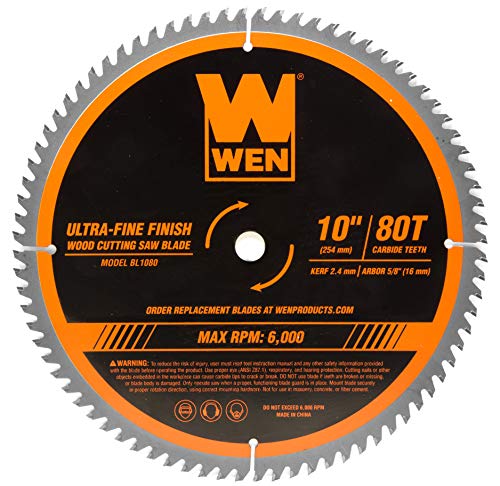
The WEN BL1080 features an 80-tooth carbide-tipped blade designed for ultra-fine finishes on miter and table saws. With a 10-inch diameter and a 5/8-inch arbor, it supports up to 6000 RPM, making it suitable for both hard and softwoods. The ultra-thin 1/10-inch kerf (2.4 mm) allows for clean, efficient cuts, reducing material waste. This blade is ideal for professionals seeking precision and smooth cuts in woodworking projects.
DEWALT 12-Inch 100-Tooth Fine Finish Blade

The DEWALT 12-inch 100-tooth blade offers enhanced durability with up to 3X longer life and fine finish performance. It incorporates a patented body slot design that minimizes vibration, improving user comfort and cut accuracy. Optimized tooth geometry further ensures precise cuts, suitable for demanding woodworking tasks requiring smooth edges and minimal tear-out on delicate materials.
WEN BL1040 10-Inch 40-Tooth Carbide Blade
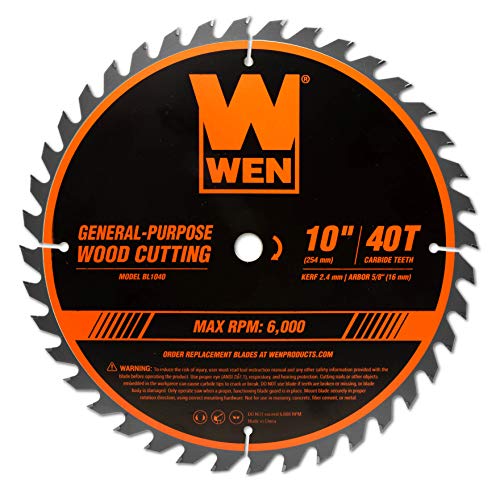
This 40-tooth 10-inch carbide blade from WEN suits general-purpose cutting on both hard and softwood. Its ultra-thin 1/10-inch kerf allows for smooth cuts with less resistance, improving efficiency and reducing waste. Rated for speeds up to 6000 RPM with a standard 5/8-inch arbor, this blade works comfortably in miter or table saws where fewer teeth result in faster, rougher cuts.
DEWALT 12” Miter Saw Combo Pack

The DEWALT combo comes with two blades, a 40-tooth and a 60-tooth, designed for versatility in fine finishing and general cutting. Both feature patented body slots for vibration reduction and optimized tooth geometry for precision. The blades are engineered for increased accuracy with up to 3X longer life, making this pack a practical choice for professionals who require multiple cutting options for various materials.
WEN BL1200 12-Inch 100-Tooth Fine Finish Blade

With a large 12-inch diameter, the WEN BL1200 offers a 100-tooth configuration for ultra-fine finish cuts. It supports a 1-inch arbor and runs up to 6000 RPM. An ultra-thin 1/10-inch kerf (2.8 mm) enhances cut efficiency while maintaining clean edges. This blade is well-suited for detailed woodworking and finish carpentry where cutting accuracy and smooth edges are critical.
Buying Guide For Carbide Miter Saw Blades
When choosing a carbide miter saw blade, consider the following key factors to ensure optimal performance for your woodworking tasks:
Blade Diameter And Arbor Size
Verify that the blade diameter matches the capacity of your miter saw. Common sizes include 10 and 12 inches. Arbor size must also be compatible (usually 5/8 inch or 1 inch) to ensure proper mounting and safe operation.
Tooth Count And Cut Type
Higher tooth counts (80 to 100 teeth) provide smoother, fine finish cuts ideal for trim and cabinetry. Lower tooth counts (40 to 60 teeth) cut faster but with rougher edges, suitable for framing and general carpentry. Choose based on the required finish quality and material type.
Kerf Thickness
The kerf, or cut width, affects both material waste and cutting speed. Ultra-thin kerfs (around 1/10 inch) reduce material loss and require less power, promoting cleaner cuts. However, thicker kerfs may provide more stability on tougher materials but generate more waste.
Material And Tooth Design
Carbide tips enhance blade durability and stay sharper longer compared to steel. Tooth geometry and grind type also influence cut quality, reducing vibration and tear-out. Look for blades with patented slot designs or optimized tooth shapes for precise, smooth results.
RPM Rating And Saw Compatibility
Ensure the blade’s RPM rating meets or exceeds your saw’s maximum speed. Over-speeding can damage the blade and compromise safety. Compatibility with your specific saw model is essential for secure installation and efficient operation.
Application Specificity
Consider what materials you’ll be cutting most frequently — hardwood, softwood, plywood, or laminated panels. Some blades are optimized for crosscutting or fine finishing on veneer and softwoods, while others handle thicker or mixed wood types better.
Package Options
Some manufacturers offer combo packs with multiple blades for different cutting purposes. Investing in such sets can provide versatility for a range of woodworking projects, allowing you to switch blades depending on task demands.