Finding an affordable dust collector that still delivers solid performance can be challenging. This guide highlights budget-friendly options that balance price with effective dust control for hobbyists and home shops. Five models from trusted brands offer compact design, easy mobility, and practical features. Below is a quick summary table of the selected products to help you compare at a glance.
| Product | Brand | Key Features |
|---|---|---|
| WEN DC3401 | WEN | 5.7-amp motor, 12-gallon bag, 4″ dust port, mobile base, optional wall mount |
| WEN DC1300 | WEN | 1300 CFM, 14-amp motor, dual 4″ inlets, 50-gallon bag, mobile base |
| WEN DC3474 | WEN | 7.4-amp motor, 9″ impeller, 4″ dust port, wall mount option |
| DEWALT DXVCS002 | DEWALT | High-efficiency cyclone separator, 6-gallon tank, compatible with various vacuums |
| VEVOR Dust Collector | VEVOR | 1.6-HP motor, 1.8-gallon capacity, universal 2″ inlet, cabinet compatibility |
Choosing the right budget option depends on your tools, room size, and how often you work. The models below are organized to help you compare airflow, dust containment, portability, and expansion potential for future projects.
WEN DC3401 Dust Collector Review
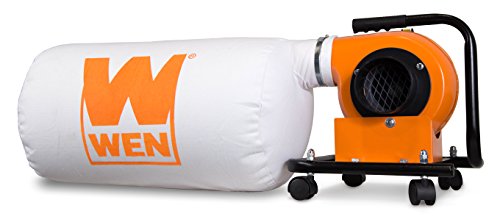
The WEN DC3401 combines a compact footprint with a practical 12-gallon dust collection bag and a 5.7-amp brushed motor. A 4-inch dust port supports connection to a range of woodworking tools, enhancing compatibility in a small shop. The unit includes an onboard carrying handle to simplify transport and storage, making it a suitable option for hobbyists who move equipment between a garage, shed, or workspace. Its balance of size, airflow, and portability makes it a common pick for budget-conscious woodworkers who prioritize mobility without sacrificing basic dust control.
WEN DC1300: Budget Power, Big Capability

The WEN DC1300 delivers up to 1,300 CFM of air movement with a 14-amp motor, providing robust suction for multiple tools. It features dual 4-inch inlets, enabling simultaneous connections or flexible tool layout in a small shop. A 50-gallon vertical collection bag reduces the need for frequent emptying, helping to maintain consistent performance across longer sessions. This model is a budget-friendly choice for workshops that require stronger airflow without stepping up to industrial-grade equipment.
WEN DC3474: Wall-Mount Ready Dust Collector

The WEN DC3474 uses a 7.4-amp induction motor and a 9-inch impeller to move up to 600 CFM of air. The 4-inch dust port remains compatible with a wide range of tools. A notable feature is the option to mount the unit on a wall, freeing floor space and reducing clutter in tight shops. This makes it a practical budget choice for woodworkers who want a stronger motor and a space-saving installation without sacrificing portability.
DEWALT DXVCS002 Dust Separator

DEWALT’s high-efficiency cyclone separator captures wood chips and debris before they reach a vacuum, reducing suction loss and the need for frequent filter or bag replacement. Its wide application includes wood dust, drywall debris, concrete dust, and more. The base features a four-caster design for stability and mobility, and it supports standard port sizes for broad compatibility. This model is well-suited for shop vac users seeking to improve filter life and maintain consistent airflow in budget-conscious setups.
VEVOR Dust Collection System: Universal Fit

The VEVOR dust collection system emphasizes a robust 1.6-HP motor paired with a 1.8-gallon dust capacity, designed for continuous operation without frequent emptying. Its universal 2-inch inlet makes it compatible with a wide range of sandblasting cabinets and media blasters, offering a versatile option for workshop environments beyond woodworking. This model appeals to buyers seeking strong suction and a compact footprint that can be integrated into existing workstations without a large investment.
Buying Guide: Key Purchase Considerations
- Airflow and suction: Look for models delivering sufficient CFM for your tools. In small shops, 600–1,300 CFM is common; prioritize units with multiple inlets if you plan to run more than one tool at once.
- Port size and compatibility: A 4-inch dust port is a standard in many tools; ensure the collector’s ports fit your equipment or consider adapters for flexibility.
- Mobility and space: If space is limited, options with wheels or wall-mount capabilities help maintain an organized work area. Portable units are ideal for rotating between projects.
- Capacity and maintenance: Larger collection bags reduce emptying frequency, but larger units require more floor space. Reusable or easy-to-clean filters save time and cost over the long term.
- Noise and durability: Induction motors tend to run smoother and quieter than brushed motors. Consider user reviews on noise levels if you work late or in shared spaces.
- Installation needs: Some models support wall mounting or base mounting. Check whether your workspace allows for secure installation and accessible venting.
- Expansion potential: If you foresee adding tools, select a system that accommodates multiple inlets or offers compatible upgrade paths.
- Budget balance: Prioritize essential features first (suction, durability, portability) and assess whether a slightly pricier model provides meaningful long-term value.
In summary, the models listed here provide solid dust control without breaking the bank. When choosing, consider the size of your workspace, the number of tools you’ll connect, and how often you’ll need to move the unit. The right budget dust collector should keep your shop cleaner, improve tool performance, and reduce maintenance time over time.