The right blade makes a big difference in radial arm saw performance, delivering smoother crosscuts, reduced chipping, and longer blade life. This guide highlights five top-rated options that excel for crosscuts and finishing work on both soft and hardwoods. Each blade brings a different balance of kerf width, hook angle, and carbide quality to suit professional shop use.
Buying Guide Snapshot:
| Product | Brand | Key Focus | Arbor |
|---|---|---|---|
| Echo Corner 10″ Fine Finish | Echo Corner | Negative hook angle for controlled crosscuts | 5/8″ |
| OSHLUN SBW-100060N | OSHLUN | Finishing ATB with negative hook | 5/8″ |
| WEN BL1040 | WEN | Ultra-thin kerf for clean cuts | 5/8″ |
| KuangBBBTools 9″ 40T | KuangBBBTools | General purpose for soft/hardwood | 5/8″ |
| CMT 219.080.10 | CMT ORANGE TOOLS | Low negative hook for fine finishes | 5/8″ |
Echo Corner 10 Inch Fine Finish Sliding Compound Saw Blade

The Echo Corner blade features an 80-tooth configuration with a negative hook angle, designed to minimize surface chipping on crosscuts. The negative face of the tooth reduces splintering and improves surface finish, particularly when routing through delicate or hard-to-cut woods. This blade emphasizes control, helping the operator avoid tearing or pulling the workpiece during feed, which is especially beneficial on radial arm and sliding miter saws.
OSHLUN SBW-100060N 10-Inch Finishing ATB Blade
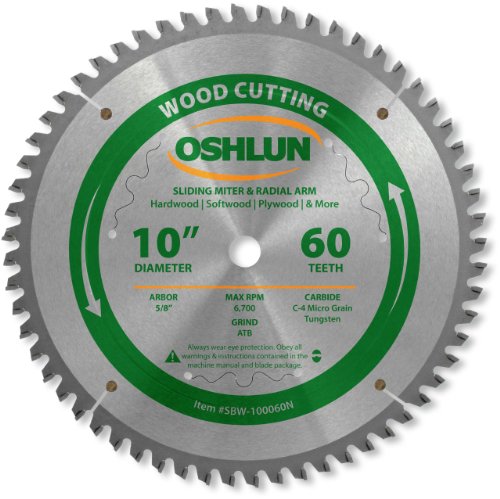
This 10-inch blade uses a negative hook angle with ATB tooth geometry for precise, low-chatter finishing passes. The 60-tooth count is a balanced choice for smooth crosscuts in a variety of hardwoods and softwoods. Its thin kerf reduces material waste and minimizes workpiece deflection, making it suitable for sliding miter and radial arm saw operations where clean edges matter most.
WEN BL1040 10-Inch Carbide-Tipped Saw Blade
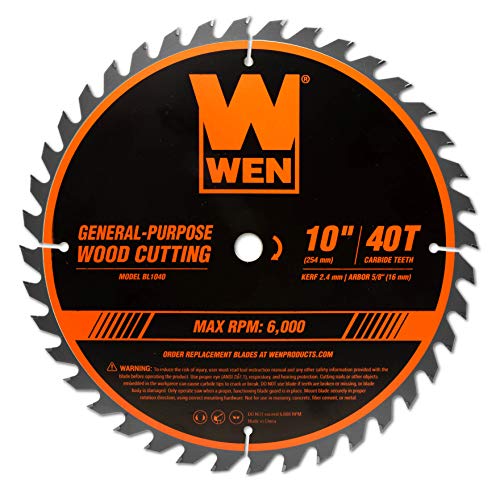
The WEN BL1040 is designed for high-speed crosscutting with a 40-tooth carbide setup. It features a 5/8-inch arbor and a kerf tuned for efficiency at up to 6000 RPM. This blade delivers a solid finish on a variety of woods, from soft to hardwoods, while maintaining stable cut lines for accurate radial arm saw performance.
KuangBBBTools 9″ 40 Teeth Blade

Designed for general purpose performance, this 9-inch blade combines 40 carbide-tipped teeth with a 5/8″ arbor and a 0.1″ kerf. Its ATB tooth design supports smooth crosscuts through both soft and hardwoods, laminates, and plywood. It’s a versatile option for combo cutting tasks on miter, slider, or radial arm saws, with a focus on a clean finish and efficient material removal.
CMT 219.080.10 10-Inch 80-Tooth Blade
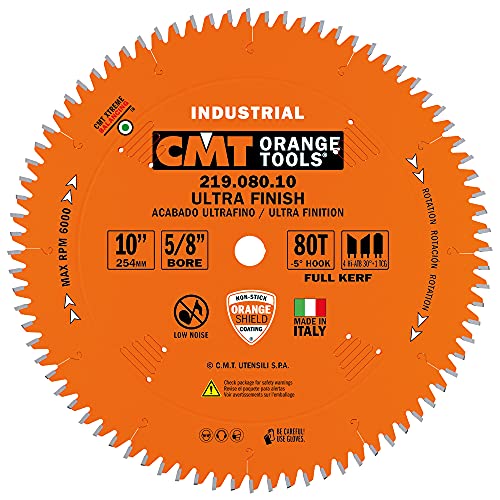
This CMT blade is tailored for fine finish crosscuts with an 80-tooth arrangement and a negative hook angle. Its 0.122 kerf and 0.100 plate thickness, combined with a -5° hook, help reduce splintering on delicate cuts. It’s suitable for taking precise finishes on soft and hard woods, plywood, and laminates when used on radial arm and sliding miter saws.
OSHLUN SBW-120072N 12-Inch 72-Tooth Blade

With a negative hook and a thin kerf, this 12-inch blade is designed for finishing passes on longer crosscuts. The 72-tooth configuration provides a balance of speed and finish quality, while the negative hook angle helps minimize tear-out and kickback in crosscut operations typically encountered with radial arm and sliding miter saws.
OSHLUN SBW-085060 8-1/2″ Negative Hook Blade
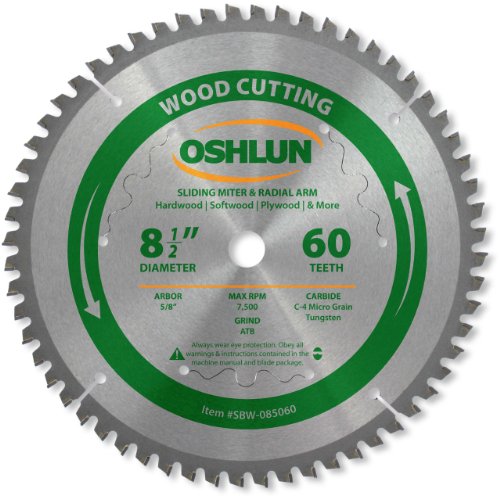
This finishing ATB blade for smaller saws emphasizes negative hook design and thin kerf for fast, controlled cuts. It’s well-suited for miter and radial arm setups where compact blades are preferred, delivering smooth edges with a professional finish on a range of wood products.
FOXBC 10 Inch Combination Saw Blade

This 10-inch, 50-tooth blade is a versatile combination blade with a 0.098″ kerf and a 15° hook angle. It’s designed for general ripping and crosscutting in wood and composites, delivering smoother finishes when used on radial arm or sliding miter saws. The blade’s ATB tooth arrangement helps reduce tear-out on denser woods.
Buying Guide: Key Purchase Considerations
- Hook angle: Negative hook blades reduce splintering and improve control on crosscuts, particularly important for finished surfaces. Positive hook blades may be faster for ripping but can pull material through the blade.
- Tooth configuration: ATB (high-ATB for finishing), or 80-tooth options deliver a finer finish, while lower tooth counts (40-60T) offer faster stock removal and are still suitable for clean crosscuts on softer woods.
- Kerf width: Thinner kerf blades create less waste and require less power for the same cut, beneficial for thinner materials or older saws. Thicker kerfs are typically stronger and may last longer in tough cuts.
- Arbor compatibility: Most listed blades use a 5/8″ arbor, a common standard for 10″ to 12″ saws. Verify your radial arm saw’s arbor before purchase.
- Material compatibility: Carbide-tipped blades provide long life on hardwoods and plywood; consider specialty coatings or tooth geometry for laminate or composite materials to minimize chipping.
- Max RPM rating: Ensure the blade’s RPM rating matches or exceeds your saw’s maximum speed to maintain cut quality and safety.
- Thin kerf vs standard kerf: Thin kerf blades reduce resistance and heat buildup, improving feed feel and edge quality, especially on older machines.
- Finishing vs general purpose: For crosscuts and finishing surfaces, prioritize blades with negative hook angles, higher tooth counts, and ATB geometry to achieve smooth edges without tear-out.
When selecting a blade for a radial arm saw, balancing finish quality, cut speed, and machine compatibility is essential. The blades listed above cover a range of finishes—from ultra-finish crosscuts to general-purpose cuts—helping operators optimize workflow and surface quality across diverse wood types.