Choosing the right blade for melamine and similar veneered materials is essential for clean, splinter-free cuts. This guide highlights five top-rated blades designed to minimize chipping and produce smooth finishes in melamine, plywood, laminates, and related materials. Each blade combines specialized tooth geometry and durable carbide for consistent performance across demanding projects.
| Product | Brand | Diameter | Teeth | ||
|---|---|---|---|---|---|
| LU80R010: 10″ Ultimate Plywood & Melamine Blade | Freud | 10″ | 80 | Hi-ATB | Premium TiCo carbide blend; splinter-free cuts |
| LU79R006M20: 160mm Thin Kerf | Freud | 160mm | 48 | Hi-ATB | HiATB tooth design for clean edges |
| LU79R010: 10″ Thin Kerf | Freud | 10″ | 80 | Hi-ATB | Thin kerf; smooth finish for melamine & veneers |
| D0860X: Diablo Fine Finish, 8-1/4″ | Diablo | 8-1/4″ | 60 | Hi-ATB | Perma-Shield coating; long life |
| NCSBP272: 8-1/4″ Melamine Plus | Norske | 8-1/4″ | 60 | 35° ATB | Laser-cut, anti-vibration design |
Below are five blades selected for reliability, edge quality, and suitability for melamine and related materials. Each product section includes a direct link to the Amazon listing for quick reference and purchase options.
Freud LU80R010: 10″ Ultimate Plywood & Melamine Blade
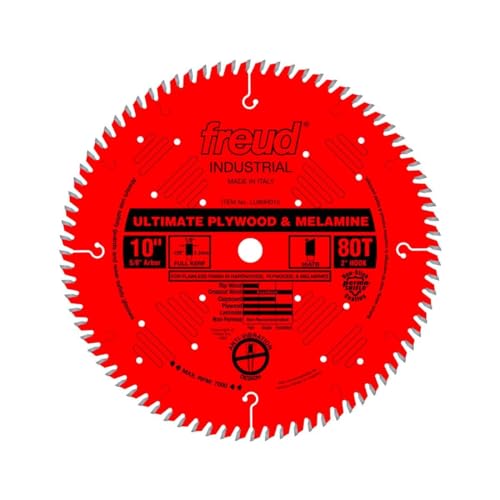
The LU80R010 is designed for crosscutting plywood and melamine with a high-ATB tooth configuration that reduces splintering on veneered surfaces. With a TiCo Hi-Density carbide blend, it balances edge retention and cutting speed to produce smooth, finished edges on thin laminates and cabinet-grade plywood. The 10″ diameter, 80-tooth design offers a fine finish suitable for cabinet doors and paneling where edge quality matters. The blade’s 2° hook angle supports a stable cut with reduced tear-out across melamine sheets and similar materials.
Freud LU79R006M20: 160mm Thin Kerf

Optimized for thin-kerf accuracy, the LU79R006M20 uses a 160mm diameter and 48-tooth Hi-ATB design. The thin kerf minimizes material waste and reduces resistance during cutting, helping to achieve cleaner edges on melamine and plywood. The 2° hook angle supports consistent feed and reduced chip-out, while the Hi-Density TiCo carbide ensures long-lasting sharpness for repetitive finishing tasks such as cabinet making or panel production.
Freud Thin Kerf LU79R010: 10″ 80 Teeth

This blade focuses on ultra-smooth, chip-free edges in veneered plywood, melamine, and laminates. The Hi-ATB tooth geometry reduces tear-out while the TiCo carbide blend delivers consistent performance across finishes. Its 10″ diameter and 80 teeth provide a refined cut suitable for finish carpentry and cabinetry where final appearance is crucial. The blade is well-regarded for finishing cuts in delicate materials and across moldings.
Diablo D0860X: Fine Finish, 8-1/4″

The D0860X delivers smooth, chip-free cuts with a TiCo Hi-Density carbide. Its Perma-Shield non-stick coating reduces gumming and heat buildup, extending blade life for melamine, plywood, and laminates. The 8-1/4″ diameter and 60-tooth configuration provide a good balance of finish quality and cut speed for smaller panels or trim work. The Hi-ATB grind aids in clean crosscuts, especially on glossy melamine surfaces where scoring is visible.
Norske NCSBP272: 8-1/4″ Melamine Plus

The Norske NCSBP272 uses a 35-degree ATB tooth design for ultra-smooth melamine and laminate cuts. The blade features high-precision C4 micro-grain carbide tips on all edges for dependable sharpness and reduced wear. A laser-cut body with anti-vibration slots minimizes noise and vibration, making it suitable for long finishing sessions on cabinet components and laminated panels. The 8-1/4″ diameter and 60 teeth support a finish-level cut on thicker melamine sheets while maintaining control and accuracy.
Buying Guide: Key Purchase Considerations
- Material compatibility: Look for Hi-ATB or MTCG tooth designs when cutting melamine, plywood, and laminates to minimize tear-out and edge chipping.
- Kerf and finish: Thin-kerf blades waste less material and reduce heat buildup, beneficial for delicate veneers and fine cabinet work.
- Coatings and carbide: TiCo Hi-Density carbide and non-stick coatings like Perma-Shield extend blade life and keep cuts clean under repeated use.
- Arbor and diameter: Verify arbor size (commonly 5/8″ or 20mm) and diameter to fit your saw model and project scope. Larger blades offer longer cuts but require appropriate saw power and stability.
- Tooth count: Higher tooth counts yield smoother finishes but may cut slower. Balance speed and finish needs (e.g., 60–80 teeth for melamine and plywood finishing).
- Durability and coatings: Coatings reduce gum buildup on melamine, improving performance during extended finish jobs; consider blades with durable carbide blends for repeated use in shop environments.
- Application scope: Some blades are optimized for finish carpentry, cabinetmaking, or production environments. Choose blades designed for melamine plus plywood if your work spans those materials.
When selecting a blade for melamine, evaluate your typical thickness, veneer quality, and whether you prioritize a higher finish quality or cutting speed. For cabinetmaking and trim, blades with Hi-ATB or MTCG tooth geometry and a TiCo carbide blend generally offer reliable performance. For production tasks with repetitive cuts, consider blades with anti-vibration features and durable coatings to maintain consistent edge quality over time.