Beam torque wrenches—often called bending beam wrenches—offer a straightforward, reliable way to tighten fasteners to precise specifications. This guide highlights top options that balance accuracy, durability, and user-friendly features for automotive, cycling, and DIY projects. Each pick below is designed to minimize parallax errors and maximize readability, with clear scales and durable construction. Read on to compare five strong contenders and learn buying considerations to help you choose the right model for your shop or garage.
| Product | Range | ||
|---|---|---|---|
| TEKTON 1/2″ Drive 72-Tooth Split Beam Torque Wrench TRQ62203 | Split beam, 1/2″ drive | 40-250 ft-lb | Calibrated to ±4% across range with serialized certificate |
| NEIKO 03727A 1/4″ Drive Beam Torque Wrench | Beam, 1/4″ drive | 0–80 in-lb / 0–9 Nm | Dual SAE and metric readings for quick conversions |
| Precision Instruments PREC3FR250F Silver 1/2″ Drive Split Beam Wrench | Split beam, 1/2″ drive | 0-250 ft-lb | Flex head for hard-to-reach areas |
| Tooluxe 03703L Dual Drive Beam Style Torque Wrench | Beam, 3/8″ & 1/2″ drives | 0-150 ft-lb | Dual drive with durable chrome finish |
| MILMUMU 1/4″ Drive Beam Torque Wrench | Beam, 1/4″ drive | 0-80 in-lb / 0-9 Nm | SAE and metric dual scale with parallax-fighting tip |
Note: The five products above have been selected for versatility across automotive, bicycle, and home repair use, emphasizing readability, calibration accuracy, and build quality. The ranges are typical for beam-style wrenches, and several models offer dual metric/SAE scales to simplify on-the-job adjustments.
TEKTON 1/2″ Drive 72-Tooth Split Beam Torque Wrench
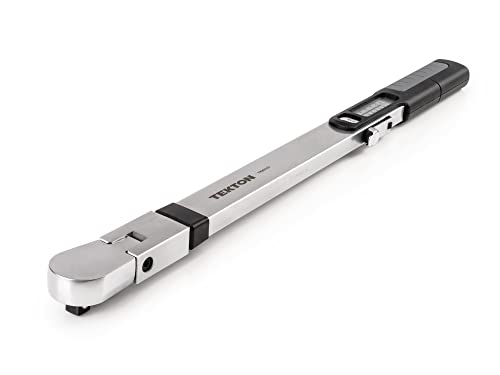
The TEKTON TRQ62203 uses a 1/2-inch drive and a split-beam design that reduces friction and improves reading stability across its 40-250 ft-lb range. It ships with a case and a manual that includes a torque conversion chart, helpful for DIYers who switch between metric and imperial measurements. Calibration is stated at ±4% across the full range, and each wrench is serialized with a certificate showing test results per ASME B107.300-2010 standards. This model is suitable for automotive fasteners, wheel lug nuts, and heavy machinery tasks where higher torque is common.
Features to note include a compact form factor, a precise scale that minimizes parallax error, and robust construction designed for regular shop use. The included certificate provides traceability, which is beneficial for professional settings or when you need documented accuracy. The wrench’s durability helps it hold its calibration under typical workshop conditions, though owners should still follow proper storage and torque-wrench maintenance practices to extend life.
NEIKO 03727A 1/4-Inch-Drive Beam Torque Wrench

The NEIKO 03727A provides a compact 1/4-inch drive and a dual measurement system that reads in both SAE inches/pounds and metric Newtons. This dual-scale approach eliminates the need to convert measurements on the fly, saving time when working on bicycles and small automotive assemblies. Calibration is stated to ±4%, with a readable range of 0–80 in-lb and 0–9 Nm in 0.25 increments, which helps ensure consistent tension on fasteners in tight spaces. The wrench is designed for versatility, making it a practical addition to a homeowner’s toolkit or a professional repair bench.
Its lightweight design makes it easy to handle in cramped engine bays, under dashboards, or on bicycle components. While highly portable, users should verify the scale clarity under different lighting conditions to maintain accuracy. As with most beam wrenches, proper storage and periodic re-certification are recommended to sustain reliability over time.
Precision Instruments PREC3FR250F 1/2″ Drive Split Beam Torque Wrench
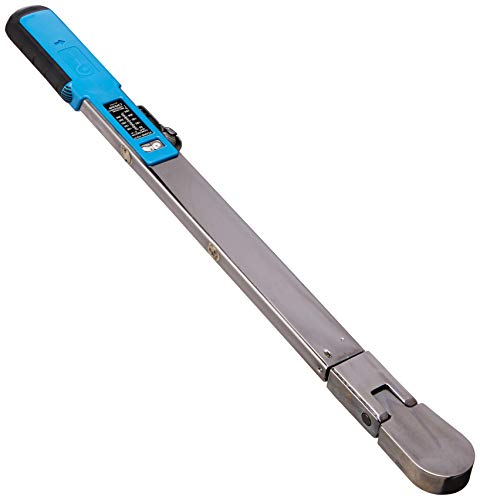
The PREC3FR250F from Precision Instruments offers a 1/2-inch drive paired with a split-beam design for sturdy, consistent readings. A notable feature is its flex head, which adds reach and flexibility in accessing recessed or awkward fasteners. The product page emphasizes the tool’s length to reach difficult areas, making it a good option for engines, motorcycles, and construction tasks where clearance is a constraint. Accuracy is rated at ±4%, aligning with industry standards for mid-range torque wrenches. The included warranty or calibration certificate supports traceability for professional work.
Users should assess whether the flex head improves accessibility for their typical jobs, or if a rigid head would suffice. Maintenance includes keeping the scale clean and ensuring the tool remains calibrated per the manufacturer’s guidelines. This model stands out for users who encounter tight spaces and need a reliable reading while maneuvering around components.
Tooluxe 03703L Dual Drive Beam Style Torque Wrench

Tooluxe’s 03703L combines 3/8″ and 1/2″ drives within a single 17-inch body, offering a torque range up to 0-150 ft-lb. The beam-style design is paired with a calibrated scale that minimizes parallax errors, and a graduated tip helps ensure precise alignment with fasteners. The construction features a durable steel alloy and a chrome finish designed for longevity in home garages and professional settings. This dual-drive setup is convenient for users who need flexibility without carrying multiple specialist wrenches.
In practice, the dual-drive capability saves time swapping tools between tasks, and the high-visibility markings help reduce mistakes in dim lighting. As with all beam wrenches, users should check for smooth beam movement and recalibrate if the wrench experiences hard drops or impact. The chrome finish improves corrosion resistance, making it suitable for regular workshop use and outdoor projects where moisture is a factor.
MILMUMU 1/4″ Drive Beam Torque Wrench

The MILMUMU 1/4″ drive focuses on a compact footprint with a dual SAE and metric readout from 0-80 in-lb and 0-9 Nm. Its parallax-reducing indicator tip aids accuracy in tight spots, a common requirement for bike maintenance and light automotive work. The dual-systems setup provides flexibility for different measurement conventions, making it a good fit for riders and hobbyists who regularly work with both standards. The tool’s sturdy construction aims to balance precision with everyday resilience in a busy workshop.
Buying Guide: Key Considerations For Bending Beam Torque Wrenches
- Torque range: Choose a range that covers your most common fasteners. For automotive tasks, a model that reaches at least 0-250 ft-lb is often sufficient, while bicycles typically require lower ranges.
- Drive size: Pick drives that match your most-used sockets. Common options include 1/4″, 3/8″, and 1/2″ drives. Dual-drive models add versatility but may be heavier.
- Readability: Look for clearly marked scales with high-contrast numbers and minimal parallax. A tip that reduces parallax helps ensure readings stay accurate when you’re in tight spaces.
- Calibration: Wrenches calibrated to a recognized standard (such as ASME) and accompanied by a certificate provide traceability and assurance of accuracy over time.
- Head design: Flex heads improve access to hard-to-reach fasteners, while rigid heads maximize stiffness for straightforward applications. Consider your typical tasks to decide.
- Durability: Stainless steel or hardened alloy bodies resist corrosion and impact. A protective case helps with storage and calibration maintenance between uses.
- Maintenance: After use, store in a cool, dry place and regularly check calibration. Avoid dropping the tool, which can affect accuracy and alignment.
- Value vs. reliability: While budget models exist, investing in a well-constructed wrench with a clear calibration record often yields better long-term performance and fewer read errors.
For a mixed toolkit, consider models offering dual metric/imperial scales or dual drives to cover varied tasks—from bicycle maintenance to automotive repairs. Flex-head options are valuable in cramped engine bays, whereas a rigid head can help with straightforward bolt patterns. Always verify the manufacturer’s calibration policy and recommended use cases to ensure the wrench aligns with your project requirements.