Choosing the right benchtop belt sander can make wood and metal projects faster, cleaner, and more precise. This guide highlights five reliable models that balance power, versatility, and value for American hobbyists and professionals alike. Each selection emphasizes durability, belt and disc options, and user-friendly design to tackle a variety of sanding tasks—from rough shaping to fine finishing. Use the summary table below to compare core specs at a glance.
| Product | ||||
|---|---|---|---|---|
| WEN Benchtop Belt and Disc Sander (6502T) | Two-in-one | 4″ x 36″ | 6″ | Cast iron base reduces vibration |
| Bucktool Combo 2″ x 42″ Belt Sander / 6″ Bench Grinder | Combo | 2″ x 42″ | 6″ | High efficiency; multi-function and tilt |
| WEN Benchtop Belt and Disc Sander (6515T) | Two-in-one | 1″ x 30″ | 5″ | Compact with sturdy base |
| Bucktool BD4603 Pro | Direct-drive | 4″ x 36″ | 8″ | Direct-drive motor; quick belt replacement |
| SKIL BB9504-00 | Two-in-one | 4″ x 24″ | 5″ | Versatile belt angle and miter gauge |
WEN 6502T Benchtop Belt and Disc Sander
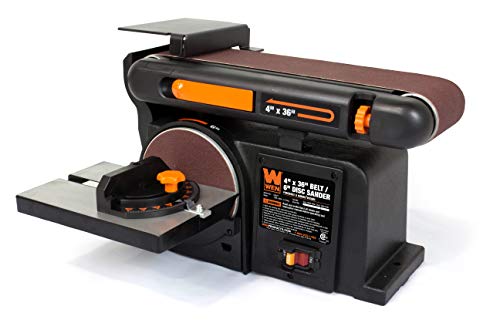
The WEN 6502T blends a 4-by-36 inch belt with a 6-by-6 inch disc in a single benchtop unit. The belt tilts from 0 to 90 degrees, enabling precise angle sanding for both flat surfaces and curved workpieces. A robust cast iron base minimizes vibrations, promoting steadier sanding and longer tool life. This model suits mixed-metal and woodworking projects that require both belt and disc operations without switching machines. The dual-function design helps streamline workflow in compact shop spaces.
Bucktool Combo 2″ x 42″ Belt Sander / 6″ Bench Grinder
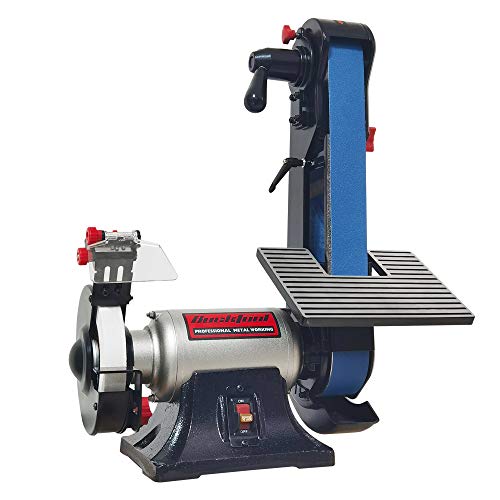
This multi-tool setup combines a 2″ x 42″ belt with a 6″ bench grinder, making it a versatile choice for metal and wood finishing. The machine supports high efficiency with a 1/2 HP, 3.5A induction motor delivering up to 3450 RPM on the belt and 4480 FPM belt speed. The belt tilts 0–90 degrees and the housing can swivel for varied sanding angles, which is especially useful for longer workpieces and angled profiles. It’s a strong option for workshop users who need both shaping and grinding capabilities in one station.
WEN 6515T Benchtop Belt and Disc Sander
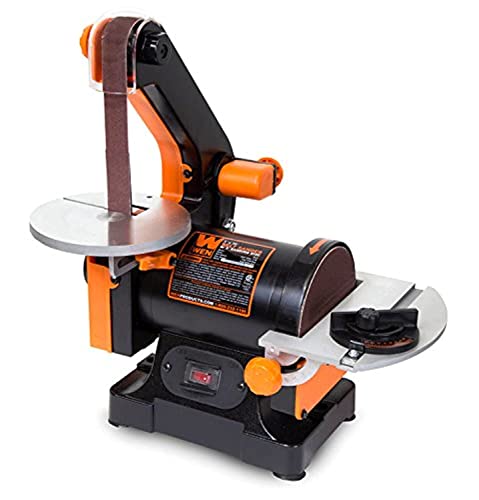
The 6515T model offers a compact two-in-one sanding solution with a 1″ x 30″ belt and a 5″ disc. A 2.3-amp motor delivers up to 3160 FPM on the belt and 3450 RPM for the disc. The sturdy base prevents walking and wobbling, ensuring steadier operation during longer sessions. This unit is well-suited for hobbyists who need a space-saving machine that still handles a variety of sanding tasks with dependable performance.
BUCKTOOL BD4601 Pro (BD4603) Direct Drive 4×36 in Sander
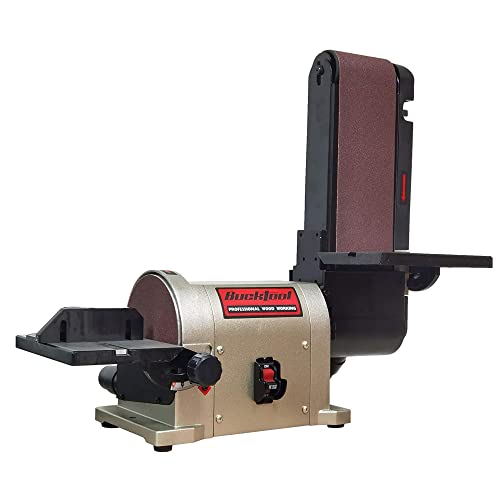
The BD4603 Pro uses a direct-drive 3/4 HP motor, delivering strong, consistent sandings with minimal belt maintenance. The belt is 4″ by 36″ and works with 80-grit paper. Its quick belt replacement feature and track control enhance workflow efficiency, especially when moving between long boards or curved profiles. The unit’s aluminum base contributes to rigidity while a removable dust port expands working space for longer pieces.
SKIL BB9504-00 Belt and Disc Sander
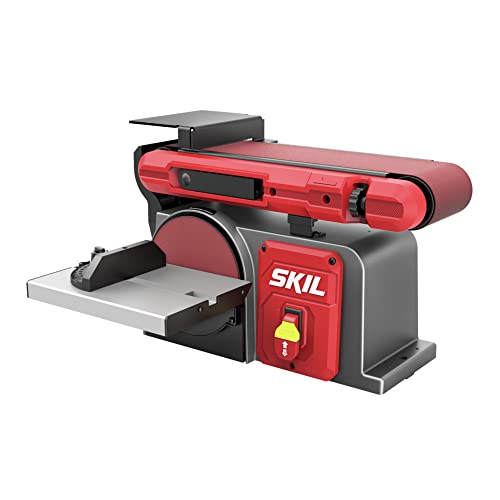
The SKIL BB9504-00 provides a two-in-one sanding station with both belt and disc options. It features a miter gauge to guide crosscuts and an adjustable belt angle from 0 to 90 degrees, enabling versatile sanding across different project needs. This model is designed for hobbyists who value angle versatility and straightforward belt alignment for dependable results on a variety of materials.
Buying Guide: Key Purchase Considerations
- Power and drive system: Direct-drive motors offer smooth and precise sanding with less belt maintenance, while induction motors can deliver steady torque for heavy tasks. Consider whether you need both belt and disc functionality in a single unit or separate tools for maximum flexibility.
- Belt and disc sizes: Common belts are 4″ x 36″ or 2″ x 42″; discs typically range from 5″ to 8″. Larger belts cover more surface quickly, while smaller belts excel at detail work. Ensure the belt and disc sizes meet your typical project needs.
- Adjustment versatility: A tilting belt (0–90 degrees) and a swiveling belt housing accommodate long boards and varied angles. A miter gauge or scale helps achieve consistent crosscuts on the disc or belt area.
- Stability and base construction: Cast iron or heavy aluminum bases reduce vibration and improve accuracy. A stable bench setup minimizes wobble during operation and improves finish quality.
- Dust management: A dust port or integrated collection system helps keep the workspace cleaner and prolongs tool life by reducing airborne debris. Consider the ease of dust port removal for larger pieces.
- Maintenance and belt replacement: Quick belt changes and accessible tension mechanisms save time on longer projects. Look for models that minimize ongoing adjustments while delivering reliable performance.
- Materials and applications: For metal finishing, a robust disc with a dedicated dust outlet can prevent glazing and overheating. For woodworking, a versatile belt that handles both rough shaping and finishing yields the best overall value.
- Safety features: Look for blade guards, optional spark guards for metal use, and clearly labeled on/off controls. A stable base and modest vibration contribute to safer operation.
In summary, the five highlighted models provide a range of capabilities—from compact, space-saving options to more robust two-in-one machines suitable for metalworking and woodworking. Evaluate your typical projects, space, and budget to select the machine that delivers the best combination of power, control, and convenience for your shop.