Choosing a bench grinder for woodworking involves balancing power, control, and durability. This guide highlights five top options that suit hobbyists and professionals alike, focusing on reliability, ease of use, and versatility for sharpening chisels, plane blades, and carving tools. Each pick emphasizes safe operation, flexible lighting, and robust construction to help you maintain sharp edges and precise grinding. Read on to compare features, performance, and practical considerations before you buy.
| Product | Motor Power / Speed | Key Benefit |
|---|---|---|
| WEN BG4276 6″ Grinder | 2.1 A; up to 3450 RPM | Flexible work light for precise sharpening |
| WEN BG625V 6″ Variable Speed Grinder | 2.5 A; 2000–3400 RPM | Adjustable speed for varied sharpening tasks |
| DEWALT DW758 8″ Grinder | 3/4 HP induction motor; 3600 RPM | Heavy-duty build and high-speed material removal |
| BUCKTOOL 8″ Low-Speed Grinder | 4.8 A; 1750 RPM | Low-speed for precise sharpen and control |
| VEVOR 8″ Bench Grinder & 2″ x 28″ Belt Sander Combo | 350 W; 3450 RPM (grinder) / 1500 RPM (belt) | Two-tools-in-one for metal and wood tasks |
WEN BG4276 6-Inch Bench Grinder With Light
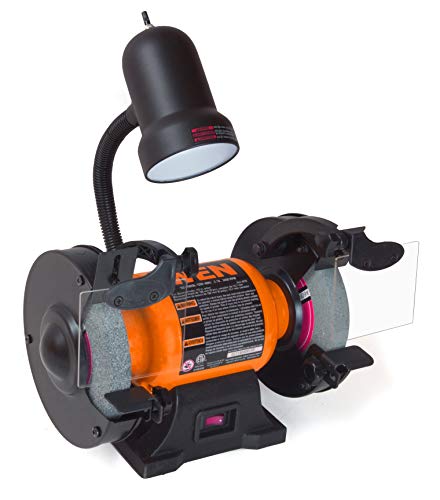
The WEN BG4276 is a compact 6-inch bench grinder designed for woodworking setups where space matters. Its 2.1-amp motor drives 6-by-3/4-inch wheels up to 3450 RPM, delivering quick sharpening for chisels, drill bits, and plane blades. A standout feature is the flexible work light that illuminates the work area during operation, reducing guesswork on edge shapes. The base is sturdy and vibration is manageable, making it suitable for hobbyist shops and small workshops seeking a budget-friendly, all-purpose grinder for routine maintenance and tool revival.
WEN BG625V 6-Inch Variable Speed Grinder

The WEN BG625V adds versatility with a 2.5-amp motor and a variable speed range from 2000 to 3400 RPM. This makes it easier to dial in a fine edge for fine woodworking tools and more aggressive material removal when needed. The same flexible work light helps you see the edge clearly, which is helpful for precision sharpening. Its solid construction and adjustability make it a practical upgrade for shops that regularly switch between different blade geometries and tool steels without changing machines.
DEWALT DW758 8-Inch Bench Grinder

The DEWALT DW758 delivers rugged industrial-grade performance with a 3/4 horsepower induction motor and a sturdy cast iron base and motor housing. Its 8-inch wheels enable higher material removal and more generous corner sharpening, making it well-suited for heavy-duty woodworking tasks. The grinder operates at 3600 RPM, which helps remove material quickly while maintaining control on delicate edges. This model is a recognized choice for workshops that require durability and long-term reliability in a high-use environment.
BUCKTOOL 8 Inch Low-Speed Grinder

The Bucktool low-speed grinder features a 4.8-amp motor turning at 1750 RPM, designed to reduce heat buildup and edge overheating during sharpening. This model emphasizes a stable wobble-free operation and is compatible with a range of CBN wheels, which can improve sharpening consistency for woodworking edges. A 1-1/2 inch wide left grinding wheel and a 1-1/2 inch right wheel provide options for coarse and fine edges, while its integrated LED lighting improves visibility on small or detailed workpieces. It suits woodworkers who prefer precise, controlled grinding for tool maintenance and knife sharpening.
VEVOR 8″ Bench Grinder & 2″ x 28″ Belt Sander Combo
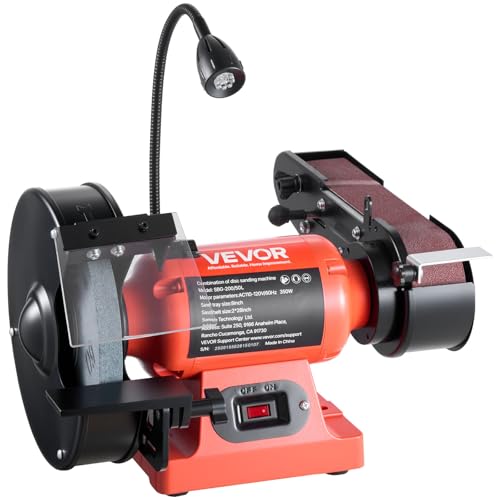
The VEVOR combo blends an 8-inch bench grinder with a 2″ x 28″ belt sander, powered by a 350W motor. The grinder spins at 3450 RPM, while the belt runs at 1500 RPM, enabling a broad range of metal grinding and wood sanding tasks. The belt arm can be adjusted 0 to 90 degrees, giving flexibility for vertical and horizontal sanding positions. An integrated LED work light and protective eye shield help maintain accuracy and safety during operation, making this a versatile choice for hobbyists who tackle multiple material workflows in a single station.
Why these features matter for woodworking
Sharp edges and accurate geometry are critical for tool performance and finish quality in woodworking. Variable speeds help tailor grinding pressure and heat generation to blade material, while lighted work areas improve edge visibility. A solid base minimizes vibration, which translates to cleaner grinds and safer operation. For those working with knives, chisels, and carving tools, a broad wheel surface plus selectable wheels accommodates a range of edge profiles and bevels. Considering these aspects helps buyers pick a grinder that matches the sharpening cadence of their shop.
Key considerations when buying
- Power and speed range: Higher RPMs remove material quickly, but a lower, controlled speed reduces heat buildup on heat-sensitive steels.
- Wheel size and type: 6″ and 8″ wheels cover different edge profiles; CBN wheels can offer durable, low-maintenance performance.
- Stability and build: Cast iron bases and heavy housings reduce vibration for cleaner edges and safer operation.
- Lighting and guards: Integrated LEDs and well-designed eye guards improve visibility and safety during sharpening.
- Versatility: Combos with belt sanding broaden capabilities for shaping, deburring, and finishing along with grinding.
Comparative perspectives
For small shops or hobbyists, the WEN BG4276 and BG625V provide affordable options with built-in lighting and adjustable speeds, balancing cost and capability. For more demanding or professional settings, the DEWALT DW758 offers robust construction and higher RPM, suitable for frequent use. Buckto ol models focus on low-speed precision and lifetime edge quality, while the VEVOR combo expands function by integrating belt sanding for multi-task workflows. Your choice depends on how often you sharpen tools, the materials you work with, and whether you prioritize speed, control, or flexibility.
Safety and maintenance tips
- Always wear eye protection and a face shield when grinding or sanding.
- Securely mount grinders to a stable surface to minimize vibration.
- Maintain wheel alignment and inspect wheels for cracks before use.
- Use the correct wheel for your tool material and avoid excessive heat buildup.
- Regularly clean the guards, lights, and work surfaces to maintain visibility and safety.
Buying Guide
When selecting a bench grinder for woodworking, consider your typical tool lineup (chisels, plane blades, carving tools) and the finishes you desire. For occasional sharpening, a 6″ grinder with a flexible light may suffice. If you frequently sharpen a range of tools with varying bevels, a variable-speed model or a heavy-duty 8″ grinder can offer more control and speed. If space is limited, a compact 6″ model keeps your setup tidy while still delivering solid performance. For projects that combine grinding and belt sanding, a dual-function grinder can add efficiency without a second workstation. Evaluate motor protection, ease of wheel changes, and the availability of compatible wheel types before purchasing.