Choosing the right benchtop drill press involves evaluating power, accuracy, speed range, and build quality. The following selections are well-suited for hobbyists and small workshops, balancing performance with value. Below is a quick reference table of five capable models to help you compare at a glance.
| Product | Brand | Swing (In.) | Motor | Key Features |
|---|---|---|---|---|
| WEN 2.3-Amp 8-Inch (4206T) | WEN | 8 | 2.3 A | 5 speeds, 1/2″ chuck, cast iron table |
| SKIL 6.2 Amp 10″ DP9505-00 | Skil | 10 | 6.2 A | 5 speeds, laser alignment, work light |
| WEN 12-Inch DP1263V | WEN | 12 | 6.2 A | Laser & LED, digital RPM readout |
| BUCKTOOL 12 Inch 6.2A | Bucktool | 12 | 6.2 A | 1/32″–5/8″ chuck, digital readout |
| JET JWDP-12 | Jet | 12 | 1/2 HP | Variable speed, sturdy base |
Across wood, metal, and plastics, these models offer robust construction and varying speed ranges to fit different tasks. Read on for detailed, objective information about each option to help you decide which benchtop drill press aligns with your projects.
WEN 2.3-Amp 8-Inch 4206T Benchtop Drill Press
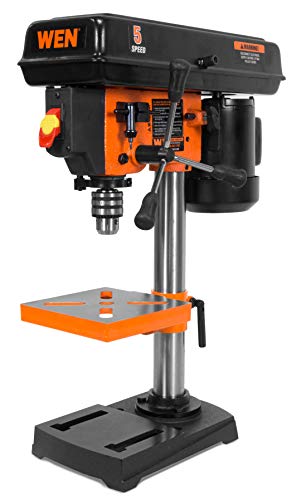
The WEN 4206T combines a compact 8-inch swing with a sturdy cast iron table and a 2.3-amp induction motor. It operates at five speeds, specifically 750, 1100, 1500, 2100, and 3200 RPM, enabling drilling through wood, plastics, and light metals. The 1/2-inch keyed chuck is standard for common drill bits, and onboard key storage keeps accessories organized. A practical option for small shops that need reliable basic drilling without occupying large bench space.
SKIL 6.2 Amp 10-In. DP9505-00 Benchtop Drill Press

The SKIL DP9505-00 delivers higher power with a 6.2-amp induction motor and a 10-inch swing. It features five speeds from 610 to 2800 RPM for versatility across materials, plus a laser alignment system to assist precise drilling and a built-in work light for visibility. This model is well-suited for more demanding projects that require deeper drilling and tighter tolerances.
WEN 12-Inch DP1263V Benchtop Drill Press
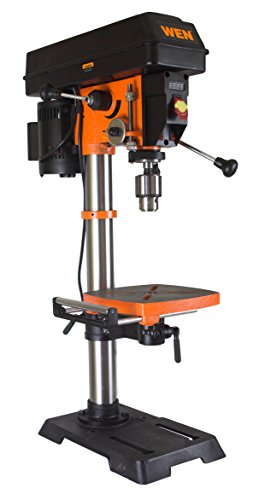
The DP1263V expands capacity with a 12-inch swing and a 3-1/8-inch spindle travel, powered by a 6.2-amp induction motor. It offers a wide speed range from 580 to 3100 RPM, enabling precise drilling across a broad variety of materials. A digital speed readout helps operators maintain consistent speeds during finishing tasks, making it a strong choice for users who value exact control and larger workpieces.
BUCKTOOL 12-Inch 6.2A Professional Benchtop Drill Press

BUCKTOOL’s 12-inch model presents a durable 6.2-amp motor, offering robust power for metal and dense woods. It uses a 1/32″–5/8″ keyed chuck, a generous 12-inch swing, and a 2-inch spindle travel, with an overall height around 39 inches. The digital speed readout supports precise control, and a laser assist along with a work light helps align and illuminate workpieces. This option suits serious woodworking and light metalworking in a compact footprint.
JET 12-Inch Benchtop Drill Press JWDP-12

The JET JWDP-12 combines a 12-inch swing with a 1/2 HP motor and a variable-speed system. It offers a broad RPM range (530 to 3,100 RPM) and an ergonomic design with oversized controls for ease of use. The cast iron base contributes to stability during drilling, making it suitable for both hobbyists and more frequent workshop tasks where accuracy matters.
WEN 10-Inch DP1050 Benchtop Drill Press

The DP1050 offers a 6.2-amp motor, a 10-inch swing, and a 2-inch spindle travel. It supports five preset speeds—630, 1100, 1800, 2450, and 3300 RPM—achieved by belt changes, providing practical versatility for fine woodworking and metal applications. The model emphasizes reliability and straightforward operation for daily use in home workshops.
Buying Guide: Key Purchase Considerations
- Power and duty cycle: Higher amperage motors (6.2 A or more) handle denser materials and longer drilling sessions more effectively. For light hobby work, 2.3–3 A units may suffice.
- Swing and spindle travel: A larger swing (12″) accommodates bigger workpieces; spindle travel (up to 3″ or more) allows deeper drilling without repositioning.
- Speed range: Variable speeds from around 500–3,000 RPM cover most woods and metals. Digital readouts or laser guides help maintain accuracy during setup.
- Chuck size and quality: A 1/2″ chuck is common for general use; larger chucks admit bigger bits but add weight. A keyed chuck securely holds bits at high speeds.
- Stability and build: Cast iron tables and bases reduce vibration and deflection. Laser guides and LEDs improve visibility for precise drilling.
- Precision features: Belt-driven speed control, digital RPM readouts, and laser alignment systems contribute to repeatable results.
- Space and ergonomics: Compact benchtop designs save workspace; check height and clearance when you include a work surface and clamps.
- Maintenance and accessories: Availability of spare chucks, belts, and replacement parts matters for long-term use.
- Intended materials: If metalworking is frequent, prioritize higher-torque models; for woodworking, a lighter unit is often sufficient.
- Safety: Ensure proper guarding, stable mounting, and routine maintenance to prevent bit slips and wander during operation.
These considerations help balance performance with budget. When selecting a model, align features with typical materials, desired accuracy, and available workspace to maximize productivity and results.