Starting with a reliable beginner wood lathe helps new turners learn technique, safety, and project planning. This guide reviews five approachable benchtop lathes and accessories that balance power, control, and value, making it easier to tackle pens, bowls, and small turned pieces.
| Product | Brand | Key Feature |
|---|---|---|
| WEN LA3424 | WEN | 5 speeds; 18″ x 12″ capacity; faceplate included |
| WEN LA3421 | WEN | 8″ swing, 13″ centers; soft-start motor |
| CXRCY 8″ x 12″ | CXRCY | Infinitely variable 750–3200 RPM; safety goggle |
| WEN 34035 | WEN | 20″ x 14″ capacity; 250–3550 RPM range |
| VINWOX Carbide Tool Set | VINWOX | Carbide tips; rotatable cutter head; aluminum handles |
WEN LA3424 4.5-Amp Benchtop Lathe

The WEN LA3424 is designed for full-size projects on a compact bench. It accepts workpieces up to 18 inches long and 12 inches wide, providing substantial turning capacity for bowls, spindles, and hollow forms. With five distinct speeds—520, 900, 1400, 2150, and 3400 RPM—users can match speed to wood type and turning technique. The included 3-1/8 inch faceplate expands non-spindle options, enabling bowl and cup turning with stable control. Built for beginners, it emphasizes steady starts and straightforward setup while delivering consistent performance.
WEN Mini Benchtop Wood Lathe LA3421

The WEN LA3421 offers a compact solution for small-scale projects like pens, bowls, and chess pieces. It features an 8-inch swing over the bed and a 13-inch distance between centers, making it ideal for short, precise pieces. Its soft-start 3.2-amp motor reduces startup stress, lowering the risk of motor damage and enhancing user safety. This lathe is well-suited for beginners focusing on detail work and consistent finishes in a smaller footprint.
CXRCY 8″ x 12″ Mini Benchtop Lathe

The CXRCY mini lathe provides an infinitely variable speed range from 750 to 3200 RPM, allowing precise control for various effects and wood densities. A 12″ distance between centers and 8″ swing over the bed offer versatility for diverse workpieces, from spindles to small hollow forms. The tailstock is adjustable for precision, and safety gear such as goggles is recommended when turning chips fly. The lathe is suitable for hobbyists seeking adjustable performance in a compact unit.
WEN 34035 6-Amp 14-Inch by 20-Inch Lathe
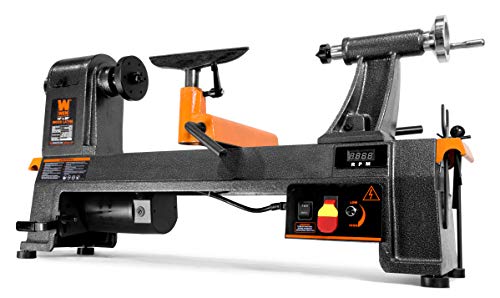
The WEN 34035 expands capacity with a 20-inch bed length and 14-inch swing, enabling larger spindle work and bowls. The variable speed control ranges from 250 to 3550 RPM, supporting a wide assortment of turning tasks—from fast roughing to fine detailing. A 4-inch faceplate is included to help turn bowls, cups, and other non-spindle pieces. This model suits beginners ready to graduate from small projects to more substantial projects without sacrificing safety or control.
VINWOX 9-Piece Carbide Lathe Tool Set

The VINWOX carbide turning tools are designed for ease of use and durability. The 9-piece set features carbide inserts that stay sharp, reducing sharpening needs for beginners. The tools include 10 mm by 10 mm straight square shanks and two aluminum handles that can connect for extended reach. These tools facilitate successful initial projects by providing predictable tool behavior and long-lasting cutting edges, making them a practical supplement to a beginner lathe setup.
Buying Guide: Key Considerations For Beginners
- Workpiece size and bed capacity: Beginners should start with lathes that accommodate common starter projects, such as pens, bowls, and spindles. Look for 8″–12″ swing and 12″–18″ centers as a solid baseline.
- Speed range and control: A variable speed range helps adapt to different woods and finishes. Soft-start motors reduce initial load, enhancing safety and motor longevity for new users.
- Accessory compatibility: Faceplates, chucks, and tool rests influence turning versatility. Ensure the lathe includes or supports compatible accessories for expanding project types.
- Tooling and maintenance: Carbide-tipped tools require less sharpening, which is helpful for beginners. Consider tool sets that integrate well with the lathe’s spindle and tailstock configuration.
- Safety features: Clear guards, proper dust management, and eye protection are essential. Choose models with stable bases and straightforward on/off controls to minimize mishaps.
- Budget and upgrade path: Start with a model that balances price with essential features. Plan for future upgrades, such as larger faceplates or additional tool sets, as skills grow.
- Product support and documentation: Access to manuals, tutorials, and customer support can shorten the learning curve. Look for reputable brands with abundant online guidance.
- Usage scenarios: Consider whether the lathe will serve primarily as a hobby exercise or a stepping stone toward small business turning. Your choice should align with intended projects and volume.