When a car battery dies or struggles to turn over, the right set of booster cables can save the day. This guide reviews five top-rated options designed for safety, durability, and easy handling. From heavy-duty copper-clad aluminum cores to thick vinyl coatings and reliable clamps, these cables cover a wide range of vehicles and emergency scenarios. Read on to compare key features, performance notes, and buying considerations to pick a model that fits your vehicle and driving needs.
| Product | Gauge | Length | Key Benefit |
|---|---|---|---|
| Energizer Jumper Cables | 6 Gauge | 16 Feet | Thick vinyl coating; carrying case included |
| TOPDC 8 Gauge Cables | 8 Gauge | 12 Feet | Strong clamps; good balance of length and safety |
| TOPDC 4 Gauge Cables | 4 Gauge | 20 Feet | Long reach; durable insulation and UL-listed |
| NOONE 2 Gauge Cables | 2 Gauge | 20 Feet | High current capacity; reverse polarity protection |
| CARTMAN 4 Gauge Cables | 4 Gauge | 20 Feet | Patented non-conducting rubber clamps |
Energizer Jump Starter Cables — 16 Feet, 6 Gauge
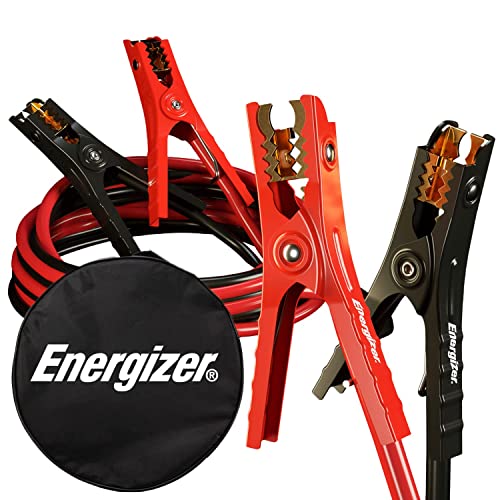
Energizer offers 16 feet of 6-gauge jumper cables designed to jump-start dead or weak batteries in a variety of vehicles, including trucks, SUVs, and compact cars. The thick vinyl coating protects against rust and corrosion and helps maintain flexibility in cold weather. A carrying case is included for compact storage and easy transport, making it a practical option for home garages and roadside kits alike.
TOPDC 8 Gauge Jump Cables — 12 Feet

TOPDC’s 8-gauge, 12-foot jumper cables are built for safety with four large alligator clamps and insulating rubber material to reduce shock risk. The higher gauge (thinner wire) may limit current relative to thicker cables, but the combination of clamp grip and solid insulation makes them a solid choice for everyday passenger vehicles and shorter emergency jumps where space is tight.
TOPDC 4 Gauge Cables — 20 Feet

This TOPDC model uses 4-gauge copper-clad aluminum conductors with a 20-foot reach, suitable for SUVs, full-size cars, and trucks. It combines robust clamps with high insulation protection to guard against electric shock. UL-listed quality and weather-resistant PVC coating enhance durability, especially in extreme temperatures or when stored in a vehicle’s trunk.
NOONE 2 Gauge Cables — 20 Feet

NOONE’s 2-gauge jump cables deliver high current capability (up to 600A) suitable for 12/24V systems and engines up to 3.0L. They feature a premium flexible copper-clad aluminum core with a thick vinyl sheath for insulation and durability. The product also includes a reverse polarity safeguard and a digital display option to monitor battery voltage during charging, emphasizing safety and reliability.
CARTMAN 4 Gauge Cables — 20 Feet

CARTMAN’s 4-gauge, 20-foot jumper cables feature patented non-conducting rubber clamps for repeated safe use and compatibility with both top-post and side-post batteries. The cables use copper-coated aluminum (CCA) for efficient power transfer and robust performance over longer distances, making them suitable for larger vehicles and varied jump-start scenarios.
Buying Guide: Key Considerations For Choosing Battery Booster Cables
- Maximum current and vehicle compatibility: Thicker gauges (low AWG numbers) deliver more current, which is important for larger engines. For compact cars, 8–6 gauge models can suffice, while SUVs and trucks benefit from 4–2 gauge options.
- Cable length: Longer cables offer flexibility to reach the battery from the operating vehicle, particularly in crowded spaces or when batteries are difficult to access. Typical ranges are 12–20 feet.
- Clamps and insulation: Look for robust, corrosion-resistant clamps with secure grip and insulated handles to minimize shock risk. A thick, durable insulation layer protects against abrasion and weather.
- Safety features: Features such as reverse polarity protection, protective sleeves, and UL listing indicate enhanced safety and reliability, especially for novice users.
- Portability and storage: A carrying bag or pouch helps keep cables organized and ready for emergency use or store in your trunk or garage.
- Material composition: Copper-clad aluminum (CCA) offers a balance of cost and conductivity, while pure copper provides top performance but at a higher price.
- Temperature resilience: Look for cables rated to perform in extreme temperatures, ensuring flexibility and continued conductivity in hot or freezing conditions.
- Ease of use: Clearly labeled polarity, intuitive clamp design, and a reasonable stiffness to avoid tangling can improve user experience during a stressful jump start.
Across these options, users should evaluate their vehicle size, typical storage space, and how often the cables will be used. For infrequent use or compact cars, mid-range gauges and 12–16 foot lengths often suffice. For families, fleets, or drivers of larger vehicles, opting for thicker cables (4 or 2 gauge) with longer reach can reduce the need for multiple attempts and provide faster, safer starts.