Choosing the right aluminum cutting blade can dramatically improve finish quality, speed, and blade life. This guide highlights top-performing aluminum blades from well-known brands, focusing on durability, cutting precision, and resistance to heat and gumming. Each blade profile includes key features to help you select the best option for flooring, remodeling, electrical, plumbing, or fabrication projects.
Summary of Selected Products
- Diablo Saw Blade for Thick Aluminum (D0756N) — 7-1/4″, 56 TCG, 5/8″ arbor
- Diablo Saw Blade for Medium Aluminum (D1296N) — 12″, 96 TCG, 1″ arbor
- FOXBC 12 Inch Aluminum Cutting Saw Blade — 120-Tooth TCG, 1″ arbor
- FOXBC 10-Inch 100-Tooth TCG Blade — 5/8″ arbor
- TOMAX 12-Inch 100 Tooth TCG Blade — 1″ arbor
Diablo Thick Aluminum Blade — D0756N

Designed for heavy-duty aluminum cutting, this blade uses TiCo Super-Density Micro-Grain Carbide for long-lasting performance. The blade’s triple-chip grind (TCG) tooth geometry balances speed, durability, and life, delivering clean, burr-free cuts even on flooring, remodeling, electrical, and plumbing jobs. Tri-metal shock-resistant brazing boosts impact resistance, extending blade lifespan in tough environments. The 5/8″ arbor and 7-1/4″ diameter make it a versatile option for common saws used in contractor work.
Key considerations:
- Best for: Thick aluminum sections, flooring, and remodeling tasks where cutting longevity matters.
- Pros: Smooth cuts, reduced clogging, strong impact resistance.
- Cons: Slightly larger kerf may be noticed on very thin materials.
Diablo Medium Aluminum Blade — D1296N

This 12″ blade is optimized for medium aluminum and non-ferrous metals. It features a 96-tooth TCG design for clean, burr-free finishes and virtually eliminates rework. Tri-Metal Shock-Resistant Brazing provides durability against impact, while the Perma-SHIELD Non-Stick Coating reduces heat buildup, gumming, and corrosion. The 1″ arbor supports sturdier saws and helps maintain stability during longer cuts. Ideal for aluminum, copper, plastics, brass, and fiberglass applications.
Key considerations:
- Best for: Finishing high-surface-quality aluminum and related non-ferrous materials.
- Pros: Very smooth finish, reduced heat-related issues, strong coating protection.
- Cons: Larger blade may require saws with adequate clearance.
FOXBC 12-Inch Aluminum Blade — 120T

This 12″ FOXBC blade uses a high-density carbide tooth set with 120 teeth for precise, smooth cuts on aluminum extrusions, copper pipe, brass plate, and similar materials. The 0.095″ kerf and 1″ arbor support thin, accurate cuts with reduced material wastage. Thin-tooth design helps prevent overheating while delivering clean edges, making it suitable for cabinetry, paneling, and custom fabrication jobs.
Key considerations:
- Best for: Thin to medium-thickness aluminum and non-ferrous metal cutting.
- Pros: Fine finish, reduced material waste, robust carbide teeth.
- Cons: Higher tooth count can necessitate slower feed rates to maintain precision.
FOXBC 10-Inch Blade — 100T TCG
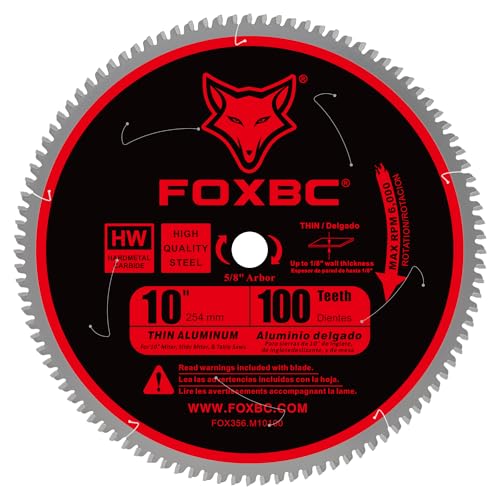
This 10″ blade with 100 teeth maintains robust performance for aluminum and non-ferrous cutting tasks. The 0.095″ kerf is paired with a 5/8″ arbor, making it versatile for common table and miter saws. Its tungsten carbide teeth deliver wear resistance and extended blade life, while the TCG design helps keep chips small and edges clean on a variety of metals. Suitable for cabinetry, trim, and light fabrication projects.
Key considerations:
- Best for: Precision cuts in thinner aluminum sections and non-ferrous metals.
- Pros: Clean edges, lower heat buildup, good for repeated cuts.
- Cons: May require slower feeds to maximize edge quality on very tough alloys.
TOMAX 12-Inch Blade — 100T TCG
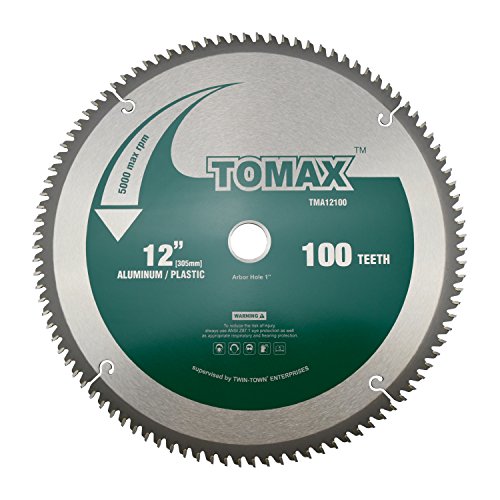
The TOMAX 12″ blade features a 100-tooth TCG design and a 1″ arbor, ideal for cutting aluminum and non-ferrous metals with minimal burrs. The construction-grade carbide teeth provide maximum resistance for longer life and reduced wear. An electrophoretic coating helps resist rust and corrosion, enhancing blade longevity in challenging shop conditions. Its balance and tooth geometry support cleaner finishes on thin to medium aluminum exteriors and extrusions.
Key considerations:
- Best for: High-precision, long-run aluminum cutting in fabrication and remodeling projects.
- Pros: Durable carbide teeth, corrosion resistance coating, clean cuts.
- Cons: Slightly heavier blade, may be overkill for very thin aluminum work.
Buying Guide: Key Purchase Considerations For Aluminum Cutting Blades
When selecting an aluminum cutting blade, consider the following factors to align blade performance with your project needs:
- Tooth configuration: Triple Chip Grind (TCG) blades excel at metal cutting by balancing chip formation and heat management. For aluminum, a thicker kerf (0.085″ – 0.106″) can help maintain rigidity on long cuts, while higher tooth counts (80–120T) produce finer finishes on thin sections.
- Kerf width: A thinner kerf reduces material waste and requires less power, but can be less forgiving on hard alloys. Lamination-friendly kerfs (0.075″–0.095″) often suit precise, clean cuts in non-ferrous metals.
- Arbor size: Ensure compatibility with your saw (5/8″ or 1″ is common). Higher-arbor blades generally offer greater stability for large workpieces.
- Coatings: Non-stick and anti-corrosion coatings help reduce gumming and heat buildup, extending blade life in aluminum work.
- Coating durability vs. tooth life: A premium coating can reduce routine maintenance but evaluate blade cost per cut for your workflow.
- Durability traits: Look for Tri-Metal brazing or other reinforced joints to withstand impact in demolition or remodeling tasks.
- Materials compatibility: Some blades are optimized specifically for aluminum, others cover non-ferrous metals (copper, brass) and plastics. Match blade to expected materials for best results.
- Project type and finish: For cabinetry or trim, prioritize blades with fine tooth counts for smooth surfaces. For structural cuts, durability and heat tolerance become more critical.
Practical tips for optimal performance:
- Use a blade with a suitable tooth count for the material thickness to minimize tear-out.
- Keep feeds steady and avoid forcing the blade; let the teeth do the work.
- Maintain proper clearance and alignment to reduce binding and overheating.
- Choose blades with coatings designed to reduce sticking on aluminum to extend blade life.