The following article highlights five top chainsaws that deliver steady performance across professional tasks, from pruning and yard cleanup to heavy-duty felling. Each option balances power, reliability, and user comfort to suit demanding workloads. Below, you’ll find a quick product summary, then detailed sections, and a buying guide to help you compare beyond price.
| Product | Brand | Type | Bar Length | Key Strength |
|---|---|---|---|---|
| EGO POWER+ CS1611 | EGO Power+ | Battery-Powered | 16 inches | Gas-equivalent performance with long runtimes |
| Baotree 62cc Chainsaw | Baotree | Gas | 20 inches | Durability and anti-kickback safety features |
| CRAFTSMAN CMECS600 | CRAFTSMAN | Corded Electric | 16 inches | Low maintenance and strong motor |
| Makita XCU11Z | Makita | Battery-Powered | 14 inches | Brushless motor, quiet operation |
| Husqvarna 450 Rancher | Husqvarna | Gas | 20 inches | Smart Start and efficient X-Torq engine |
EGO POWER+ 16” Battery Chainsaw – CS1611
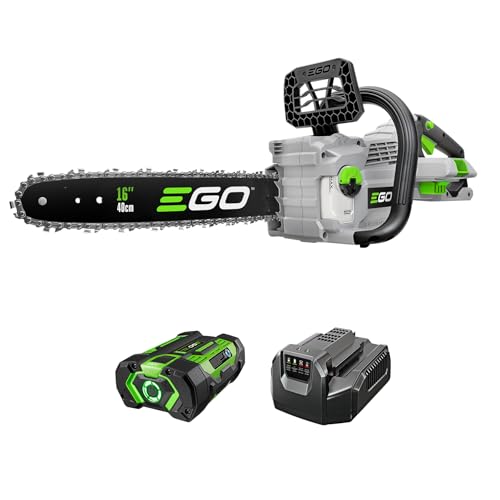
The EGO POWER+ CS1611 delivers a gas-like performance with a clean electric design. Its 16-inch bar and chain are paired with a 56V 2.5Ah ARC Lithium battery that claims up to 130 cuts on a 4×4 with a single charge. The tool is designed for frequent pruning and light-to-mid-duty felling in professional settings, offering minimal maintenance and reduced emissions compared with gas models.
Key considerations include balanced weight distribution, quick-restart reliability, and compatibility with EGO’s growing battery ecosystem. Users should verify battery charge cycles and understand local charging availability on job sites. The 40cc gas-equivalent claim aims to set expectations for performance during demanding tasks, especially in urban forestry or landscape contracting where emissions limits may apply.
Baotree 62cc Gas Chainsaw, 20-Inch Pro Chainsaw

The Baotree 62cc chainsaw targets professional tree cutting with a 20-inch bar and a robust 2-cycle engine. Notable features include a 3D anti-kickback chain brake system for safety, a forged magnesium crankcase for durability, and a tool-free chain tensioning system to speed maintenance. This combination supports productive work in forestry, logging, and heavy-duty property maintenance where frequent, lengthy cuts are common.
Considerations include fuel management, vibration control, and service availability for parts. While gas-powered units provide strong performance on larger logs, operators should plan for routine maintenance and fuel storage requirements on job sites. The safety system and build quality aim to minimize downtime and maximize uptime during long projects.
DEJUNPIOOL Cordless Mini Chainsaw (2 x 6″/8″ Chains)

This cordless mini chainsaw kit emphasizes versatility for pruning and small-diameter cutting. It supports a 6-inch and 8-inch chain setup and is compatible with Dewalt 20V MAX batteries (not included). While not a primary pro-forced lumber unit, its portability and rapid swap chains make it useful for workplace pruning, branch clearing, and tight-space cuts on job sites where a full-size saw would be impractical.
Key considerations include battery availability, run-time for your typical pruning tasks, and the balance between lighter weight and cutting capacity. For professional crews, it can serve as a supplementary tool for overhead branches or line clearance where access is constrained.
Makita XCU11Z 18V LXT Brushless 14″ Chainsaw

The Makita XCU11Z offers a compact, low-emission option with a brushless motor that enhances efficiency and extends tool life. With a 14-inch bar, this model suits pruning, limb removal, and light-to-mid-duty cutting in professional landscapes. Its design emphasizes quiet operation and maneuverability, making it a strong fit for urban forestry or grounds crew work where noise and emissions matter.
Considerations for Makita include battery strategy (18V LXT system), blade maintenance, and vibration control for prolonged use. The tool-only nature means you’ll need to coordinate battery availability with other Makita tools on the job site for max efficiency.
Husqvarna 450 Rancher – 20 Inch Gas Chainsaw

The Husqvarna 450 Rancher delivers a balance of power and user-friendly features designed for professional use. A 50.2cc X-Torq engine provides strong cutting capability while maintaining reasonable fuel efficiency. Smart Start and inertia-activated chain brake improve starting reliability and safety during demanding yard cleanups, pruning, and firewood preparation. This model is well-regarded for its ergonomics, which support longer work sessions in professional environments.
Critical considerations include maintenance intervals, fuel management, and parts availability. The 20-inch bar length supports larger diameter cuts, but operators should assess weight and vibration for extended use. Husqvarna’s service network can be a factor in choosing this model for ongoing contracting work.
Buying Guide: Key Purchase Considerations
Power source and task fit: Gas chainsaws excel for heavy-lumber tasks and uninterrupted runtime, especially on larger properties or job sites without easy charging access. Battery-powered saws offer clean operation, lower maintenance, and quieter performance, ideal for urban settings and frequent pruning. Corded electric models provide reliable power with continuous use but require a nearby outlet and extension considerations.
Bar length and cutting capacity: Longer bars accelerate high-diameter work, but add weight. For most professional applications, 16–20 inches covers a broad range of pruning, firewood, and felling tasks. Assess typical log sizes and lifting ergonomics when selecting bar length.
Weight, balance, and vibration: Ergonomics impact productivity and safety. Seek models with anti-vibration features, balanced frames, and comfortable handles to reduce operator fatigue during long shifts.
Safety features: Look for anti-kickback chains, chain brakes, inertia-activated brakes, automatic oiler systems, and smart-start technologies. These reduce risk and downtime on the job.
Maintenance and parts availability: Pro users benefit from easy maintenance, tool-free tensioning, and accessible parts. A strong service network minimizes downtime for repairs and blade replacements.
Battery ecosystem and compatibility: If you choose a battery platform, confirm compatibility with existing tools to maximize uptime and minimize spare batteries. Consider charge time and field-replaceable batteries for on-site productivity.
Cost of ownership: Beyond initial price, weigh fuel or electricity costs, maintenance, wear parts like bars and chains, and service intervals. A model with longer intervals between service visits may offer better lifecycle value for professionals.
Warranty and support: A robust warranty and responsive customer support are essential for pro workloads where downtime is costly. Check what’s covered and whether extended warranties are available.