When shopping for an air-powered nail gun, choose models that fit your project type, compressor setup, and workflow. This guide highlights five reliable options, each best for specific tasks like trim work, cabinetry, framing, or upholstery. The top picks balance ease of use, safety features, and durability for American DIYers and professionals alike. See the quick comparison table below to narrow your choice.
| Product | Best For | Why It Stands Out |
|---|---|---|
| NEU MASTER 2-in-1 Brad Nailer & Stapler | Trim, molding, upholstery | Versatile 18GA brads and 1/4″ crown staples in one tool; tool-free jam clear and safety features |
| Metabo HPT Finish Nailer NT65M2S | Finish carpentry | Lightweight for long sessions; adjustable modes for precise finishing |
| VEVOR Framing Nailer | Framing, decking | Dual trigger modes and depth adjustment for heavy-duty framing |
| POPULO Pneumatic Brad Nailer & Staple Gun | Upholstery, furniture, trim | 2-in-1 tool with included nails/staples; requires external compressor |
| Dotool Pneumatic Brad Nailer & Staple Gun | General woodworking | 2-in-1 capability with broad nail/staple range; easy air compatibility |
NEU MASTER 2-in-1 Brad Nailer & Stapler
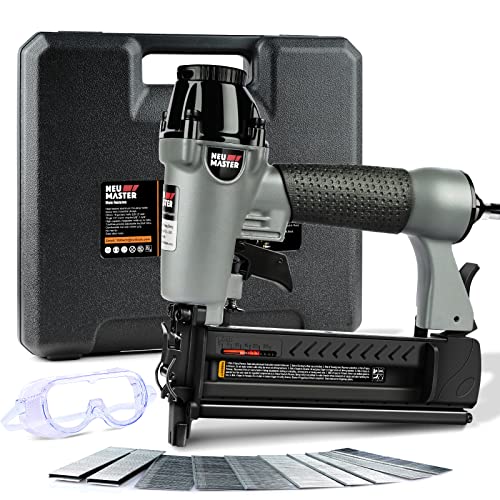
Best for: small trim projects, furniture assembly, and upholstery work where both nails and staples are needed. This 2-in-1 tool handles 18GA brad nails (5/8″–2″) and 1/4″ crown staples (5/8″–1-5/8″), enabling quick adjustments between nailing and stapling without switching devices. The tool-free jam clear and 360° exhaust help keep the workspace clean and downtime minimal. The transparent magazine window helps prevent dry-fire marks, and the soft grip supports extended use.
Why selected: It consolidates two functions in one compact unit, reducing tool clutter and improving workflow for finish carpentry and upholstery tasks. The safety features reduce accidental firing, and the lightweight design aids maneuverability. This model is best for buyers who frequently alternate between securing trim and attaching thin upholstery pieces.
Caution: Ensure your air compressor supplies adequate pressure for both nails and staples; use the correct fasteners to avoid misfires.
Metabo HPT Finish Nailer NT65M2S

Best for: molding, chair rail, and cabinetry work where a precise finish is essential. This 16-gauge finish nailer supports nails from 1″ to 2-1/2″ and features a selective actuation switch for bump fire or sequential fire modes, enabling controlled driving for delicate trim and tight spaces.
Why selected: Lightweight feel and proven Pro Preferred status lend reliability for detailed finish carpentry. The dual-mode trigger provides flexibility for different application speeds and material hardness, making it a solid choice for professional finish work where consistent, clean results matter.
Caution: The tool is designed for specific 16-gauge nails; using the wrong size can cause jam or incomplete seating.
VEVOR Framing Nailer

Best for: framing, decking, and structural projects where longer nails provide strong fastenings. This 21° full round head framing nailer accepts smooth shank, ring shank, and threaded nails with a depth-adjustment wheel for precise setting across materials.
Why selected: It offers dual trigger modes, enabling sequential or contact firing to adapt to fast-paced framing or careful sheathing work. The tool-free depth adjustment simplifies driving depth changes on the fly, supporting versatility on site.
Caution: For optimal results, ensure you select the correct nail type and length for your specific framing application to avoid misfires or damage to the workpiece.
Air Locker AP700 Heavy Duty Punch Nailer

Best for: professionals needing to remove or pull nails and perform light-duty punching tasks. This tool uses 80-120 PSI and a 1/4″ NPT air inlet, with a 0.16-inch driver diameter for controlled extraction and lighter-duty driving tasks.
Why selected: It complements a shop set by offering a dedicated nail-removal capability alongside basic punching tasks. It is a practical inclusion for workshop maintenance and repair work where removing fasteners is common.
Caution: It is primarily a punch/removal tool; avoid using it for heavy nailing tasks beyond its designed help to prevent damage.
POPULO Pneumatic Brad Nailer & Staple Gun
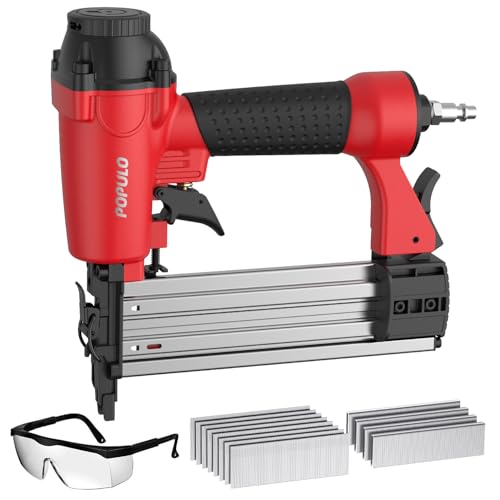
Best for: upholstery, trim work, cabinetry, and furniture assembly where both 18GA brads and 1/4″ crown staples are helpful. This model requires an external air compressor (not included) and ships with a substantial supply of nails and staples.
Why selected: The 2-in-1 capability covers a broad range of fastening tasks in woodshop and workshop scenarios. Sequential safety and the ability to switch between firing modes support precision and safety on detailed projects.
Caution: External air power is required; ensure your compressor delivers steady pressure for consistent drive depth and avoid over-pressurizing which may cause fastener damage.
Dotool Pneumatic Brad Nailer & Staple Gun
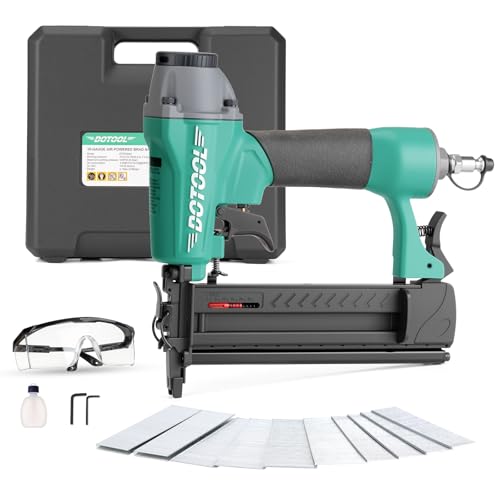
Best for: general woodworking and DIY projects where a flexible 2-in-1 tool saves space and adds versatility. The unit drives 18GA brads from 5/8″ to 2″ and accepts 1/4″ crown staples up to 1-5/8″.
Why selected: It suits hobbyists and small shops looking for a practical multi-tool that can handle a variety of fasteners with a single air-powered device. It emphasizes adaptability and straightforward air compatibility.
Caution: An air compressor is required but not included; match compressor output to the tool’s 60–120 psi operating range for best results.
Buying Guide: Essential Considerations For Your Next Pneumatic Nailer
- Project Type: Trim and finish tasks benefit from 16- or 18-gauge finish/brad nailers; framing tasks require longer, heavy-duty nails and sometimes a 21° or 22° angle nailer.
- Air Supply: Confirm your compressor’s CFM and PSI rating meets or exceeds the tool’s requirements. Higher-demand tools need robust, consistent airflow.
- Firing Mode: Some tools offer sequential and bump-fire modes. Sequential firing is safer for beginners and precise installations; bump-fire speeds up workflow for experienced users.
- Depth Adjustment: A clear depth control helps prevent overdriving or underdriving nails, protecting surface integrity on delicate materials.
- Versatility: 2-in-1 nailers that drive both brads and staples reduce tool clutter and expand use cases in trim, upholstery, and furniture assembly.
- Safety Features: Look for trigger safety mechanisms, jam-clear features, magazine windows, and anti-dry-fire design to protect workpieces.
- Maintenance: Regularly lubricate the tool and clear debris from the magazine to sustain consistent performance and extend tool life.
Frequently Asked Questions
- What is the difference between brad nails and finish nails?
– Brad nails are thinner (often 18 gauge) suited for delicate trim and upholstery, while finish nails (often 15-16 gauge) are stronger for heavier trim and cabinetry. - Do I need an air compressor for a pneumatic nailer?
– Yes. Pneumatic nailers require a compatible air compressor to supply sufficient CFM and PSI for consistent driving depth. - Can I use a 2-in-1 nailer for both nails and staples?
– Yes, many 2-in-1 models support both brads and crown staples, offering broader applicability for different projects. - What safety features should I prioritize?
– Look for sequential triggers, jam-clear mechanisms, magazine windows, and anti-dry-fire protection to protect both user and workpiece. - How do I choose the right nail length?
– Match nail length to material thickness and the job. Longer nails provide stronger fixtures for framing; shorter nails are gentler for trim and delicate parts. - Is depth adjustment necessary?
– Yes. Adjusting depth ensures flush seating and prevents surface damage on varying material densities.