Choosing the right air finish nailer can streamline cabinetry, molding, and trim work. The following five models balance weight, maneuverability, and nail range to tackle crown moldings, chair rails, baseboards, and trim with consistent drive quality. This guide compares 16–16/15 gauge options, including lightweight angled nailers and versatile 3-in-1 tools, to help builders and DIY enthusiasts select a reliable pneumatic or cordless finish nailer.
style=”display:none;”>Summary of selected products:
| Product | Brand | Nail Type | Notes |
|---|---|---|---|
| NT65M2S Finish Nailer | Metabo HPT | 16 Gauge Finish Nails 1″-2½” | Lightweight, selective actuation |
| NT65MA4 Finish Nailer | Metabo HPT | 15 Gauge Angled 1¼”-2½” | Slim, balanced for molding and cabinets |
| BTFP71917 Finish Nailer Kit | Bostitch | 16 Gauge 1¼”-2½” | Oil-free, jam release |
| DCN660B Finish Nailer | DEWALT | 16 Gauge (Cordless) | Battery-powered, no compressor needed |
| 61721 Brad Nailer | WEN | 18 Gauge | Versatile for light trim; compatible with any air system |
Metabo HPT 16-Gauge Finish Nailer NT65M2S

The NT65M2S is a lightweight 16-gauge finish nailer designed for precision trim work. It accepts nails from 1 inch to 2-1/2 inches, making it suitable for decorative moldings, chair rails, and cabinetry. A selective actuation switch provides bump fire or sequential fire modes for controlled driving in varied materials, while a built-in air duster helps with chip and dust removal during assembly. This model has earned recognition as a Pro Preferred Nailer, signaling long-term industry trust.
Metabo HPT 15-Gauge Angled Finish Nailer NT65MA4

This 15-gauge angled nailer excels at crown moldings, base moldings, window and door casings, and cabinetry. It accepts angled nails from 1-1/4″ to 2-1/2″ and weighs around 4.2 lbs for easy handling on extended renovation tasks. The angled design improves access to tight corners, while the lightweight construction reduces fatigue during prolonged use.
BOSTITCH Finish Nailer Kit, 16GA BTFP71917

The Bostitch BTFP71917 kit drives 16-gauge finish nails from 1-1/4″ to 2-1/2″ with oil-free operation to reduce staining risks on finished surfaces. Its tool-free jam release mechanism facilitates quick nail removal and clearing misfeeds, which is helpful on projects with complex trim patterns or close-fitting joints.
DEWALT 20V MAX Finish Nailer DCN660B (Tool Only)

DEWALT’s cordless finish nailer runs on a 20V MAX battery, eliminating the need for a compressor, hose, or gas cartridges. Its brushless motor enhances runtime and durability, while a tool-free selectable trigger supports sequential or contact actuation. This model suits projects where mobility and a compact setup are priorities, such as on high-and-low profile trim installations or outdoor framing tasks that transition to finish work indoors.
WEN 18-Gauge Pneumatic Brad Nailer 61721
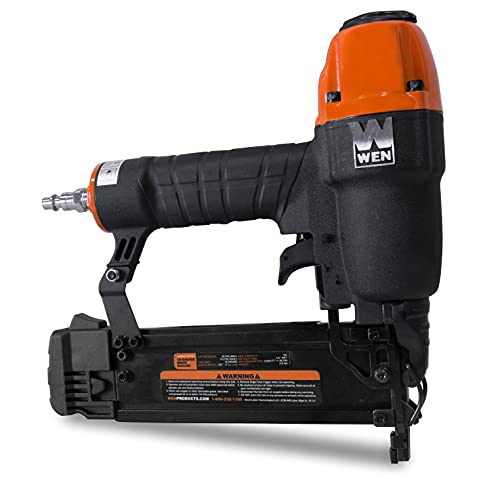
The WEN 61721 is a versatile option for light finish tasks and trim, shooting 18-gauge brads from 3/8″ to 2″. It operates at 60–115 PSI with a standard 1/4″ NPT air inlet. Notable features include a depth adjustment wheel, nail gauge, rotatable exhaust, and a 106-nail capacity magazine. It’s suitable when a broader nail choice is needed for delicate wood joints and fine detailing.
RYOBI ONE+ 18V 16-Gauge Finish Nailer P326

RYOBI’s 18V cordless Finish Nailer leverages AirStrike technology, removing the need for compressors and hoses. Its 78% smaller nose improves access to tight spots, and an adjustment dial tunes air pressure for optimal drive quality. This option is ideal when mobility and a clean workspace are priorities, though it depends on battery readiness for continuous use on larger projects.
Buying Guide: Key Purchase Considerations
- Gauge and nail length: 16-gauge tools are standard for most finish work, with 15-gauge options offering deeper molding and larger trim drives. Nail length should match trim thickness and substrate density.
- Angled vs. straight magazines: Angled nailers provide better access in corners and tight spaces, while straight nailers are simpler and more compact for flat surfaces.
- Power source: Pneumatic nailers require an air compressor, which adds setup, while cordless options (like DEWALT DCN660B) offer mobility but depend on battery life and charge cycles.
- Actuation mode: Selective actuation (bump vs. sequential) helps control shot placement on delicate wood or detailed trim. Sequential reduces the chance of misfires on meticulous work.
- Weight and balance: Lighter tools reduce fatigue during extended sessions. Look for ergonomic grips and well-balanced bodies for long-running renovations.
- Oil-free operation: Oil-free systems minimize staining on finished wood but verify maintenance needs and sealant compatibility.
- Ease of maintenance: Jam release mechanisms and simple clearing procedures save time on complex trim joints or dense hardwoods.
- Accessories and extras: Some kits include air dusters, belts, or additional nails, which can add value for complete finish-work setups.
- Compatibility: Ensure the chosen nailer supports common trim profiles (crown molding, baseboards, casing), and verify that nails are readily available in your region.
- Budget and availability: Balance features with long-term durability and manufacturer support to maximize ROI on cabinetry and remodeling projects.