Looking for a durable, easy-to-use air line hose for your compressor? This guide highlights five top options—each with clear pros and potential limitations—so you can pick the right hose for your garage, workshop, or job site. We describe who each hose is best for, why it stands out, and practical buying tips to avoid common pitfalls. Whether you need ultra-flexibility, heavy-duty pressure tolerance, or compact storage, these picks cover a range of typical use cases.
| Product | Type | Length | Max PSI | Best For |
|---|---|---|---|---|
| YOTOO Polyurethane Recoil Air Hose | Recoil, 1/4″ ID | 25 ft | 150 | Lightweight, space-saving storage |
| FIDEURSUS Compressed Air Piping System | HDPE Tubing Kit | 200 ft | 200 | Shop-wide, long runs, flexible fittings |
| YOTOO Hybrid Air Hose | Hybrid, 3/8″ ID | 50 ft | 300 | All-weather, higher airflow |
| Hromee 1/4 in x 25 ft PU Recoil | Recoil, PU, 1/4″ ID | 25 ft | 120 | Kink resistance, easy storage |
| Flexzilla 3/8 in x 50 ft Hose | Hybrid Polymer | 50 ft | 300 | Extreme flexibility, all-weather use |
YOTOO Polyurethane Recoil Air Hose, 25 ft
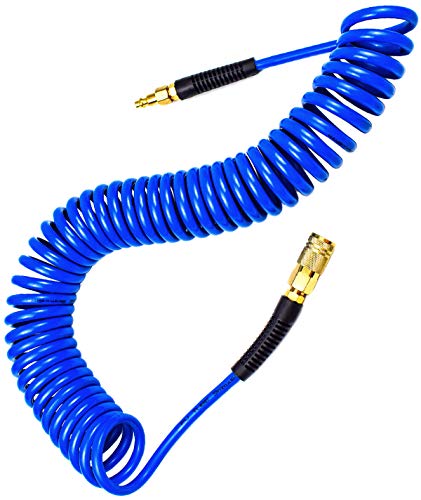
Best for lightweight setups and compact storage. This 25-foot polyurethane recoil hose is designed to snap back when not in use, saving space and reducing tangles. It supports up to 150 PSI, which covers typical home and hobbyist projects. The 1/4″ ID is suitable for general-purpose tools, and the bend restrictor helps limit kinking. Caution: not ideal for long runs where higher airflow is required.
FIDEURSUS Compressed Air Piping System

Best for shop-to-workshop installations and long runs. This kit uses a three-layer HDPE-AL-HDPE construction with copper and nickel, designed to maintain consistent pressure up to 200 psi. It comes with multiple ports and fittings, enabling flexible layout across garages or light industrial spaces. Caution: assembly complexity is higher than simple hoses, and may require more setup time.
YOTOO Hybrid Air Hose 3/8″ x 50 ft

Better for higher airflow and versatile tools. The 3/8″ ID provides a larger internal diameter for reduced friction losses, and the hybrid material blends flexibility with durability. It includes 1/4″ industrial fittings and bend restrictors to minimize kinks. Caution: heavier than 1/4″ hoses, so storage takes more space than lighter options.
Hromee 1/4 in x 25 ft PU Recoil
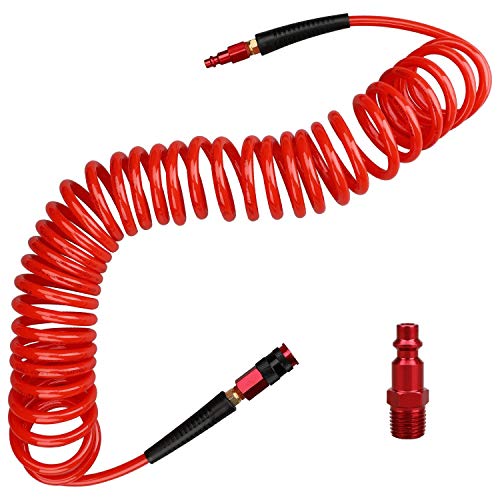
Best for organized, compact workflows in tighter spaces. This 25 ft polyurethane recoil hose resists tangles and kinks with bend restrictors and a universal coupler kit. It supports up to 120 PSI, adequate for most hobbyist tools and small equipment. Caution: lower PSI rating than some industrial hoses, so not ideal for high-demand tools.
Flexzilla Air Hose, 3/8 in x 50 ft

Best for all-weather flexibility and durability. Flexzilla uses a hybrid polymer that resists kinking and lays flat with minimal memory. The 3/8″ ID and 50 ft length offer a solid balance of reach and airflow for mid-to-large tools. Caution: some users find the hose heavier than 1/4″ options, which can affect portability.
Fideursus 3/4 Inch ID x 200 Feet Kit
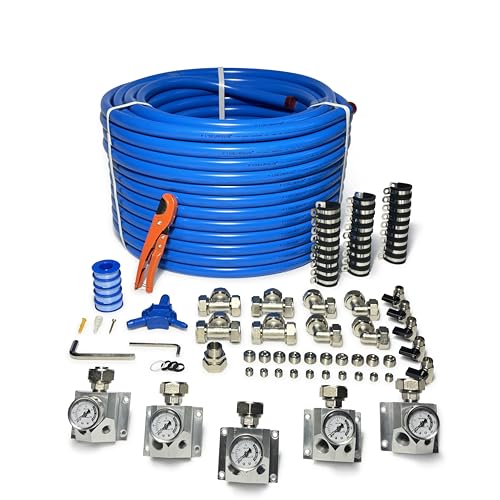
Best for expansive shop installations requiring networked air delivery. This 200-foot kit includes multiple ports, bends easily, and a pressure gauge for monitoring. It is designed for heavy-duty use in larger spaces, maintaining up to 200 psi. Caution: setup is more involved and may require planning for routing and safety clearance.
Buying Guide
What material should I choose?
Polyurethane hoses are lightweight and kink resistant, ideal for light- to medium-duty use. Hybrid polymer hoses offer a balance of flexibility and durability, performing well in various climates. For long runs or shop-wide installs, HDPE-based piping kits provide robust pressure management but require more setup.
What inner diameter and length matter?
Smaller IDs like 1/4″ are common for home garages and handheld tools, with easier maneuverability. 3/8″ IDs improve airflow for higher-demand tools but are less portable. Lengths range from 25 ft to 200 ft—choose based on distance between compressor, outlets, and work zones.
Pressure rating and fittings
Look for hoses rated to at least 150–300 psi if you plan to run impact wrenches or heavy tools. Ensure compatible fittings (1/4″ NPT, quick-connects) and consider bend restrictors to reduce wear and tangling.
Storage and handling considerations
Recoil or self-coiling hoses save space and reduce tangles in tight spaces. If storage is not a constraint, a longer hose improves reach but may be bulkier.
Which kit fits a specific use case?
- Small hobby projects or personal garages: pick a 25 ft polyurethane or recoil hose with bend restrictors.
- Medium workshops with multiple tools: consider 50 ft to 100 ft hybrids for better airflow and flexibility.
- Larger shops needing extensive reach: HDPE piping kits or 200 ft hose runs offer scalable coverage.
FAQ
- Q: What’s the advantage of a recoil hose? A: It saves space, minimizes tangling, and returns to shape after use.
- Q: Can I use a 1/4″ hose for heavy tools? A: For high-demand tools, a larger ID like 3/8″ can improve airflow and performance.
- Q: Do I need bend restrictors? A: Bend restrictors reduce kinking and extend hose life, especially in tight spaces.
- Q: Are HDPE piping kits suitable for all garages? A: They’re excellent for long runs and organized layouts but require more installation planning.
- Q: How do I choose PSI rating? A: Match the highest PSI of your tools; higher PSI ratings support more demanding equipment.