Air belt sanders are essential for fast material removal, deburring, and finishing on wood, metal, and composite surfaces. This guide highlights top pneumatic belt sanders, comparing power, reach, and ergonomic design to help you choose the right tool for daily use in shops or professional settings.
| Product | Brand | Belt Size | Main Strength |
|---|---|---|---|
| Ingersoll Rand 360-418 | Ingersoll Rand | 1/2″ x 18″ | High power and adjustable regulator |
| Astro Pneumatic 3037 | Astro Pneumatic Tool | 1/2″ x 18″ | Versatile with belts and tension lever |
| Ingersoll Rand 360-313 | Ingersoll Rand | 3/8″ x 13″ | Compact yet powerful, ergonomic grip |
| Tezoro 1/2″ x 18″ | Tezoro | 1/2″ x 18″ | Wide compatibility with adjustable angle |
| Minimprover Pneumatic Tool | Minimprover | 3/8″ x 13″ | Low vibration with ergonomic design |
Note: This article focuses on five high-performing options that suit a range of tasks, from heavy material removal to precise deburring and finishing. All models listed are compatible with standard air compressors and use 1/2″ x 18″ or 3/8″ x 13″ belts or belts of similar width, making belt replacement straightforward for ongoing projects.
Ingersoll Rand 360-418 – Air Belt Sander

The 360-418 model delivers a robust 0.6 HP motor and 20,000 RPM for rapid material removal, complemented by a belt speed of 4700 SFPM. A user-friendly power regulator helps tailor performance to each task, reducing the risk of gouging delicate surfaces. The tool is engineered for extended use, combining solid construction with an articulated arm that reaches tight corners without sacrificing control. Its balance and lightweight feel support all-day operation in professional shops and job sites alike.
Astro Pneumatic 3037 – Air Belt Sander
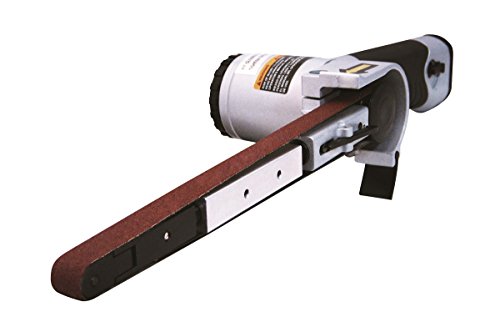
The Astro Pneumatic 3037 is a versatile 1/2″ x 18″ belt sander designed for spot weld removal and finish work. It features a straightforward belt tension lever and variable-speed control, along with expanded pulley space to accommodate thicker belts. This setup supports a range of materials, including metal and wood, ensuring reliable performance on fabrication and finishing tasks that demand precision with speed.
Ingersoll Rand 360-313 – Air Belt Sander

The 360-313 model mirrors the power profile of its 360-418 sibling, offering a 0.6 HP motor, 20,000 RPM, and 4700 SFPM. It emphasizes a compact form factor suitable for restricted spaces and challenging angles. The tool’s adjustable power regulator and articulating arm provide dependable control for detailed contour work, while its lightweight construction supports sustained use across multiple projects without excessive fatigue.
Tezoro 1/2″ x 18″ Air Belt Sander

The Tezoro unit is designed for broad metal and wood finishing applications, with a 1/2″ x 18″ belt size and a 180-degree adjustable angle to access awkward surfaces. Its ergonomic handle and rapid belt replacement capability make it suitable for deburring, rust removal, and edge rounding. A complete package includes three sanding belts (36/40/60) and an air inlet interface, enabling immediate setup and use on the shop floor.
Minimprover Pneumatic Tool – 3/8″ x 13″ Belt Sander
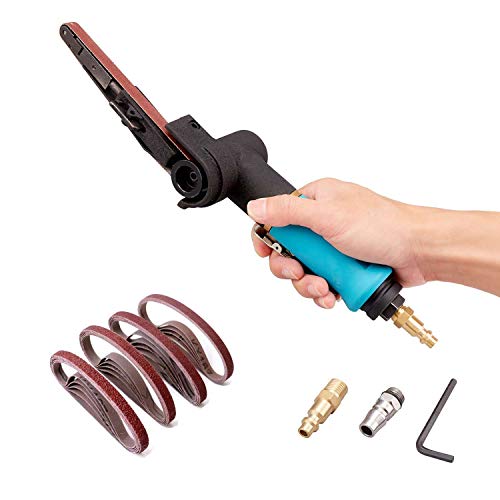
The Minimprover unit emphasizes stability and comfort, featuring a knurled, non-slip handle and a compact 3/8″ x 13″ belt footprint. Its low-vibration design and ergonomically shaped trigger switch support ongoing use for metal polishing, edge deburring, and finishing tasks. The included 12 belts across common grits expand versatility for a range of materials including aluminum, steel, and plastics, making it a strong all-around option for shop workflows.
UPWOOD Air Belt Sander – 3/8″ x 13″

The UPWOOD model targets industrial and automotive deburring, sanding, and finishing. It features a 360° swing-position grip that adapts to any angle, enabling precise control during complex operations. Belt changes are tool-free, allowing rapid belt swaps to maintain momentum on the job. This makes it well-suited for production environments where speed and repeatability are critical.
Buying Guide: Key Purchase Considerations
Power and speed compatibility: Look for a model with a motor around 0.6 HP and belt speeds near 4700 SFPM for balanced material removal and control. Variable-speed options help match the task to the tool, reducing over-sanding and operator fatigue.
Grip and ergonomics: A comfortable, low-fatigue grip is essential for extended sessions. Tools with articulated arms or flexible reach help access tight corners and complex curves without sacrificing accuracy.
Belt access and replacement: Quick belt changes reduce downtime. Some models include a tension lever or tool-free belt swap features, which improve workflow efficiency on busy shop floors.
Durability and materials: Heavy-duty housings, corrosion-resistant finishes, and well-designed front-end accessories extend tool life under daily use in metalworking or woodworking environments.
Reach and size: In cramped spaces, compact belt sanders with adjustable angles or longer reach belts will outperform larger, bulkier units. Consider whether you need 1/2″ x 18″ belts for aggressive material removal or 3/8″ x 13″ for finer finishing tasks.
Accessory availability: Availability of compatible belts (grits 36–120 and beyond) and optional accessories like sanding belts, tension levers, and replacement parts influences long-term costs and convenience.
Noise and vibration: Lower vibration helps reduce operator fatigue and improves control, especially on stainless or hard metals where precise removal is necessary.
Air compatibility: Ensure your compressor provides the necessary CFM and PSI for continuous operation, as underpowered air supply can degrade performance and shorten tool life.