Finding a budget-friendly metal lathe that still delivers reliable performance is essential for hobbyists and small workshops. This guide highlights five value-focused options, comparing capacity, speed, safety features, and usability to help you choose the right machine for turning, threading, drilling, and more.
Summary of selected products
| Product | Brand | Core Benefit | Key Specs |
|---|---|---|---|
| VEVOR 7″x14″ Benchtop Lathe | VEVOR | Compact with LED display | 550W, 2250 RPM, 7.09″/180mm swing |
| VEVOR Mini Lathe 8″x14″ | VEVOR | Versatile for models and small parts | 600W, 50-2250 RPM, 3-jaw chuck |
| Mini Metal Lathe 7″x14″ (Generic) | Generic | High precision on a tight budget | 0-2500 RPM, LED speed display, 3-jaw chuck |
| VEVOR 8.3″x29.5″ Benchtop Lathe | VEVOR | Longer center distance for bigger parts | 750W, 50-2500 RPM, LCD display |
| CREWORKS Mini Metal Lathe 9″x30″ | CREWORKS | Robust for threading and drilling | 1100W, 0-3000 RPM, LCD display |
VEVOR 7×14 Benchtop Lathe With Digital Display

This upgraded VEVOR model combines a compact footprint with a capable 550W motor and a digital display for precise speed control up to 2250 RPM. It includes a 3-jaw chuck suitable for both square and round stock, making it a versatile option for threading and small turning tasks. An aluminum handwheel enhances durability, and an LED lamp assists in low-light environments. The design emphasizes safety with automatic power-off features and a protective layout around the bed area.
VEVOR Mini Lathe 8×14 Precision Machine

Built from cast iron for durability, this mini lathe delivers 600W and a variable range of 50-2250 RPM. It ships with a 3-jaw chuck (around 3.9″/100 mm) and a backsplash guard for operator safety. The unit supports forward and reverse operations and offers manual or automatic feed control. It’s well-suited for model making, hobby projects, and precise work requiring repeatable dimensions.
Mini Metal Lathe 7×14 With LED and High Precision
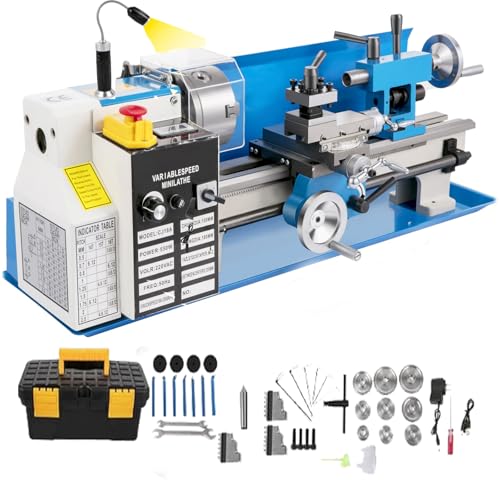
This model emphasizes precision with a spindle tolerance of under 0.01 mm. It uses a 4″ 3-jaw self-centering chuck and offers speeds up to 2500 RPM with a clear digital readout. The turret column with quick-tool-change capability and a central tool post enhances versatility for internal, face, and bevel cuts. Overall, a strong balance of accuracy and convenience for compact projects.
VEVOR 8.3×29.5 Benchtop Lathe

Designed for longer parts, this VEVOR lathe features a 750W brushless motor and a dual-speed range with a digital display for precise adjustments. Safety features include an emergency stop and protective switching across the control panel and motor housing. It provides both forward and reverse spindle motion, enabling a broad set of turning operations while maintaining energy efficiency and reduced maintenance needs.
CREWORKS Mini Lathe 9×30 With LCD

The Creworks lathe packs substantial muscle into a compact frame: 1100W motor, 0-3000 RPM, and a large center distance of 29.5 inches. The LCD display provides real-time speed readouts, and the machine includes robust headstock and tailstock alignment for accurate threading, turning, and drilling. This model is designed for hobbyists and professionals who need stronger capability without stepping up to a full-sized industrial unit.
Buying Guide: Key Purchase Considerations
When evaluating affordable metal lathes, consider these factors to match your needs with the best value:
- Bed size and swing: A larger swing and longer center distance enable turning longer parts and provide more flexibility. For small projects, 7 x 14 is often sufficient.
- Power and speed range: Look for variable speed (often 50-2500 RPM) and a powerful motor (600W–1100W) for versatility across materials and operations like threading and drilling.
- Chuck type and size: A 3-jaw chuck is common for beginner-friendly centering. Verify the chuck diameter and whether it is self-centering and easy to swap.
- Control interface: Digital or LCD readouts simplify speed control. Safety features such as emergency stop and power-off protection are important for beginners and occasional users.
- Build quality: Cast-iron beds and metal gears generally offer better rigidity and longevity than plastic housings, especially under heavier loads.
- Accessories and expansion: Check included chucks, tool posts, guards, and whether options exist for additional carbide tooling or threading tools.
- Maintenance and warranty: Consider the availability of replacement parts and service in the U.S. market, as well as the warranty terms for peace of mind.
- Noise and vibration: Heavier, well-built units tend to operate more smoothly. If you work in a small shop, lower vibration improves accuracy and comfort.
For buyers on a budget, prioritize machines with robust chucks, sufficient RPM range, and solid safety features. If your projects require longer parts or more demanding threading, a lathe with extended bed length or higher motor power may justify the investment. Always verify the included accessories and potential upgrade paths to tailor the lathe to evolving needs.