Top buyers looking for a 9 inch table saw blade want smooth, accurate cuts with minimal tear-out across hardwoods, plywood, and laminates. This guide highlights five reliable 9″ blades, optimized for ripping, crosscutting, and finishing work. Each choice is suited to different projects and saw setups, helping you pick the right blade for your needs, whether you’re a hobbyist, a woodworker, or a professional shop.
| Product | Best For | Key Benefit |
|---|---|---|
| Wadoy 9″ Table Saw Blade 2 Pack, 40T Carbide Tipped | General wood cutting and fine finishes | ATB carbide teeth for smooth cuts and long life |
| Freud LU87R009: 9″ Thin Kerf Rip Blade | Ripping hardwoods and softwoods | Thin kerf for fast feed and reduced waste |
| KuangBBBTools 9″ 40 Teeth Carbide Tip Wood Cutting Blade | Versatile ripping and crosscutting | ATB tooth design with broad compatibility |
| Freud LU88R009: 9″ Thin Kerf Fine Finish Crosscut Blade | Fine crosscuts and finishing | 54-teeth crosscut blend for smooth surfaces |
| ATIE 9″ 40T Carbide Tip General Purpose Blade | All-purpose wood cutting | Balanced performance for ripping and crosscutting |
Note: Each blade listed supports a 5/8″ arbor on most standard table saws, miter saws, and circular saws. The selection below uses blades with a similar tooth count (around 40T) to balance speed, finish quality, and material versatility.
Wadoy 9″ Table Saw Blade 2 Pack – 40T Carbide Tips
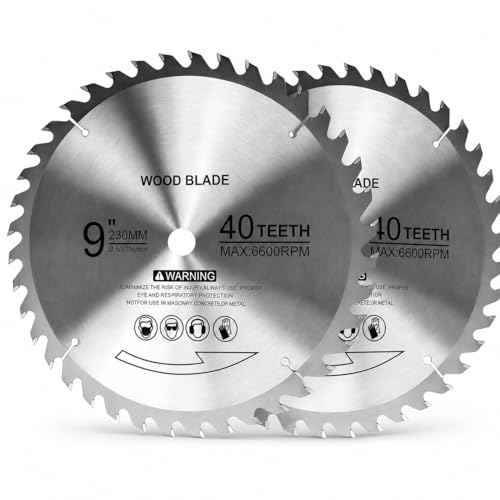
The Wadoy blade set uses 40T carbide-tipped ATB teeth for fast, clean cuts with minimal tear-out in plywood, MDF, and seasoned woods. The dual-pack offers value and a spare blade for balanced performance across projects. Best for: hobbyists and carpenters who want reliable all-purpose blades with durable teeth and straightforward crosscutting and ripping. Limitation: two blades may require careful storage and handling to avoid nicks at the teeth tips.
Freud LU87R009: 9″ Thin Kerf Rip Blade

The LU87R009 is designed for aggressive ripping with a thin kerf (.094″) that reduces waste and increases feed rate. Its 5/8″ arbor fits most standard saws. Best for: users who primarily rip boards and want efficient material removal. Caution: thin kerf requires precise setup to avoid deflection on tough stock.
KuangBBBTools 9″ 40T Carbide Tip Wood Cutting Blade

The KuangBBBTools blade uses ATB tooth geometry to balance fast cutting with a smooth finish across softwoods, hardwoods, plywood, and laminates. Best for: mixed projects where you switch between ripping and crosscutting. Limitation: not intended for metal cutting or exotic composites beyond typical wood products.
Freud LU88R009: 9″ Thin Kerf Fine Finish Crosscut Blade

The LU88R009 features 54 teeth and a TiCo HI-Density carbide blend for finer finish crosscuts. Its positive hook angle promotes a smoother cut and quicker feed. Best for: precision crosscuts and finishing tasks where surface quality matters. Caution: higher tooth count can slow down feed rate on very thick stock.
ATIE 9″ 40T General Purpose Blade (2 Pack)

The ATIE 9″ blade combines 40 teeth with ATB geometry for reliable performance on ripping and crosscutting tasks. The 5/8″ arbor and 0.1″ kerf support versatile woodworking projects, including plywood and laminate work. Best for: woodworkers seeking a dependable all-purpose blade. Limitation: heavy-duty ripping can generate more heat; ensure proper feed rate to minimize burning on dense stock.
Buying Guide
What to consider when choosing a 9″ blade
- Tooth count and type: 40T ATB blades provide a balance between speed and finish. Higher tooth counts yield smoother cuts but require slower feed rates; lower counts cut faster but with rougher finishes.
- Kerf width: Thin kerf blades reduce waste and require less motor power, but can be sensitive to deflection; standard kerf blades are more forgiving on budget saws.
- Arbor compatibility: Most 9″ blades target a 5/8″ arbor. Verify your saw’s arbor size and nut thread to avoid vibration and poor seating.
- Edge finish: For finishing cuts, consider blades with TiCo or similar carbide blends designed for smoother surfaces and longer life.
- Material versatility: If you work with plywood, laminates, or chipboard, ATB or alternative tooth geometries can help reduce tear-out and improve edge quality.
- Ripping vs. crosscut emphasis: If your primary task is ripping, choose slimmer kerf and rip-friendly designs; for finishing, prioritize higher tooth counts and crosscut optimized blades.
FAQ
- Q: Can I use a 9″ blade on a table saw with a smaller arbor? A: Most 9″ blades are designed for a 5/8″ arbor; confirm your saw’s arbor diameter and mounting hardware before purchasing.
- Q: Are carbide-tipped blades worth the extra cost? A: Carbide tips provide longer life and better edge retention, especially for hardwoods and plywood, making them cost-effective over time.
- Q: What blade should I choose for plywood and laminates? A: Blades with ATB or negative hook angles and finer tooth counts minimize tear-out and produce cleaner edges on plywood and laminates.
- Q: Is a thin kerf blade better for old or budget saws? A: Yes, thin kerf blades reduce load on the motor and can increase feed rates, but require stable guidance to avoid deflection.
- Q: How do I prevent burn marks when ripping? A: Maintain steady feed, use a sharp blade, and avoid forcing the saw. Proper blade selection for the material type also helps.
- Q: Should I own more than one blade? A: For diverse tasks, having dedicated ripping and finishing blades allows faster setup and better cut quality across projects.