All buyers want crisp, clean cuts from an 8-1/4 inch blade. This guide highlights top 8-1/4″ table saw blades, focusing on finish quality, kerf thinness, and durability. It helps hobbyists, woodworkers, and professionals choose blades that deliver smoother cuts with less tear-out. Each product section explains who it’s best for and why it’s a strong pick for fine finish work, crosscuts, and long-term performance. A quick buying table is provided for easy comparison at a glance.
Note: The following table summarizes five strong options selected for 8-1/4″ table saw compatibility, finish quality, and kerf characteristics. Use this as a starting point to compare blade tooth counts, coatings, and arbor compatibility relevant to your saw model.
| Product | Tooth Count | Kerf | Arbor | Main Advantage |
|---|---|---|---|---|
| FOXBC 60T 8-1/4″ | 60 | 0.079″ | 5/8″ | Fine finish with durable carbide |
| Diablo 60T 8-1/4″ | 60 | 0.079″ | — | Tico Hi-Density carbide for smooth cuts |
| ANGELSWORD 60T 8-1/4″ | 60 | 0.07″ | 5/8″ | Balanced for finish cuts with long life |
| DEWALT 40T 8-1/4″ | 40 | — | — | Robust framing/ripping option |
| TOYAKI 80T 8-1/4″ | 80 | 0.07″ | 5/8″ | Ultra-fine finish for precise cuts |
FOXBC 60-Tooth 8-1/4 Inch Table Saw Blade

Best for: Hobbyists and finish carpenters who need clean, fine cuts with a narrow kerf. The 60-tooth ATB design reduces tear-out on delicate joinery while the 0.079″ kerf enables quick passes. It uses a 5/8″ arbor and a tungsten carbide composition for wear resistance.
Why selected: It balances speed and finish quality. The ultra-thin kerf supports fast cutting with minimal waste, and the diamond knockout helps alignment after mounting. This is a solid all-around choice for fine finish work and mitered joints.
Caution: The blade is optimized for hardwoods and plywood; softer woods may produce fewer chips but consider tooth geometry for very soft materials.
Diablo 60T Fine Finish Saw Blade
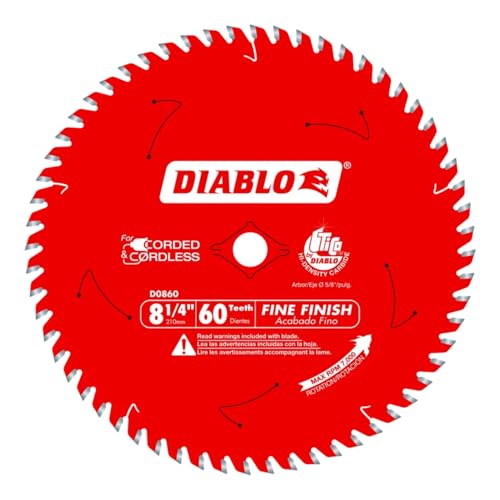
Best for: Finish carpenters and cabinetmakers seeking precise, chip-free cuts on hardwood and plywood. The TiCo Hi-Density carbide teeth provide longevity and reduced wear in fine finish applications.
Why selected: The Hi-Density carbide and Alt-ATB grind deliver smooth rip and crosscuts, including on oak and pine. Perma-Shield non-stick coating minimizes heat buildup and gumming, extending blade life.
Caution: The blade may be more expensive than basic options; prioritize long-term performance for frequent finish work.
ANGELSWORD 60T Blade Pack
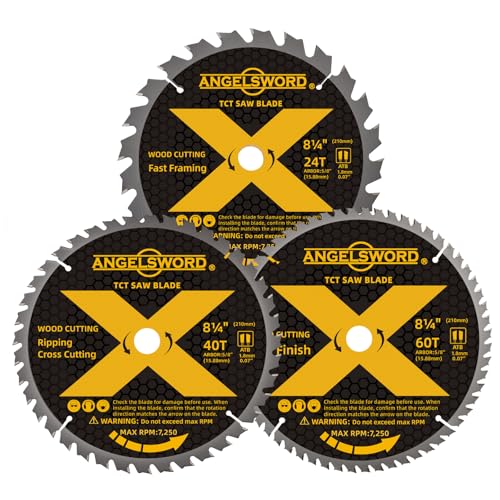
Best for: Users who want a versatile set for framing, ripping, and fine finish tasks. The 60-tooth blade included in a 3-pack merges cost efficiency with performance.
Why selected: High-quality plate and thin kerf enable fast, smooth, clean cuts. Tungsten carbide teeth offer wear and heat resistance for longer blade life across varied woods.
Caution: The set is best used with 5/8″ arbors; confirm your saw’s compatibility before purchase.
DEWALT 40T 8-1/4 Inch Blade
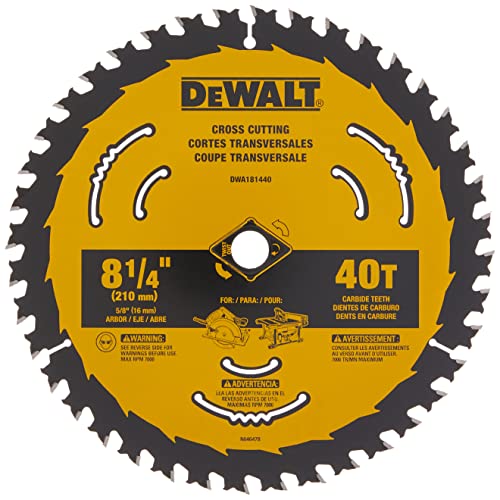
Best for: Framing and ripping tasks where blade durability and tracking are critical. The ToughCoat anti-stick coating helps maintain cutting efficiency over time.
Why selected: Tungsten carbide construction provides toughness and wear resistance, while the anti-stick coating minimizes friction and gumming for longer blade life during heavy-duty use.
Caution: Lower tooth count means slightly rougher finish on fine joinery; plan fine work with a higher-tooth blade or switch blades accordingly.
ANGELSWORD 60T 3-Pack For Fine Finish
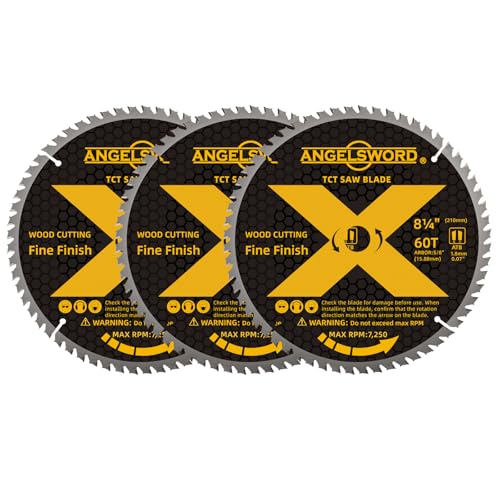
Best for: Woodworkers who want a dedicated blade for finish work and an economical option for projects with multiple cuts per piece.
Why selected: The 60-tooth design and 0.07″ kerf deliver a refined cut with reduced tear-out. Tungsten carbide teeth enable wear resistance and prolonged life.
Caution: The 3-pack provides value but confirm blade dimensions match your saw’s arbor requirements and clearance.
Buying Guide
What to consider when selecting an 8-1/4 inch blade
- Tooth count: Higher tooth counts (60–80) deliver smoother finishes; lower counts (40) are better for framing and fast cuts but leave rougher edges.
- Kerf width: Thinner kerfs remove less material and cut faster, but may be less forgiving on heavy material or saw alignment.
- Arbor compatibility: Most 8-1/4″ blades use a 5/8″ arbor; verify your saw’s arbor size and any adapter needs.
- Tooth geometry: ATB (Alternate Top Bevel) provides good finish cuts on most woods; more complex grind patterns exist for plywood and melamine.
- Coatings: Non-stick coatings help reduce heat buildup and gumming on softwoods and plywood; consider coatings if you cut sticky materials often.
- Material support: Tungsten carbide teeth offer longevity and wear resistance, especially on hard woods and dense species.
Maintenance and safety tips
- Keep blades clean and free of pitch buildup to maintain accuracy and cut quality.
- Install blades properly with the correct orientation and tighten arbor nuts to secure mounting.
- Use push sticks and proper PPE when working with power tools to reduce risk of injury.
How to compare blades without testing
- Compare tooth count, kerf, and coating as primary indicators of finish quality and life span.
- Assess whether the blade’s intended use aligns with your project—finish work vs. framing vs. crosscuts.
- Check compatibility with your saw model and arbor standards to avoid fit issues.
Frequently Asked Questions
- What is the best 8-1/4 inch blade for fine finish cuts? Answer: Blades with 60–80 teeth and ATB grind typically deliver smoother finishes on a variety of woods.
- Is a thinner kerf always better? Answer: A thinner kerf cuts faster and wastes less material, but it requires precise alignment and stable saw performance.
- Can I use an 8-1/4 inch blade for ripping? Answer: Yes, but blades with lower tooth counts (e.g., 40T) are generally better for ripping and framing tasks.
- Do coatings matter for plywood? Answer: Yes, coatings like Perma-Shield reduce heat, friction, and gumming when cutting plywood and melamine.
- Should I choose a multi-pack blade set? Answer: Multi-packs offer value and variety for projects requiring different finishes; ensure each blade matches your saw’s arbor.
- How do I know if a blade fits my saw? Answer: Check blade diameter, arbor size (most 8-1/4″ use 5/8″ arbor), and safe operating conditions from your saw manual.