Finding the right 3×21 belt sander belts can improve surface finish, reduce heat buildup, and extend tool life. This guide highlights five solid belt options that fit most 3×21 inch sanders, covering grit ranges from coarse to fine for wood, metal, and composite materials. Each choice features aluminum oxide construction, durable seams, and compatibility with common 3×21 belt sanders. Read on to compare performance features and practical uses to match your project needs.
Product Comparison Snapshot
| Product | Brand | Grit Range | Pieces | Key Benefit |
|---|---|---|---|---|
| 3×21 Belt Pack (12 Pcs) | TPmax | 80/120/150 | 12 | Premium aluminum oxide; diagonal lap splice; versatile for wood, metal, glass, and plastics |
| 3×21 Belts, 80 Grit, 10PK | POWERTEC | 80 | 10 | Open coat; heat and moisture resistant; strong seams |
| 21 Pack 3×21 Belts | BOSHCRAFT | 40/60/80/120/180/240/400 | 21 | Reinforced joints; variety for many materials; high durability |
| 3×21 40 Grit Belts (12 Pack) | TPmax | 40 | 12 | Firm interface; diagonal lap splice; premium aluminum oxide |
| 20 PCS 3×21 Belts | S SATC | 40/60/80/120/150/240/400 | 20 | Durable backing; multiple grits; broad material compatibility |
TPmax 3×21 Belt Pack (12 Pcs)

These 3×21 belts are crafted with premium aluminum oxide grain and feature a diagonal lap splice technology for a firm belt interface that resists breakage. The set is suitable for sanding wood, aluminum, non-ferrous metals, glass, plastic, and stone, providing broad applicability for hobbyists and professionals.
POWERTEC 3×21 Inch Belts, 80 Grits

POWERTEC belts are built to fit a variety of belt sanders with open-coat aluminum oxide grain. They feature heat and moisture resistance and robust seams designed to withstand pressure, making them suitable for wood, metal, paint removal, and other heavy-duty tasks.
BOSHCRAFT 21 Pack 3×21 Belts
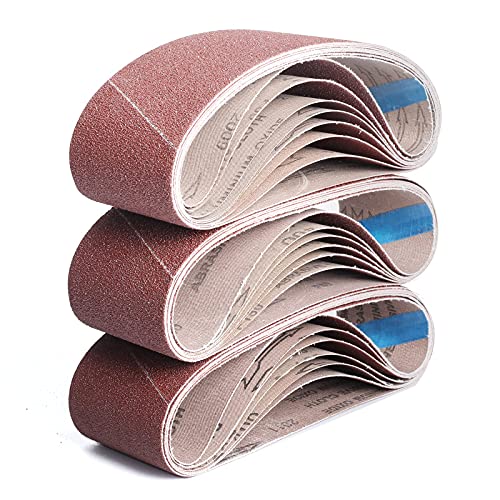
This set offers seven grit sizes from 40 to 400, enabling a wide range of applications from rough stock removal to fine finishing. The belts use reinforced joints with German tape on the cloth backing to minimize belt bumps and keep grinding flat and steady.
TPmax 3×21 Inch 40 Grit Belts (12 Pack)

This pack focuses on a single coarse grit at 40, ideal for substantial stock removal on wood and metal. Like the other TPmax belts, it emphasizes a firm belt interface and diagonal lap splice for reliable operation in demanding tasks.
S SATC 20 Pieces 3×21 Belts

Chock-full of grit options, this assortment provides 40/60/80/120/150/240/400 grades across 20 belts. The build uses durable backing and aluminum oxide grains, delivering versatility for aggressive stock removal to fine finishing on wood, metal, plastics, and composites.
Buying Guide: How To Choose The Right 3×21 Belt Belts
When selecting 3×21 belt sander belts, consider grit range, material compatibility, belt join construction, and sanding goals. A mixed-grit set is ideal for users who switch between rough shaping and finishing, while single-grit packs work well for focused tasks.
- Grit progression: Coarse grits (40-80) remove stock quickly; mid grits (120-180) smooth surfaces; fine grits (240-400) finalize edges and details. Some sets include a broad spread (40-400) for versatile projects.
- Material compatibility: Aluminum oxide belts suit wood, aluminum, plastics, and non-ferrous metals. Zirconia belts (not shown in these selections) excel in hard metals; choose oxide for a balance of cost and performance.
- Seam quality: Diagonal lap splice and reinforced joints reduce edge bumps and belt slips. Strong seams extend belt life under pressure and heat.
- Backing and bond: X-weight cloth backing with resin bonds offers heat resistance and durability for long sessions and variable humidity conditions.
- Sanders compatibility: Confirm belt width matches your sander’s platen and drum. The 3×21 size fits most common portable belt sanders, including lightweight hobby models and pro-grade machines.
For best results, select belts that align with your typical projects—rough stock removal and shaping may favor 40-80 grit packs, while finishing and preparation for staining or painting benefits from 120-400 grit sets. A combination approach, using multiple grits from a single brand or from compatible brands, can provide consistent sanding behavior across transitions.