Finding a robust 30-gallon air compressor helps power nail guns, paint sprayers, and workshop tools without frequent downtime. This guide compares five top 30-gallon and near-30-gallon models to match different workshop needs. The selections cover oil-lubed and oil-free pumps, vertical and horizontal tanks, and gas- versus electric-powered units. This helps buyers choose based on noise, maintenance, run time, and portability. The listed machines cater to hobbyists, DIY enthusiasts, and small professional shops seeking reliable air supply for mid- to high-demand tasks.
| Product | Brand | Tank Size | Max PSI | Notes |
|---|---|---|---|---|
| Klutch 29-Gallon | Klutch | 29 gal | 175 | Reliable for intermediate use; near-30 gal capacity; oil-free pump for maintenance ease |
| DEWALT 30 Gallon Portable | DEWALT | 30 gal | 175 | High performance; quiet operation vs. comparable models |
| CRAFTSMAN 33 Gallon | CRAFTSMAN | 33 gal | 175 | Vertical design saves space; oil-free pump reduces maintenance |
| Dewalt 30 Gallon Vertical | DEWALT | 30 gal | 175 | Vertical orientation; belt-drive for durable operation |
| Albott 30 Gallon Gas | Albott | 30 gal | 180 | Gas-powered with large air delivery; requires fuel management |
Klutch 29-Gallon Air Compressor Overview

The Klutch 29-Gallon model delivers a 2.5 HP motor with 175 PSI maximum and 5.1 CFM at 90 PSI. It is designed for portable use with maintenance-free operation due to an oil-free pump. Best for: intermediate air tool work, painting, nailing, and blow gun tasks in small to mid-size workshops. Limitation: slightly smaller CFM at 90 PSI compared with some heavy-duty units, which may affect prolonged high-demand tasks.
DEWALT 30 Gallon Portable Overview
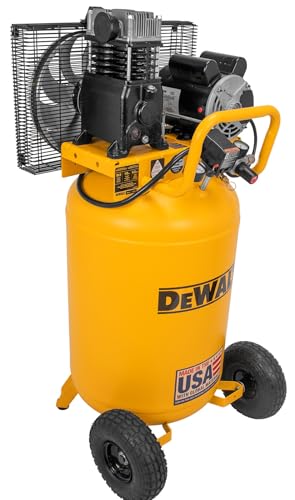
This DeWalt unit offers a 175 PSI max with a 6.2 SCFM at 90 PSI rating, and is noted for longer run time versus some 30-gallon competitors. Best for: shops needing reliable, longer tool run times and quieter operation. Caution: oil-lubed belt-drive design may require more routine maintenance than oil-free units.
Klutch 20-Gallon as a Reference Point

The Klutch 20-Gallon model uses a 2 HP motor with 4.2 SCFM at 90 PSI. It serves as a practical, compact option for smaller spaces and lighter workloads. Best for: users who want a budget-friendly entry point to air tools in a smaller shop. Limitation: significantly smaller tank and lower CFM than 30-gallon units, limiting sustained high-demand use.
CRAFTSMAN 33 Gallon Overview

CRAFTSMAN offers a 33-gallon tank with 175 Max PSI and vertical design for space efficiency. It features an oil-free pump for low maintenance. Best for: garages needing a compact footprint without sacrificing tank capacity. Limitation: slightly larger footprint than some 30-gallon models due to vertical orientation, which may affect placement in tight spaces.
DEWALT 30 Gallon Vertical Overview

This model emphasizes a vertical design and a belt-drive system, with a robust 175 Max PSI and 6.2 SCFM at 90 PSI. Best for: users who need a durable, high-output vertical unit in a workshop with vertical clearance constraints. Caution: belt-drive systems can require belt maintenance over time.
Albott 30-Gallon Gas-Powered Overview
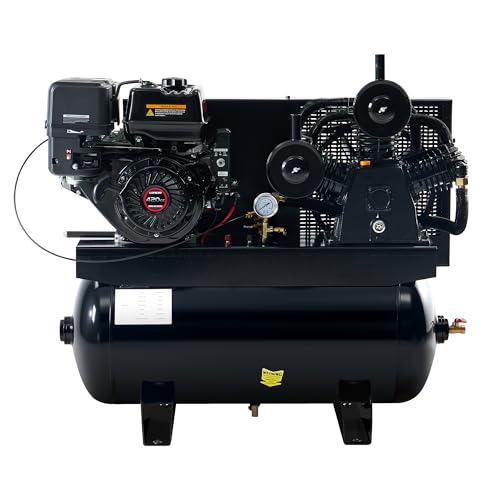
Albott’s 30-gallon gas-powered unit uses a 13 HP piston pump with up to 180 PSI and a large 30-gallon tank. Best for: outdoor or remote shop use where electric power is limited or where fuel-powered operation is preferred. Limitation: requires fueling and has louder operation than electric models.
Buying Guide
- Tank size and PSI: A larger tank (28–33 gallons) supports longer tool runs; higher PSI (up to 175–180) powers tough tools but may increase noise and energy use.
- Oil-free vs oil-lubed: Oil-free pumps reduce maintenance but may wear faster under heavy cycles; oil-lubed units typically run longer between service intervals but need oil changes.
- Motor type and power: Electric motors are quieter and convenient for most shops; gas-powered units suit outdoor or remote setups with less reliance on electricity.
- Layout and space: Vertical tanks save floor space; horizontal tanks may fit better in wide basements or garages.
- Maintenance and parts availability: Look for models with readily available replacement parts and simple service schedules.
- Noise considerations: Ultra-quiet models are advantageous in shared spaces or apartments; typical 70–90 dB ranges vary by design.
- Best for whom:
– Home garages: compact footprint, low maintenance, and sufficient CFM.
– Hobbyists: reliable performance with moderate run times.
– Small workshops: higher tank capacity for continuous use.
– Outdoor or remote use: gas-powered options provide flexibility without electrical dependence.
Frequently Asked Questions
- What is the advantage of a 30-gallon tank? A 30-gallon tank provides more stored air, reducing cycling and enabling longer tool operation between fills.
- Is an oil-free pump better for beginners? Oil-free pumps require less maintenance and are easier for casual use, but may wear faster under heavy loads.
- Which is quieter: electric or gas-powered models? Electric models generally run quieter; gas-powered units produce more noise due to combustion and exhaust.
- Do I need a vertical tank? Vertical tanks save floor space, useful in tight garages or small workshops; horizontal tanks can be steadier in larger setups.
- What running time should I expect with a 30-gallon unit? Expect longer tool runs between fills with larger tank capacity, particularly at moderate PSI; exact runtime depends on CFM ratings and tool demands.
- Are these units suitable for nail guns and paint sprayers? Yes, most 30-gallon units with 175 PSI and adequate CFM at 90 PSI support common nail guns and paint sprayers for DIY and light shop use.