Answering the question “which 200 psi air compressor should I buy?” this guide highlights five top options suited for contractors, shop setups, and serious DIYers who need reliable high-pressure performance. Each selection targets different use cases—from framing nailers to air ride suspensions—so readers can pick the model that best fits their tool lineup and work style. The list prioritizes portability, recovery speed, and durability, with practical notes on who benefits most from each unit.
To help compare at a glance, here is a quick table of the featured products and their strengths:
| Product | Best For | Key Benefit |
|---|---|---|
| Metabo HPT THE TANK EC914S | Framing, roofing, finish tasks | High pressure, strong airflow, versatile dual-nailers support |
| DEWALT DWFP55130 | Low noise, oil-free pump, solid 200 PSI max | |
| CNRAQR 200PSI Heavy Duty | Compact 12V design with 200 PSI capacity | |
| ZHSYMX 200PSI Air Compressor | All-in-one with mounting options, robust build | |
| DICMIC 12V 200 PSI Chrome | Thermal protection and 200 PSI max |
Metabo HPT THE TANK 200 PSI Pancake Air Compressor

The Metabo HPT THE TANK delivers 200 PSI with 4 CFM at 90 PSI, offering 25% more pressure than typical pancake models. This makes it well suited for framing, siding, and finish nailers where consistent pressure matters. The 6-gallon tank helps sustain tool performance without frequent recharges, supporting simultaneous use of multiple nailers for larger tasks.
Best for: crews doing heavy framing, roofing, or finish work where sustained airflow matters and compact footprint is needed. Choose this if you need higher pressure and reliable multi-nailer operation from a portable unit.
Caution: operate within the included duty cycle guidelines to avoid overheating during extended use.
DEWALT 200 PSI Quiet Portable Air Compressor (DWFP55130)

DEWALT’s model operates at up to 200 PSI with a compact 2.5-gallon tank and 3.0 SCFM at 90 PSI. Its standout feature is low noise, listed around 71.5 dBA in testing scenarios. The oil-free pump reduces maintenance, making it suitable for trim work and finish nailers where quiet operation and quick recovery matter.
Best for: users prioritizing quiet operation and low maintenance in a small shop or job site. Better for light-to-medium finishing tasks rather than continuous high-demand framing work.
Caution: smaller tank size means more frequent cycling under heavy loads; plan for rest periods between bursts of nail driving.
Klutch 29-Gallon Air Compressor (2.5 HP, 175 PSI)

This model offers a larger 29-gallon tank and a robust 2.5 HP motor, delivering up to 175 PSI with quick recovery via 5.1 SCFM at 90 PSI. The maintenance-free design helps reduce downtime on longer jobs, while the oil-free pump minimizes upkeep. It’s a strong option for continuous use in paint, nailing, and spray tasks.
Best for: workshops needing higher air capacity without frequent refills. It’s better for multi-tool operation across carpentry, painting, and finishing tasks.
Caution: bigger footprint means less portability; ensure garage or truck bed space is adequate for transport and setup.
DICMIC 12V 200 PSI Chrome Air Compressor
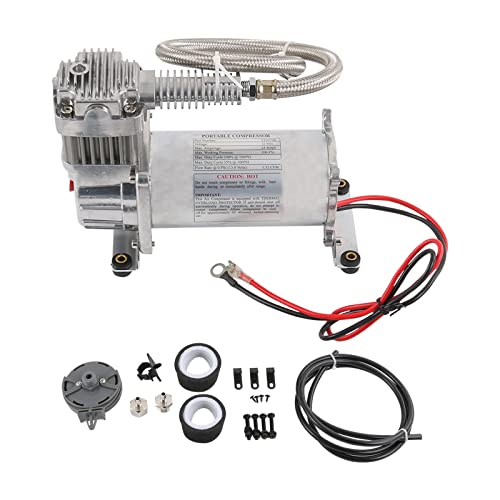
The DICMIC 12V model offers a compact 200 PSI working pressure with a built-in thermal overload protector for harsh environments. It targets automotive and motorcycle maintenance, delivering reliable performance for on-the-go tire inflation and small tool tasks where space is limited.
Best for: mobile technicians and trunk-ready kits that need 200 PSI capability in a small form factor. A practical pick for quick on-site tire inflation or light air-tool use.
Caution: 12V compressors typically have limited airflow for long bursts; suitable for quick inflation rather than sustained nailer use.
Vixen Horns 200 PSI Onboard Air Compressor

Vixen Horns provides a 200 PSI onboard compressor designed for truck and car systems, with a 1.7 CFM flow rate and ¼” NPT hose. It includes a thermal overload protector and a heavy-duty hose with a check valve to prevent backflow, aiming at gap-filling in air suspension and horn systems.
Best for: vehicle enthusiasts and fleet operators needing rapid accessory air for horns, suspension, or tire tools. Better for dedicated automotive applications than wide-ranging shop use.
Caution: 12V onboard units have limited capacity for high-demand tools; avoid long continuous runs at maximum pressure without periodical cooling.
CNRAQR 200 PSI 12V Heavy-Duty Air Compressor

CNRAQR’s 12V unit delivers up to 200 PSI with a 23-amp draw and a 1.76 CFM flow at 0 PSI. It uses an anodized aluminum cylinder and a stainless braided hose with a check valve, plus thermal overload protection for added safety in automotive setups and mobile tire work.
Best for: installers and technicians needing a rugged, compact compressor for car/ motorcycle applications and portable air tools. Choose this for frequent road-ready inflations and light tool use.
Caution: expect modest air flow at higher pressures; plan for intermittent use on high-demand tools.
ZHSYMX 200 PSI 12V Heavy-Duty Onboard Compressor

ZHSYMX offers an all-in-one onboard system with 200 PSI capability and simple mounting. It highlights versatility for car horns, air ride suspension, tools, and tires. The system includes a stainless steel braided hose, a check valve, and thermal protection for durability in varied conditions.
Best for: users seeking an easy-to-install onboard solution for automotive air needs, including suspensions and horns. Better for integrated vehicle projects than standalone shop use.
Caution: installation complexity can vary; ensure compatibility with your vehicle’s electrical system and mounting provisions.
Klutch 20-Gallon Air Compressor (2 HP, 175 PSI)

Klutch’s 20-gallon unit emphasizes reliability with a 2.0 HP motor and 175 PSI max. It features a splash oil-lubricated cast iron twin-cylinder pump and a ball-bearing crankshaft for longevity. The unit is designed for multi-application use, including automotive and shop tasks requiring steady airflow.
Best for: shops that need a balance of capacity, durability, and versatility for varied air tools. Better for longer sessions than ultra-portable options.
Caution: 175 PSI may be below some high-demand tools’ needs at peak task loads; verify your tool spectrum before relying on it for continuous heavy use.
Buying Guide: Key Purchase Considerations
- Pressure vs. capacity: Higher PSI improves tool compatibility with high-demand nailers, but consider tank size for recovery time and air volume needs.
- Portability: Pancake and small tank models are easier to move; larger tanks suit stationary shop setups with multiple tools.
- Noise and maintenance: Oil-free designs reduce maintenance but may be noisier in some models; evaluate noise tolerance and service intervals.
- Duty cycle and recovery: Models with faster recovery and higher SCFM at 90 PSI handle continuous tool use better.
- Onboard vs. portable: Onboard 12V/24V units excel for mobile tasks; portable models excel for job-site versatility and higher air capacity.
- Tool compatibility: Match CFM and PSI to your most-used tools to prevent weak performance or cycling issues.
Frequently Asked Questions
- What does 200 PSI mean for my tools? — It indicates the maximum pressure the compressor can reach; ensure your tools are rated to utilize up to that pressure.
- Is a larger tank better for nailers? — Yes, larger tanks provide longer runtimes between fills, reducing cycling and downtime for high-use tasks.
- Are oil-free pumps better for beginners? — They require less maintenance but can be noisier; consider your tolerance for noise and upkeep.
- Can 12V compressors handle framing nailers? — Typically not for continuous framing tasks; they’re better for inflating tires or running light tools in mobile setups.
- Do I need an onboard compressor for vehicles? — Onboard systems are convenient for horn and suspension work, but check installation requirements and compatibility with your vehicle’s electrical system.
- How do I know which compressor to choose? — Consider your primary tasks, tool lineup, required airflow (CFM at 90 PSI), portability needs, and whether you need on-site or shop-based use.