Searching for a 20 inch circular saw blade? This guide matches top 20″ blades to real-job needs, from heavy construction to precision non-ferrous work. The best picks cover general purpose, diamond blades for concrete and masonry, and high-tooth carbide blades for aluminum and non-ferrous metals. If you’re a professional contractor, choose blades that balance reliability with cutting speed; DIY users may prioritize ease of setup and longevity. Below is a quick comparison table of five leading options to help you decide at a glance.
| Product | Best For | Key Benefit |
|---|---|---|
| Freud LU72M020 | General purpose and long life | Premium TiCo carbide for versatile use |
| Amana Tool 520121 | Non-ferrous metals and aluminum | Carbide tipped for clean cuts on soft metals |
| EDiamondTools All Purpose Diamond Blade | Concrete, asphalt, masonry | Diamond blade designed for hard materials |
| Tenryu IA-510120DN | General purpose performance | Well-regarded 20″ option from Tenryu |
| ArcherPro 20″ Diamond Blade | Concrete, stone, masonry | Laser welded segments for durability |
Freud LU72M020: 20″ x 72T General Purpose Blade
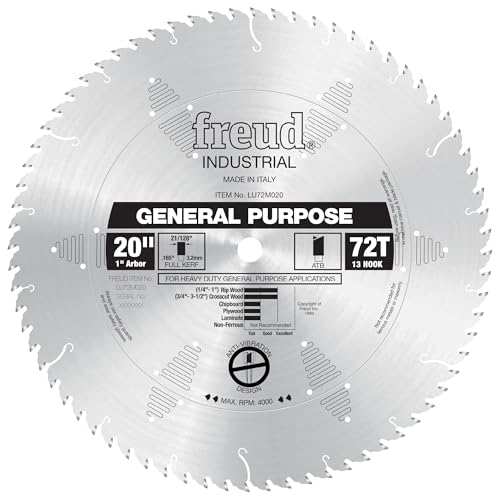
Best for: General purpose cutting with long blade life. The LU72M020 uses a TiCo HI-Density carbide blend and a heavy-duty thick kerf and plate to deliver stability and extended cutting life. It is well-suited for hardwoods, softwoods, and generic construction materials where a robust, versatile blade is desired. The 72-tooth count balances smooth cuts with material removal speed. Caution: The blade’s performance depends on feed rate and material density; pushing too fast through hard materials may shorten life.
Amana Tool – 520121 Carbide Tipped 20″ Blade

Best for: Cutting aluminum and non-ferrous metals. This blade is carbide tipped with 20″ diameter and 120 teeth, optimized for clean, precise cuts in soft metals. It’s a strong choice when a smooth finish on aluminum or similar materials is required. Limitation: The high tooth count may reduce aggressiveness on very tough non-ferrous alloys if feed rate isn’t matched to material stiffness.
EDiamondTools 20″ All Purpose Diamond Blade

Best for: Concrete, asphalt, and masonry cutting. This all-purpose diamond blade is designed for multi-material cutting with diamond segments that handle hard or reinforced substrates. Caution: Diamond blades require proper cooling and setup; never use for wood or non-concrete materials without material compatibility checks. This blade suits professional use where uniform depth and clean edges are needed.
Tenryu IA-510120DN 20″ Saw Blade

Best for: General purpose performance from a trusted brand. The Tenryu IA-510120DN offers standard 20″ size with a balanced design suitable for a range of cutting tasks. Caution: Specific teeth configuration and kerf dimensions may influence cut quality on very dense materials; verify compatibility with your saw and material before use. Better for routine construction tasks that require dependable results.
Amana Tool – 620600 General Purpose 20″ Blade

Best for: General purpose cutting with a durable ATB configuration. This blade features 60 teeth and a 1″ bore, suitable for versatile construction tasks. It’s a solid option for users needing a reliable, all-around blade, especially when combined with a 20″ saw. Caution: With fewer teeth than high-precision blades, finish quality on certain finishes may be slightly less refined; plan for a finishing pass if required.
Buying Guide
How to choose a 20 inch blade
- Material compatibility: Diamond blades excel on concrete, masonry, and asphalt. Carbide tipped blades are ideal for wood, non-ferrous metals, and general purpose uses. Match the blade type to the primary material you cut.
- Tooth count and grind: Higher tooth counts (e.g., 60–120T) deliver smoother finishes but cut more slowly. Fewer teeth remove material faster but produce rougher edges. ATB grind generally yields better crosscuts and finishing performance.
- Kerf and plate thickness: Heavier kerfs offer stability and longer life for demanding cuts; thinner kerfs remove less material and are easier to push in soft materials. Consider your saw’s motor power and feed rate when selecting kerf.
- Arbor size and bore: Most 20″ blades use a 1″ arbor. Confirm your saw supports a 1″ bore and whether any adapters are needed for proper fitment.
- Durability features: Laser-welded segments and premium carbide blends increase blade life in tough jobs and reduce segment loss. For high-production environments, prioritize blades with laser welding and robust segment design.
- Application scope: For mixed-material projects, having both a general-purpose carbide blade and a diamond blade for concrete can reduce tool changes and improve safety by using the correct blade for each task.
Frequently Asked Questions
- What is a 20″ blade best used for? It’s typically used on large cold-cut saws or floor saws for construction, masonry work, and metal fabrication where wide cuts are necessary.
- Are diamond blades safe for hard concrete? Yes, when used with appropriate cutting conditions and coolant if required. They are designed to handle hard substrates better than standard carbide blades.
- Should I choose a blade with more teeth? Higher teeth provide smoother cuts, especially for finishing; they also reduce chip-out on soft materials but may reduce cutting speed.
- What does kerf mean, and why does it matter? Kerf is the width of the cut the blade makes. A thicker kerf removes more material per pass but requires more motor power. For dense materials, a thicker kerf can help with blade stability.
- Is bore size important for fit? Yes. A 1″ arbor is common for 20″ blades, but always verify your saw’s arbor compatibility to ensure a secure fit and safe operation.
- Can I use a diamond blade for metal cutting? Diamond blades are typically designed for masonry and concrete. For aluminum or other non-ferrous metals, carbide blades specifically rated for metals are usually preferred.