Choosing the right saw blade can dramatically improve cut quality, reduce tear-out, and extend blade life. This guide highlights five top-performing blades tailored for miter and table saw use, from ultra-fine finishes to general-purpose cuts. Each option is evaluated based on tooth design, kerf, durability, and compatibility with common 10-inch saws. Use the buying guide below to compare features and select the best blade for your projects.
| Product | Brand | Key Feature | Best For |
|---|---|---|---|
| WEN BL1080 | WEN | 80 teeth, ultrafine kerf | Finish carpentry, fine woodworking |
| DEWALT DWA11080 | DEWALT | 80 teeth, optimized geometry | Finishing and precision cuts |
| WEN BL1060 | WEN | 60 teeth, fine finish | Finish cuts in soft/hardwoods |
| FOXBC 80-Tooth Ultra Finish | FOXBC | High-density tungsten carbide, thin kerf | Ultra-smooth finishes |
| Luckyway 60T/32T Combo | Luckyway | Two blades in one pack, versatile | General purpose and finish blends |
This article uses a neutral, objective lens to help readers compare blades across popular 10-inch models. Each product section provides a concise overview, supported by listed features, to help builders, hobbyists, and professionals decide which blade best fits their finish, speed, and durability needs.
WEN BL1080 10-Inch 80-Tooth Carbide-Tipped Finish Blade

The WEN BL1080 is designed for ultra-fine finishes with an 80-tooth configuration and a 1/10-inch kerf. This blade is well-suited for both miter and table saws and is rated up to 6000 RPM, enabling smooth, precise cuts through hard or softwoods. Its carbide tips help reduce heat build-up and maintain edge sharpness for extended periods, making it a versatile choice for finish carpentry and cabinetry projects.
Key features include a 10-inch diameter, 5/8-inch arbor compatibility, and an ultrafine kerf that minimizes material loss while delivering clean results. This blade strikes a balance between finish quality and cutting speed, ideal for projects where visible edges require a refined appearance.
WEN BL1060 10-Inch 60-Tooth Fine-Finish Blade
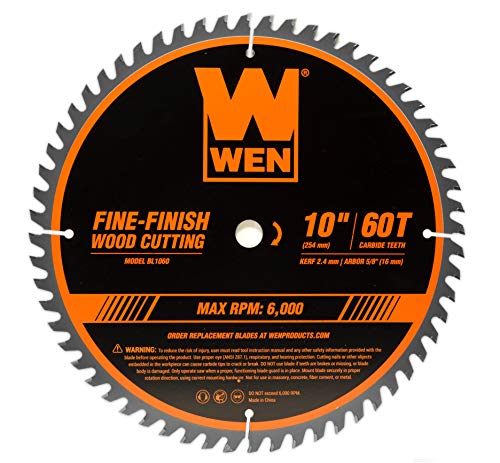
The WEN BL1060 offers a 60-tooth configuration for fine finishing tasks, delivering smoother edges for cabinetry, shelving, and trim work. With a 10-inch diameter and 5/8-inch arbor, this blade fits most standard miter and table saws and can handle a range of woods with predictable results. Its performance at up to 6000 RPM supports quick, efficient cuts when finish quality is a priority.
Its ultra-thin kerf design contributes to reduced material waste and less drag, helping maintain clean lines on delicate pieces. The blade is a solid option for woodworkers who want a dedicated finish blade without sacrificing cutting speed for small- to medium-sized projects.
DEWALT Table Saw Blade, 10 inch, 80 Tooth, Fine Finish

DEWALT DWA11080 features an 80-tooth configuration with a patented body slot design aimed at reducing vibration and increasing finish quality. This blade is optimized for accuracy and consistent cuts, making it suitable for fine woodworking, cabinetry, and woodworking projects that demand refined edges. The carbide teeth are engineered to deliver long wear life, enabling more cuts before replacement is needed.
With a 10-inch diameter and 5/8-inch arbor, it matches standard saws and provides a stable cutting experience. The blade’s geometry is designed to balance speed and finish quality, reducing tear-out in delicate woods while maintaining throughput in busy shops.
FOXBC 10-Inch 80-Tooth Ultra Finish Blade

FOXBC’s 80-Tooth Ultra Finish blade combines a thin kerf with high-density tungsten carbide teeth for clean, precise cuts and smooth finishes. The 0.098″ kerf reduces waste while preserving blade stability and minimizing chatter. An 5/8-inch arbor ensures compatibility with most 10-inch miter and table saws, and the blade’s ATB tooth geometry is optimized for fine finish work in hardwoods and softwoods alike.
Designed for durability and long life, this blade emphasizes finish quality and repeatable accuracy across multiple cutting sessions, making it a strong option for cabinetry, trim, and panel work where surface quality matters most.
FOXBC 80-Tooth TCG Blade For Aluminum and Non-Ferrous

This FOXBC blade uses a 80-tooth TCG configuration designed for cross-cutting metals and non-ferrous materials. While primarily aimed at metal and composite applications, the blade’s robust carbide teeth and precise kerf offer opportunities for specialized cut tasks in aluminum and plastics where a universal tool is beneficial. The 5/8-inch arbor keeps it compatible with standard 10-inch saws, and laser-cut stabilizers help reduce noise and vibration for smoother operation.
Note that this blade is more specialized and may not be ideal for typical wood finishing tasks but can serve as a versatile option when a shop handles mixed-material work under tight tolerances.
Luckyway 10-Inch Combo Blade Pack
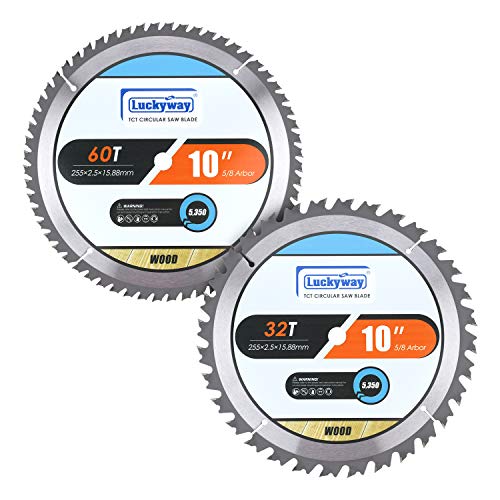
The Luckyway combo pack includes a 32-tooth and a 60-tooth blade, offering versatility for both general purpose cuts and finer finishes. The blades feature a 5/8-inch arbor and a 10-inch diameter, making them compatible with most miter and table saws. The 32T blade is suitable for faster rough cuts, while the 60T blade delivers cleaner finishes for cabinetry and trim. The fully hardened steel blade body resists bending and provides stable, accurate cuts.
For hobbyists and multi-project shops, this two-blade option provides flexibility without purchasing multiple specialized blades. It’s a practical choice when project diversity and budget matter, though it may require swapping blades to maximize finish quality on fine work.
Buying Guide
Key considerations when choosing a 10-inch saw blade for wood projects include tooth count, kerf width, blade material, and arbor compatibility. Here are multiple perspectives to help guide decisions:
- Finish vs. speed: Higher tooth counts (e.g., 60–80T) yield smoother finishes but cut more slowly. For cabinetry and trim, prioritize 60–80T blades; for rough carpentry, lower tooth counts may speed up workloads.
- Kerf width: Ultra-thin kerfs reduce material waste and require less power, but can be more sensitive to deflection. A 0.098″ kerf is common for finish-grade blades and offers a balance between precision and durability.
- Tooth geometry: ATB (alternating top bevel) is standard for clean cross-cuts and finishes, while other geometries like TCG or raker designs can address aluminum or plastics but may not be ideal for wood finish work.
- Arbor compatibility: Most 10-inch blades use a 5/8-inch arbor. Confirm your saw’s arbor size and any potential need for adapters to ensure proper fit and stabilization during cut.
- Durability and life: Carbide-tipped blades tend to last longer and stay sharp under typical woodworking loads. Look for blades with robust carbide teeth and reinforced body construction for heavy use.
- Use case and material: Fine finish blades excel on hardwoods and plywood with delicate veneers, while general-purpose blades are better for mixed materials. For aluminum or non-ferrous metals, consider blades specifically designed for metal cutting with proper stabilizers and venting to minimize vibration.
- Maintenance: Keep blades clean and free from pitch buildup. Store blades flat and dry, and inspect for chipped teeth or warping before use to avoid poor cuts or safety issues.
In practice, selecting a blade often involves matching tooth count to the material and the desired edge quality. For finish work on wood, blades in the 60–80T range with thin kerfs are generally favored. For versatile shop use that spans rough cutting and fine work, a dual-pack blade option can offer flexibility without sacrificing too much finish quality. Always follow manufacturer guidance for RPM limits and compatibility with your specific saw model.