Whether you’re framing, finishing, or cutting plastics and metals in some cases, the right circular saw blade can dramatically improve finish quality, speed, and blade life. This guide highlights five top-performing blades suited for American hobbyists and professionals alike, with a focus on clean finishes, durability, and versatile RPM ranges. Each blade section includes an image, a quick spec snapshot, and justification for its suitability across common woodworking tasks.
Summary table of selected products:
- WEN BL1080: 10″, 80-tooth carbide-tipped ultra-fine finish blade for precise finishes
- DEWALT DWA11040: 10″, 40-tooth finishing blade for smooth cuts and long life
- WEN BL1060: 10″, 60-tooth fine-finish blade for detailed work
- WEN BL1040: 10″, 40-tooth carbide-tipped standard blade for general use
- DEWALT DWA11080: 10″, 80-tooth finish blade with optimized geometry
WEN BL1080 80-Tooth Ultra-Fine Finish Blade

The WEN BL1080 is designed for ultra-fine finishes on both soft and hard woods, with a large 80-tooth count and a carbide-tipped edge for extended life. Its 10-inch diameter and 5/8-inch arbor match common miter and table saw setups. The ultra-thin kerf of 1/10 inch (2.4 mm) reduces waste and minimizes heat buildup, contributing to smoother cuts and longer blade life at speeds up to 6000 RPM. This blade is ideal for finish carpentry, cabinetry, and any task demanding a high-quality surface.
Key considerations:
– Finish quality: High tooth count yields smoother cuts with less tear-out.
– Compatibility: Fits standard 10-inch saws with a 5/8-inch arbor.
– Durability: Carbide-tipped teeth provide extended life under typical shop conditions.
DEWALT Table Saw Blade 10″ 40 Tooth

The DEWALT DWA11040 offers a balanced option for those seeking a reliable finish cut at a mid-to-fine tooth count. With a 10-inch diameter and a 40-tooth configuration, this blade emphasizes clean cuts while delivering good cutting speed for a variety of woods. Its carbide construction provides durability across multiple projects, and the blade geometry is optimized to minimize vibration for steadier cuts and better surface quality.
Product highlights:
– Versatility: Suitable for a range of hardwood and softwood applications.
– Longevity: Carbide tips extend blade life even with frequent use.
– Accuracy: Tooth geometry and body design balance speed with finish quality.
WEN BL1060 60-Tooth Fine-Finish Blade
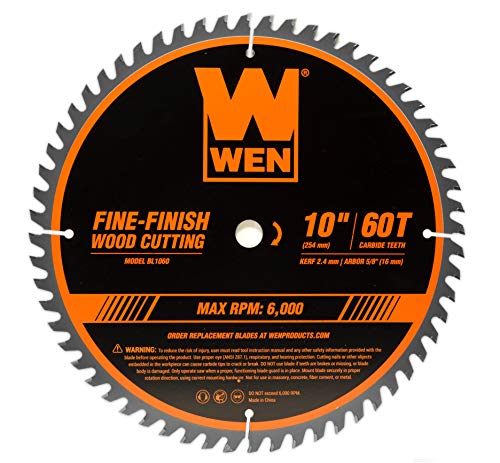
The WEN BL1060 is a mid-to-high tooth-count blade designed for finish work where a flawless surface is critical. Its 60 teeth provide smoother cuts than standard finishing blades while maintaining a practical kerf and speed of up to 6000 RPM. The 10-inch blade with a 5/8-inch arbor makes it compatible with most miter and table saws found in home shops and professional shops alike. This blade excels in cabinetry, furniture, and decorative trim installations where finish is paramount.
What to expect:
– Finish quality: The 60-tooth count hits a sweet spot between speed and surface quality.
– Compatibility: Fits standard 10-inch saws with 5/8-inch arbors.
– Durability: Carbide tips resist dulling under regular woodworking tasks.
WEN BL1040 10-Inch 40-Tooth Carbide Blade
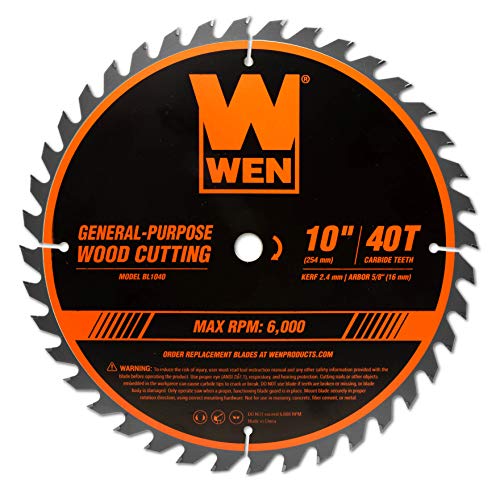
The WEN BL1040 offers a reliable baseline for general-purpose cutting with carbide-tipped teeth. This 10-inch blade is a strong option for framing, trim work, and basic construction tasks where a balance of speed, kerf, and durability is needed. Its 40-tooth configuration delivers cleaner cuts than a typical 24-tooth blade but without sacrificing cutting speed on common lumber. Ideal for DIY projects and shops that require a dependable all-around blade.
Important notes:
– General use: Good all-around blade for a variety of woods.
– Efficiency: 1/10-inch kerf reduces waste and resists binding.
– Build: Carbide tips extend blade life for regular use.
DEWALT 10-Inch 80-Tooth Fine Finish Blade

This DEWALT DWA11080 blade is built for premium finish quality and longer life. With up to 3x the expected life relative to standard blades, its fine-tooth geometry minimizes heat and vibration while delivering crisp surface finishes. The patented body slot design is focused on reducing vibration, further improving cut accuracy across delicate joinery, trim, and cabinetry work. It’s a strong choice for finishing, door joinery, and other precision tasks where a flawless surface is essential.
Key advantages:
– Finish quality: High tooth count yields exceptional surface quality.
– Longevity: Design prioritizes longer blade life in finish tasks.
– Precision: Optimized tooth geometry enhances accuracy and reduces chatter.
Buying Guide: Key Considerations For Choosing The Right Blade
To ensure you pick the best blade for your needs, consider the following perspectives and trade-offs:
-
<li Tooth count and finish quality: Higher tooth counts (40–80T) yield smoother surfaces but may cut slower than lower-tooth blades. For cabinetmaking and finish carpentry, prioritize 60–80T blades. For framing and quick rough cuts, 24–40T blades offer speed with acceptable edge quality.
<li Kerf width: Ultra-thin kerf blades reduce material waste and require less power, but can be more prone to deflection on heavy cuts. Standard kerf blades offer a balance of durability and performance, especially on less-than-perfect lumber.
<li Arbor compatibility: Most 10-inch blades in consumer tools use a 5/8-inch arbor. Verify your saw’s arbor size before purchase to avoid adapters or wobble.
<li Carbide longevity: Carbide-tipped blades hold an edge longer than high-speed steel blades, especially under regular shop use. For frequent cutting, carbide blades provide a better long-term value.
<li Material compatibility: Some blades are optimized for plywood, hardwood, or non-wood materials like plastics and non-ferrous metals. Match blade design to your primary materials for best results.
<li Vibration and finish goals: Blades with special body slot designs or optimized tooth geometry reduce vibration, improving accuracy on finish tasks. When precision truly matters, prioritize blades with these design features.
<li Brand and warranty: Reputable brands typically offer consistent performance and support. Evaluate warranties and customer feedback to gauge long-term reliability.
Overall, select blades that align with your most frequent tasks: finish work demands high tooth counts and superior surface quality, while framing and rough carpentry benefit from sturdier, lower-tooth blades. The five blades highlighted here provide a representative range of options across common woodworking scenarios, balancing speed, cut quality, and durability for American workshops.