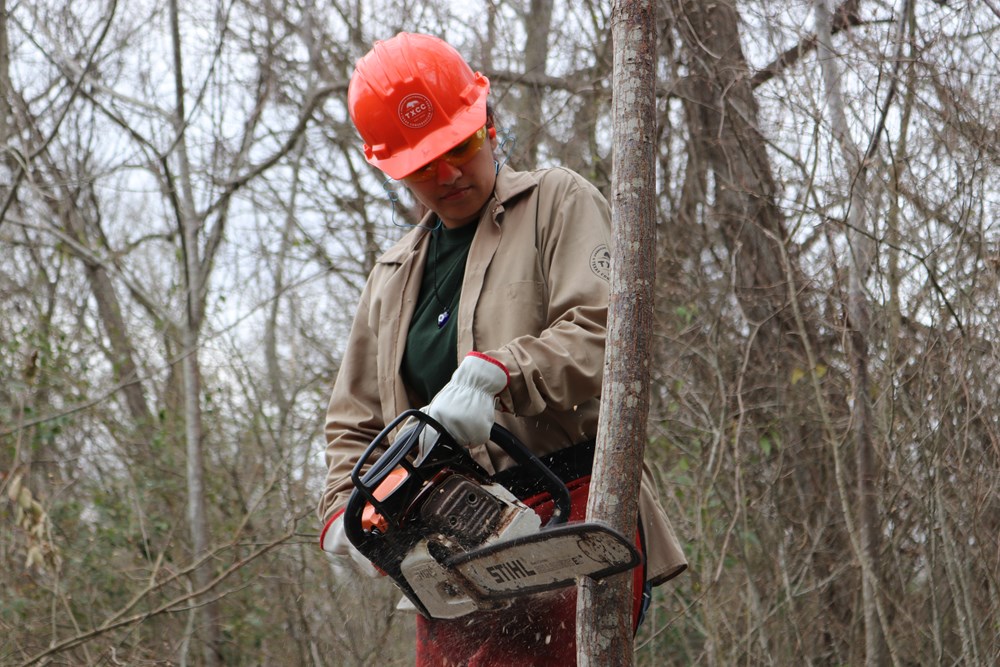
The job is not finished when the last piece of wood separates. You still need to shut the saw down, manage heat and energy, cover the chain, and move the equipment without creating a new hazard.
Plan those steps before work begins, especially if the saw will travel in a vehicle. A short drive does not make an unsecured tool, exposed chain, or fuel concern acceptable.
Make the destination part of the plan
Decide where the saw will cool and where it will be secured for transport. Those locations should follow the manual's precautions and remain separate from ordinary household movement.
A porch beside the children's entrance may seem convenient until someone brushes past the exposed chain or hot equipment. Choose a location that accounts for people who are not involved in the task.
If you are working away from home, confirm that the vehicle has suitable space before starting. A fully loaded trunk can leave you improvising a transport arrangement at the end of a tiring afternoon.

Include cleanup and transport time in the schedule. A plan that allocates every remaining minute to cutting encourages rushed handling precisely when you may be fatigued.
Shut down using the exact controls
Follow the operator manual and your training for ending the operation and stopping the machine. Do not assume a released trigger, silent motor, or stationary chain is the complete storage or servicing state.
For a battery saw, follow the specified battery-removal and energy-isolation instructions. For a gas or corded machine, use the relevant exact procedure rather than transferring a habit from another power source.
Keep others clear while you complete the transition from operating equipment to stopped equipment. Do not hand a saw to someone who approaches unexpectedly because you assume they understand its condition.
If a stop control or safety feature does not behave as specified, treat that as a service issue. Leave the machine out of use and explain the fault rather than putting it away without a warning.
Give heat somewhere safe to go
Follow the cooling precautions before packing, refueling, or placing the saw near heat-sensitive or combustible material. A case is not a solution for a machine that is still too hot to store as instructed.
Do not set hot equipment on dry vegetation, loose clothing, plastic bags, or an upholstered vehicle surface. Choose the suitable location planned in advance and keep it clear while the machine cools.

Swipe sideways to inspect the diagram, or focus it and use the arrow keys.
If you are in a hurry to leave, the correct response is to build in waiting time or change the schedule. Closing a lid does not remove heat, vapor, or an unresolved fuel concern.
Avoid checking temperature by touching the muffler or other potentially hot parts. Use the manual's handling guidance and allow the required cooling rather than creating a burn test.
Fit the correct chain cover
Use the protective scabbard or cover specified for the fitted cutting attachment. It should cover the intended exposed chain and remain in place as the manufacturer requires.
A cover intended for a shorter bar may leave part of a longer chain exposed. Check again when the approved bar configuration changes instead of assuming the cover supplied with the original machine still fits.
STIHL's gas-saw safety manual separately describes chain covering and securing the saw for vehicle transport against turnover, fuel spillage, and damage. Use your own saw's exact instructions for its handling details.
Do not carry or suspend the saw by a scabbard unless the manufacturer specifically identifies a permitted attachment for that purpose. A protective cover is not automatically a load-bearing handle.
Choose the route before picking up the tool
Look at the path to the vehicle or storage area after work is complete. Branches, cut pieces, and tools may now occupy a route that was clear before the task began.
Clear ordinary loose obstacles safely with the saw stopped and isolated as appropriate. Do not combine walking with casual cleanup while carrying an exposed cutting attachment.
If the route involves a steep slope, unstable debris, ladders, or other difficult access, reassess the move and get suitable help. A small saw does not make unsuitable footing reliable.
Keep other people informed about the move so they do not cross your path unexpectedly. Use the carrying method, handle, and orientation specified for the actual saw rather than a generic picture from another model.
Secure the machine, not just the case lid
A carrying case can protect surfaces and organize equipment, but the vehicle arrangement must still prevent movement as instructed. A closed lid does not automatically secure the case to the vehicle.
Choose a location and restraint method appropriate for the saw, case, and vehicle. Avoid placing the equipment where it can strike occupants or other items during braking, turning, or an impact.
Keep the tool away from objects that could damage controls, caps, battery housings, or the protective cover. Check the actual arrangement rather than assuming everything wedged tightly together is secure.
If the case maker does not document fit for your assembly, confirm physical clearance before relying on it. Bar length alone does not describe the powerhead, handle, bumper spikes, or accessories that occupy the case.
Handle fuel and batteries as their own cargo
Use the approved fuel containers and transport precautions for the applicable products and location. Do not put an unidentified or leaking container in a case compartment simply because it fits.
For batteries, follow the pack's instructions on removal, protection of terminals, temperature, and securing during transport. Loose metal tools and a battery should not share an improvised pocket when that could create a short-circuit hazard.
If a pack is damaged, swollen, leaking, or behaving abnormally, do not treat ordinary transport instructions as permission to move it casually. Seek the manufacturer's guidance and use emergency services if an immediate hazard develops.
Air travel and shipping can have additional requirements that a drive-home checklist does not cover. Check the relevant carrier and official transport rules for the exact item before planning that kind of journey.
Inspect for a leak before departure
With the machine safely stopped and cool, check the accessible items the manual specifies and look for an unexplained leak. Resolve a fuel leak through qualified service rather than hiding it inside a case.
Do not assume every oily mark means the same thing. A spilled refill, ordinary residue, and an active leak need different responses, and the product instructions or dealer can help establish the cause.
Keep cleanup materials and used absorbents managed appropriately. Contaminated rags should not be left in the passenger area or piled beside ignition sources because the saw itself is secured.
If the vehicle develops a strong fuel odor or another concerning sign, stop safely and address the hazard under appropriate guidance. Finishing a short trip is not more important than resolving a potential leak.
Finish the handover at home
Unload into the planned secure storage location and follow the saw's storage instructions. A vehicle is not automatically an appropriate long-term home for fuel equipment or a battery.
Clean and inspect only after following the required isolation and cooling procedures. Record damage, service needs, or an unusual symptom while the day's observations are still clear.
Tell other users whether the saw is ready for use or requires attention. A protective cover and a tidy case can make an unfinished maintenance job look complete unless you label it clearly.
A good shutdown and transport routine carries the task through to a secure destination. When the equipment is cool, appropriately isolated, covered, checked, and secured according to its instructions, you have finished the whole job rather than only the cutting.