
Finding the best miter saw blade for fine woodworking is essential for achieving clean, accurate, and professional cuts on various wood types. Whether you work with hardwood, softwood, plywood, or composite materials, the right blade enhances your project’s quality and efficiency. Below is a summary table showcasing top-performing miter saw blades selected for their fine finish and woodworking precision.
| Product | Diameter & Teeth | Arbor Size | Key Feature |
|---|---|---|---|
| WEN BL1080 10-Inch 80-Tooth | 10″ / 80 Teeth | 5/8″ | Ultra-thin kerf for clean, efficient cuts |
| WEN BL1060 10-Inch 60-Tooth | 10″ / 60 Teeth | 5/8″ | Fine finish with versatile cutting |
| WEN BL1200 12-Inch 100-Tooth | 12″ / 100 Teeth | 1″ | Ultra-fine finish with 1/10-inch kerf |
| TOYAKI 10-Inch 120-Tooth | 10″ / 120 Teeth | 5/8″ (Standard) | Engineered teeth pattern reduces vibration |
| DEWALT 12-Inch 100-Tooth (DWA112100) | 12″ / 100 Teeth | 1″ | Patented low vibration design for accuracy |
WEN BL1080 10-Inch 80-Tooth Ultra-Fine Finish Saw Blade
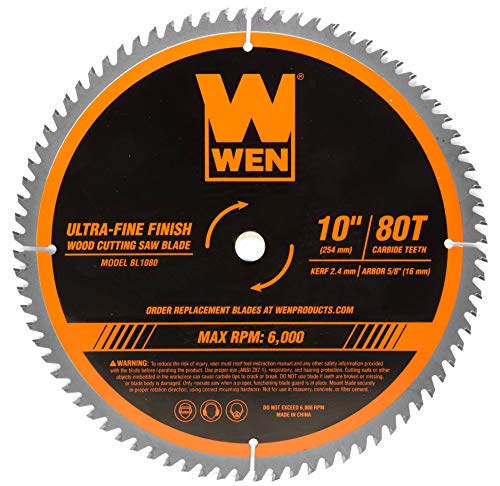
This 10-inch miter saw blade from WEN features 80 carbide-tipped teeth, engineered for ultra-fine, professional-grade woodworking finishes. The 5/8-inch arbor size fits most standard miter and table saws and supports up to 6000 RPM for smooth operation. Its ultra-thin 1/10-inch kerf (2.4 mm) helps minimize material waste and produces clean, efficient cuts. Ideal for slicing through both hard and softwoods, this blade balances sharpness and durability for precision trimming and crosscuts.
WEN BL1060 10-Inch 60-Tooth Fine-Finish Woodworking Blade
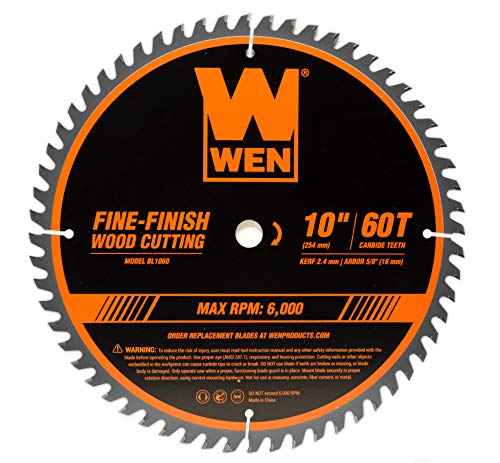
The WEN BL1060 is a 10-inch blade with 60 teeth, providing a slightly coarser cut than the 80-tooth version but still delivering a fine finish suitable for precision woodworking. Featuring a 5/8-inch arbor and up to 6000 RPM rating, this blade excels in cutting both hardwood and softwood. Its ultra-thin 1/10-inch kerf reduces resistance during cuts, maintaining cleaner edges and reducing the effort needed when cross-cutting panels or molding materials.
WEN BL1200 12-Inch 100-Tooth Ultra-Fine Finish Woodworking Blade

For larger workpieces, the WEN BL1200 offers a 12-inch diameter with 100 carbide-tipped teeth tuned for ultra-fine finish cuts. Its 1-inch arbor fits many professional and industrial-grade saws. The ultra-thin 1/10-inch kerf (2.8 mm) improves cutting speed and reduces tear-out. This blade is particularly suited for those requiring extremely smooth edges on hardwood furniture or fine millwork projects.
TOYAKI 10-Inch 120-Tooth Fine-Finish Miter Saw Blade
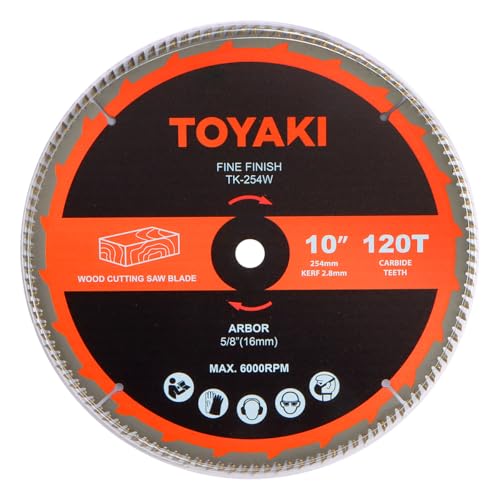
The TOYAKI 10-inch saw blade stands out with its impressive 120-tooth count, delivering an exceptionally smooth finish. Designed for wood and soft materials, the engineered tooth pattern minimizes vibration and noise, enhancing cut accuracy. This blade maintains consistent cutting quality throughout its lifespan, making it a reliable choice for woodworkers focusing on detailed trim work and cabinetry. It fits standard saws suitable for 10-inch diameter blades.
DEWALT 12-Inch 100-Tooth Fine Finish Miter Saw Blade (DWA112100)

The DEWALT DWA112100 is designed with patented low-vibration body slots that reduce noise and increase cut accuracy. This 12-inch blade with 100 ultra-sharp carbide teeth offers improved finish quality and extended blade life compared to standard blades. Its optimized tooth geometry is ideal for fine woodworking, providing clean, precise cuts on hardwoods and softwoods alike. The 1-inch arbor size fits a wide range of professional saws for versatile use.
Buying Guide for Miter Saw Blades for Fine Woodworking
Choosing the right miter saw blade is crucial for achieving desirable woodworking results. Here are key factors to consider when selecting a blade for fine woodworking:
Blade Diameter and Arbor Size
Ensure the blade diameter matches your miter or table saw’s specifications. Common sizes include 10-inch and 12-inch blades. Arbor size is equally important; most blades feature either a 5/8-inch or 1-inch arbor to securely fit the saw’s spindle.
Tooth Count and Design
Higher tooth counts typically provide cleaner cuts and finer finishes, suitable for trim work, cabinetry, and delicate furniture. For fine woodworking, 60 to 120 teeth are common. Blades with an ATB (Alternating Top Bevel) or combination tooth design improve cut quality and reduce tear-out.
Kerf Thickness
Kerf refers to the blade’s thickness. Ultra-thin kerf blades (around 1/10 inch or less) require less power and remove less material, resulting in smoother cuts and less waste. However, very thin blades may be less durable on thicker or harder woods.
Material and Coating
Look for carbide-tipped teeth that stay sharp longer and resist heat buildup. Coatings such as titanium or chrome reduce friction and resin build-up, preserving blade performance.
Cutting Speed and RPM Rating
Check the blade’s maximum RPM rating to ensure compatibility with your saw’s speed. Most professional blades handle up to 6000 RPM safely.
Application and Wood Type
Consider the types of wood you most often cut. Some blades are optimized for hardwoods, others for softwoods or plywood. For mixed woodworking, opt for versatile fine-finish blades designed for multiple wood types.
In summary, the best miter saw blade for fine woodworking balances tooth count, kerf size, and material quality to deliver precise, smooth cuts for your specific woodworking projects.