
Choosing the right metal cutting circular saw blade can dramatically improve productivity and accuracy for any metalworking project. This comprehensive guide covers some of the top circular saw blades designed specifically for metal cutting, focusing on durability, heat resistance, and cutting performance.
| Product | Blade Diameter | Teeth Count | Material & Features | Ideal For |
|---|---|---|---|---|
| Diablo Steel Demon Cermet II Saw Blade | 7-1/4″ | 48 TCG | Cermet II teeth, Perma-Shield coating, triple chip grind, cooler cuts | Medium metal cutting, stainless steel, ferrous metals |
| Echo Corner 7-1/4 Inch Metal Cutting Blade | 7-1/4″ | Not specified | Cermet carbide tipped teeth, ATB style, suitable for mild steel & angle iron | Mild steel, carbon steel, angle iron, sheet/plate/tube metals |
| DEWALT 7 1/4 Inch 68-Tooth Metal Cutting Blade | 7-1/4″ | 68 | Precision sharpened teeth, rust-resistant coating, thicker body for durability | General metal cutting with smooth finish |
| Diablo Steel Demon Cermet II Thick Metal Blade | 8″ | 42 TCG | Cermet II teeth, laser cut stabilizer vents, high heat tolerance | Thick metal cutting, industrial applications |
| COMOWARE 12“ 100T TCG Metal Cutting Blade | 12″ | 100 TCG | Tungsten carbide teeth, triple chip grind, anti-vibration & Teflon coating | Aluminum and non-ferrous metals |
Diablo Steel Demon Cermet II Saw Blade 7-1/4″

This blade features Cermet II teeth which combine ceramic and metallic compounds offering elevated hardness and wear resistance for longer blade life. Designed for medium metal cutting, the triple chip grind helps produce smoother edges and reduces heat buildup. Its Perma-Shield coating controls friction and prevents rust, contributing to up to 25 times longer life compared to typical grinding discs. This blade offers cooling performance that prevents metal discoloration, operating with cooler cuts which reduce the heat-related damage on metals such as stainless steel.
Echo Corner 7-1/4 Inch Metal Cutting Circular Saw Blade

This metal cutting blade uses Cermet carbide tipped teeth optimized for cutting tough ferrous metals including mild steel, carbon steel, angle iron, and steel plates. Its ATB (Alternate Top Bevel) tooth style helps enable cleaner and more efficient cuts with less vibration. The blade is compatible with both corded and cordless circular saws, making it versatile for various workshop or on-site applications. It is designed for fast, clean, dry, and cool cutting performance.
DEWALT 7 1/4 Inch, 68-Tooth Metal Cutting Blade

Featuring 68 sharpened teeth, this DEWALT blade is precision ground to deliver smooth and fast metal cuts while extending blade life. It includes a blade coating that prevents rust and reduces friction which enhances cutting efficiency. The thicker blade body gives it durability in heavy-duty conditions, making it appropriate for professional metal fabricators and DIYers alike. This blade is suited for cutting a wide range of metals with smooth edge finishes.
Diablo Steel Demon Cermet II Thick Metal Blade 8 Inch
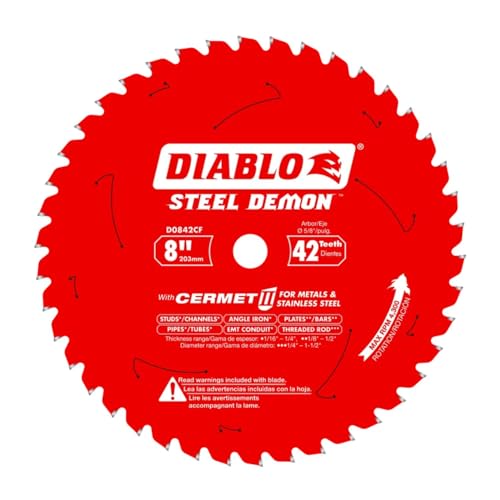
Designed for more demanding applications, this 8-inch blade features Cermet II teeth that offer outstanding heat tolerance which results in longer blade life and excellent cutting speed through thick metals. The blade is equipped with laser-cut stabilizer vents that reduce vibration and noise while maintaining blade stability for precise cuts. The triple chip grind tooth geometry contributes to cleaner cuts on 0.063″ plate metal and thicker stock.
COMOWARE 12“ 100T TCG Metal Cutting Circular Saw Blade

This large diameter 12-inch saw blade is designed primarily for cutting aluminum and non-ferrous metals. It features tungsten carbide teeth arranged in a triple chip grind pattern for clean, smooth cuts with minimal material tear-out. The blade also includes anti-vibration technology and a Teflon coating to reduce friction and heat buildup, improving both cut quality and blade longevity. The 1-inch arbor size enhances stability during heavy-duty cutting operations.
Buying Guide for Metal Cutting Circular Saw Blades
Blade Material and Teeth Composition
The choice of blade teeth material significantly impacts cutting performance and durability. Cermet carbide tips blend ceramic and metallic materials, offering superior heat resistance and hardness compared to traditional carbide tips. Tungsten carbide
Teeth Geometry and Cut Quality
Teeth design influences cut smoothness and efficiency. Triple chip grind (TCG) blades produce clean cuts with minimal burr formation and are suitable for cutting hard metals. Alternate top bevel (ATB) style generates smoother edges but is generally more suited to softer or thinner metals. Consider the type of metal and finish quality needed when choosing tooth geometry.
Blade Diameter and Arbor Size Compatibility
Ensure the blade’s diameter matches your saw’s capacity. Common sizes include 7-1/4″, 8″, and 12″. Arbor sizes (such as 5/8″ or 1″) must also align with your tool. Using the correct dimensions ensures safe operation and optimal cutting performance.
Heat Management and Cooling Features
Metal cutting generates significant heat which can damage blades or workpieces. Look for blades with features like laser cut stabilizer vents or coatings like Perma-Shield that reduce friction and heat buildup. Cooler cutting blades prolong tool life and minimize metal discoloration or warping.
Cutting Speed and Application
Some blades are optimized for speed, suitable for production environments where time efficiency is critical. Others prioritize precision, providing smoother finishes ideal for detailed metal fabrication. Evaluate your project requirements to choose a blade balancing speed and cut quality.
Type of Metals to Cut
Blades designed for ferrous metals like steel and iron incorporate tougher tooth materials and coatings to handle abrasive conditions. For aluminum, copper, or other non-ferrous metals, specialized blades with fine teeth and anti-stick coatings produce the best results. Matching the blade to metal type enhances efficiency and safety.