Choosing the right blade for cutting fiber cement and similar materials can dramatically improve cutting precision and blade longevity. This article reviews the best cement blades for circular saws, focusing on professional-grade, diamond-tipped blade options designed to withstand tough materials like HardiePlank, fiber cement board, and laminate flooring. Below is a quick comparison of key features of selected blades featured in this guide:
| Product | Diameter | Teeth | Kerf | Arbor Size | Special Features |
|---|---|---|---|---|---|
| WEN BL0704 7-1/4-Inch Diamond Blade | 7-1/4 inch | 4 | 1.8 mm | 5/8 inch | PCD teeth, fits fiber cement & laminate flooring, 7000 RPM max |
| Janchi 6-1/2 Inch 4T PCD Tip Blade | 6-1/2 inch | 4 | 1.8 mm | 5/8 inch | Polycrystalline diamond tips, anti-vibration slots, laser-cut body |
| Diablo HardieBlade 7-1/4″ PCD Tipped Blade | 7-1/4 inch | 4 | Not specified | 5/8 inch | James Hardie approved, triple chip PCD design, less dust generation |
| DEWALT 7-Inch Diamond Blade DW4712 | 7 inch | Continuous rim | Thin kerf (exact thickness N/A) | 5/8 inch | Advanced diamond matrix, dry/wet cutting, long life |
| CRALY 6-1/2 Inch 4 Teeth PCD Blade Black Ice™ | 6-1/2 inch | 4 | 1.8 mm | 5/8 inch | Non-stick coating, laser-cut slots, diamond knockout, 75X life |
WEN BL0704 7-1/4-Inch Diamond-Tipped Blade
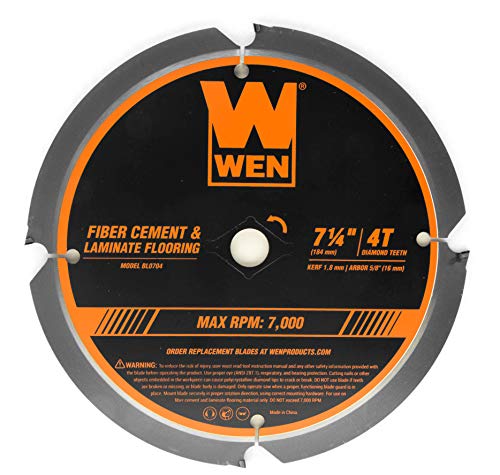
The WEN BL0704 blade features a 7-1/4 inch diameter with a 5/8-inch arbor to fit most standard circular saws. Its diamond-tipped, 4-tooth (PCD) design ensures excellent durability and clean cutting across fiber cement boards and laminate flooring. The ultra-thin kerf of 1.8 mm helps reduce material waste while providing efficient, smooth cuts. It operates safely up to 7000 RPM, making it suitable for professional and home users alike. This blade is a practical choice for users seeking accuracy and longevity when working with tough cement materials.
Janchi 6-1/2 Inch 4T PCD Tip Hardie Fiber Cement Blade

This 6-1/2 inch blade by Janchi is crafted with four polycrystalline diamond tipped teeth that offer an impressive service life — up to 60 times longer than standard carbide blades. Featuring a thin kerf of 1.8 mm, along with a laser-cut body and anti-vibration expansion slots, this blade ensures fast, precise cuts with minimal dust and reduced material waste. It’s designed specifically for hard materials like fiber cement boards, HardiePlank, MDF, and Corian. This blade’s specialized design makes it ideal for those seeking performance and durability in tough cutting jobs.
Diablo HardieBlade 7-1/4″ PCD Tipped Fiber Cement Blade
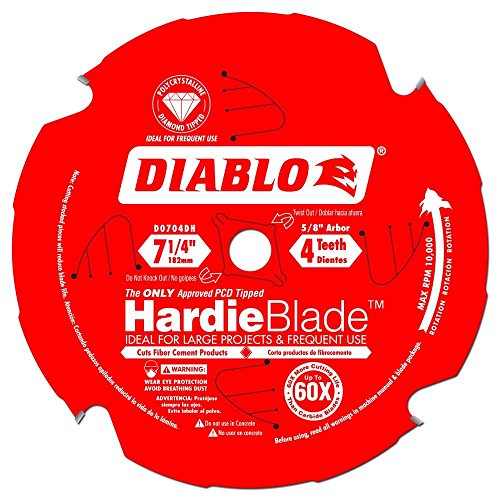
The Diablo HardieBlade is lauded for its exceptional longevity, with a triple chip PCD tooth design providing up to 75 times the life of carbide alternatives. It generates up to 50% less respirable dust, creating a cleaner and safer environment when cutting fiber cement materials. This blade is also the only James Hardie approved PCD tipped circular saw blade, ensuring trustworthy performance for fiber cement applications. Its 7-1/4 inch diameter fits common saw sizes, making it suitable for heavy-duty professional use.
DEWALT 7-Inch Diamond Blade for Block & Brick

The DEWALT DW4712 blade features an advanced diamond matrix designed to provide long life and enhanced material removal for block, brick, and cement applications. With a continuous rim design, this blade offers clean cuts and is usable in both dry and wet cutting scenarios. The thin kerf increases cut speed while minimizing dust production. Providing durability that lasts up to 200 times longer than traditional bonded abrasive blades, it suits professionals needing reliability in masonry and cement cutting.
CRALY 6-1/2 Inch Black Ice™ PCD Cement Blade

The CRALY blade boasts a polycrystalline diamond tipped design with four teeth and a thin kerf of 1.8 mm for precise cutting with minimal waste. The blade features a Black Ice™ non-stick coating to reduce pitch build-up and resist rust and corrosion. Laser-cut expansion slots and stabilizer vents help minimize vibration and noise, contributing to smoother operation. This blade offers up to 75 times the lifespan of standard carbide blades and includes a diamond knockout feature for easy arbor changes, making it a well-rounded professional option.
Buying Guide: Key Considerations When Choosing a Cement Blade for Circular Saw
Selecting the best blade for cutting cement materials hinges on several critical factors:
Blade Diameter and Arbor Compatibility
Ensure the blade diameter fits your circular saw’s specifications—common sizes include 6-1/2 inch and 7-1/4 inch. The arbor size (typically 5/8 inch) must also match your saw’s spindle for safe, firm mounting. Use arbor adapters if necessary.
Tooth Design and Tip Material
PCD (polycrystalline diamond tipped) teeth provide superior cutting life and durability compared to carbide. Fewer teeth (like 4-tooth design) improve chip clearance and reduce heat build-up for cement board cutting. Look for blades with specialized tooth geometry (e.g., triple chip grind) to reduce dust and improve cut quality.
Kerf Thickness
A thinner kerf (around 1.8 mm or 0.071 inch) enables faster cuts with less waste and helps reduce motor load. Thin kerf blades are preferable for precise, clean cement cuts.
Blade Coatings and Expansion Slots
Non-stick or anti-corrosion coatings extend blade life by preventing pitch build-up and rust. Laser-cut expansion slots and stabilizer vents reduce vibration and noise while minimizing blade warping during use.
Cutting Application and Performance
Match the blade to your material: fiber cement boards, HardiePlank, laminate flooring, or masonry materials. Some blades are James Hardie approved, signifying optimal performance and endorsement for fiber cement products. Consider dust reduction claims if working indoors or concerned about site cleanliness.
Durability and Lifespan
Diamond-tipped blades offer substantial longevity; some claim up to 75 times the cutting life of carbide. Higher upfront cost blades may save money long term by cutting more material before needing replacement.
By weighing these factors—compatibility, design, kerf, coating, and durability—you can find the blade best suited to your fiber cement cutting needs.