
Choosing the right 8-inch circular saw blade can significantly impact your cutting performance and project quality. Whether you’re working with wood or metal, selecting blades with the appropriate tooth design, material, and blade features is essential. Below is a summary table highlighting key details of top-rated 8-inch circular saw blades for versatile use across different materials.
| Product | Brand | Material | Tooth Count | Primary Use |
|---|---|---|---|---|
| Diablo Steel Demon Cermet II | Diablo | Cermet II (Ceramic & Metallic) | 42 TCG | Thick Metal Cutting |
| Benchmark Abrasives TCT Wood Blade | Benchmark Abrasives | Tungsten Carbide Tips | 64 | Wood Cutting |
| Benchmark Abrasives Metal Cutting Blade | Benchmark Abrasives | Tungsten Carbide Tips | 48 | Metal Cutting |
| DEWALT 8 1/4 Inch Cross Cutting | DEWALT | High-Density Tungsten Carbide | 40 | Cross Cutting Wood |
| Evolution Power Tools Steel Cutting | EVOLUTION | Japanese Carbide | 50 | Mild Steel Cutting |
Diablo Steel Demon Cermet II Saw Blade for Thick Metal
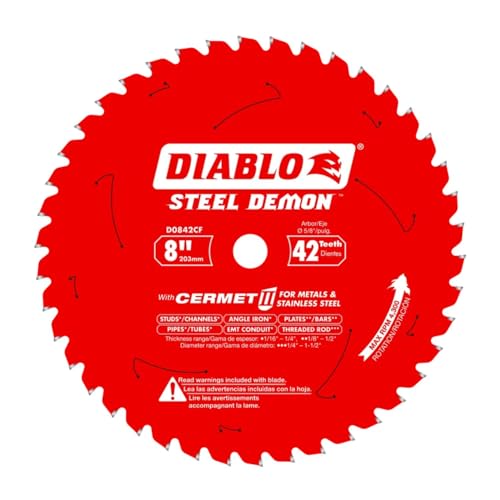
The Diablo Steel Demon Cermet II blade is engineered for high-performance cutting of thick metals. Its unique Cermet II composition combines ceramics and metallic elements, offering superior wear resistance and heat tolerance that extends blade life up to 25 times more than standard grinding discs. It also offers significantly cooler cuts, helping reduce steel discoloration and maintaining material integrity.
Equipped with 42 TCG (triple chip grind) teeth and advanced laser-cut stabilizer vents, the blade minimizes vibration and noise, ensuring accurate, straight cuts. This maximizes productivity and reduces blade changes during demanding metal cutting tasks.
Benchmark Abrasives TCT 8 Inch Circular Saw Blade for Wood

The Benchmark Abrasives 8-inch TCT blade is a versatile tool for woodworking, designed to cut softwoods, hardwoods, plywood, MDF, and more with smooth precision. Its 64 tungsten carbide tipped teeth provide long-lasting sharpness and deliver burr-free, clean cuts that suit professionals and DIYers alike.
This blade meets industrial quality standards and fits most miter saws, making it a reliable option for those needing accuracy and durability in various woodcutting applications such as framing or decorative work.
Benchmark Abrasives TCT Metal Cutting Circular Saw Blade

Designed specifically for metal cutting, this Benchmark Abrasives TCT blade features 48 tungsten carbide tipped teeth built to slice through metals like cast iron, stainless steel, titanium, and more. Its industrial-grade TCT construction promises both clean, burr-free cuts and extended blade life, even after repeated heavy use.
This blade is compatible with miter saws and circular saws by a variety of brands and is tailored for professionals and enthusiasts who require efficient cutting of ferrous metals with precision and ease.
DEWALT 8 1/4 Inch 40 Tooth Cross-Cutting Blade

This DEWALT circular saw blade offers high-density tungsten carbide teeth built for toughness and long-lasting wear resistance. The blade’s tough coat anti-stick coating reduces friction and gumming, ensuring smoother cuts with less heat buildup.
Its thin kerf design helps minimize material waste while maintaining the smoothness and accuracy of every cut, making it ideal for cross-cutting wood and other sheet goods where a clean edge is needed.
Evolution Power Tools 8-Inch 50 Tooth Steel Cutting Blade

The Evolution 8BLADEMS is specifically designed for mild steel cutting with 50 precision heat-treated Japanese carbide teeth. It provides virtually no sparks, no heat buildup, and burr-free cuts, which enables you to touch the cut surface moments after operation.
Note that this blade should only be used on mild steel and is not suited for galvanized or hardened metals. It is an excellent choice for metalworkers needing clean, safe cuts on ferrous metals with an 8-inch saw.
Buying Guide: How to Choose the Best 8-Inch Circular Saw Blade
Selecting the appropriate 8-inch saw blade depends on your intended cutting application, material type, and desired cut quality. Here are key factors to consider:
Material Compatibility
- Wood Blades — Typically have more teeth (e.g., 40-64 teeth) with alternate top bevel (ATB) or triple chip grind (TCG) tooth designs for smooth crosscuts and fine finish.
- Metal Blades — Usually feature tungsten carbide tips with fewer teeth (around 40-50), designed for cutting ferrous or non-ferrous metals without overheating.
- Cermet Blades — Blend ceramic and metal for higher heat resistance and longer life, suited for heavy metal cutting.
Tooth Count and Design
- Higher Tooth Count (e.g., 64 teeth) offers smoother finishes but slower cuts, ideal for fine woodworking or cabinetry.
- Lower Tooth Count (e.g., 24-40 teeth) provides faster cuts with rougher edges, better for framing or quick rip cuts.
- Tooth Geometry impacts cut type: ATB for clean wood cuts, TCG or flat top grind (FTG) for metal cutting.
Kerf Width and Blade Thickness
- Thin Kerf Blades remove less material, causing less waste and requiring less power, suited for portable saws and smooth finishes.
- Thicker Kerf Blades offer more stability and durability under heavy-duty cutting but require more horsepower.
Coatings and Features
- Anti-Stick or Anti-Gumming Coatings reduce friction, heat buildup, and resin buildup on the blade, improving longevity and cut quality.
- Laser-Cut or Stabilizer Slots minimize vibration and noise, enhancing cut precision.
- Arbor Size Compatibility is essential to ensure the blade fits your specific saw model properly.
Durability and Usage
- Look for blades made with high-quality carbide or cermet teeth for extended durability.
- Consider blade compatibility with your saw type: circular saw, miter saw, or table saw.
- Evaluate the intended use to select a blade balancing cutting speed, finish quality, and lifespan that fits your project needs.