
Finding the right 160mm circular saw blade can make all the difference in your woodworking and cutting projects. Whether you’re tackling plywood, melamine, hardwood, or general purpose cuts, choosing a blade that matches your tool and material requirements is essential. Below is a summary table featuring the top options available, highlighting key specs for quick comparison.
| Product | Brand | Teeth | Kerf Thickness | Arbor Size | Best For |
|---|---|---|---|---|---|
| Freud LU79R006M20 Ultimate Plywood & Melamine | Freud | 48 | 0.087″ | 20mm | Crosscutting Plywood, Melamine |
| Freud LU87R006M20 Thin Kerf Rip Blade | Freud | 14 | 0.098″ | 20mm | Rip Cuts, Fast Feed Rate |
| Oshlun SBFT-160048 FesPro Crosscut ATB | Oshlun | 48 | Standard | 20mm | Hardwood, Softwood, Melamine |
| Freud LU86R006M20 General Purpose Blade | Freud | 28 | 0.098″ | 20mm | General Purpose Cutting |
| Jisculo 495377 Track Saw ATB Blade | Jisculo | 48 | 2.2mm | 20mm | Track Saw, Sheet Goods |
Freud LU79R006M20 Thin Kerf Plywood & Melamine Blade

This Freud LU79R006M20 blade offers a 160mm diameter with a narrow kerf of 0.087 inches, optimizing material savings and reducing cutting resistance. Featuring 48 premium-grade TiCo high-density carbide teeth arranged in a High Alternate Top Bevel (Hi-ATB) design, it excels at producing splinter-free crosscuts on plywood and melamine.
The blade’s 20mm arbor and 2-degree hook angle contribute to precise handling and clean finish cuts. Its thin plate of 0.063 inches maintains rigidity while minimizing waste, making it suitable for fine woodworking that demands accuracy.
Freud LU87R006M20 Thin Kerf Rip Blade for Faster Cuts

The Freud LU87R006M20 is engineered specifically for ripping tasks. Its 14 teeth with an ATB grind and a more aggressive 20-degree hook angle enable fast feed rates through wood fibers.
This 160mm blade has a 0.098-inch kerf, slightly thicker than thin-kerf blades to maintain durability during intense ripping cuts. Constructed with premium TiCo carbide, it balances speed and performance while reducing material waste thanks to the thin kerf profile.
Oshlun SBFT-160048 Fine Tooth Crosscut ATB Blade

This blade is designed to fit popular track saws such as Festool TS 55 EQ, DeWalt DWS520, and Makita SP6000K. Its 48 professional-grade C-3 carbide teeth make it adept at crosscutting hardwood, softwood, and melamine sheets with a clean, accurate finish.
The 20mm arbor size ensures compatibility with multiple saw brands, while the ATB tooth configuration limits tear-out and chip damage. It is an ideal choice for users seeking a versatile cutting solution for various wood types.
Freud LU86R006M20 General Purpose Blade for Versatility
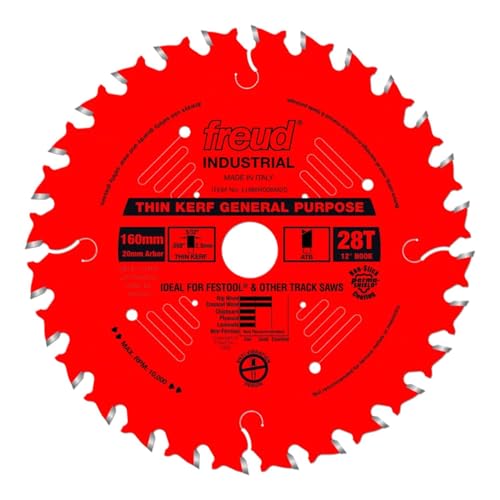
The Freud LU86R006M20 caters to a broad range of cutting tasks with its 28-tooth ATB grind and 13-degree hook angle. This setup promotes clean and efficient cuts on both hardwood and softwood materials.
Its 0.098-inch kerf and thicker plate of 0.063 inches lend stability, reducing blade flex and enhancing longevity. This makes it a solid option for those who need a single blade for day-to-day woodworking.
Jisculo 495377 Track Saw Blade with Wide Compatibility

This 160mm track saw blade is tailored for Festool track saw models and similar plunge-cut saws. Featuring 48 ATB teeth with a dual hook angle between 5° and 15°, it delivers smooth, clean cuts across sheet goods such as plywood, melamine, and various woods.
Its 2.2mm kerf thickness is slightly wider than traditional thin kerf blades, offering a robust design for heavy-duty use without compromising cutting efficiency. Built with an advanced hard alloy, this blade is durable for extended operational life.
Buying Guide for 160mm Circular Saw Blades
Choosing the ideal 160mm circular saw blade depends on several key factors. Understanding these will help you pick a blade tailored to your specific needs.
Tooth Configuration and Number
- Crosscut blades usually have 40 to 56 teeth arranged in an Alternate Top Bevel (ATB) pattern for smooth, splinter-free cuts.
- Rip blades have fewer teeth (typically 14-24) and a more aggressive hook angle to cut fast along the wood grain.
- General purpose blades strike a balance with moderate tooth count (~28) suited for various tasks.
Kerf Width and Plate Thickness
- Thin kerf blades reduce material waste and require less power from your saw, ideal for portable tools and minimizing burn marks.
- Thicker kerfs provide more blade stability and durability for heavy-duty tasks.
Material and Tooth Carbide Quality
- Look for premium carbide teeth, such as TiCo (titanium cobalt) blends, which offer superior toughness, edge retention, and resistance to heat.
- High-density carbide teeth contribute to longer-lasting blades and cleaner cuts.
Hook Angle
- A positive hook angle (5° to 20°) helps pull material into the blade, speeding up cutting but may affect finish quality on delicate materials.
- A lower or neutral hook angle (0° to 5°) is better for fine or finish cuts to avoid tear-out.
Compatibility
- Ensure the blade matches your saw’s arbor size, typically 20mm for 160mm blades.
- Check machine compatibility if using specialized tools like track saws, miter saws, or plunge saws.
Usage Purpose
- Crosscutting: Select blades with high tooth count and fine bevels for smooth, clean cuts.
- Ripping: A blade with fewer teeth and higher hook angle cuts faster with less effort.
- General purpose: Balanced blades avoid multiple blade purchases but may sacrifice some cutting finesse.
By considering these factors, you can select a 160mm circular saw blade that maximizes performance, longevity, and cut quality for your specific woodworking projects.